The Daintree River’s Ricochet
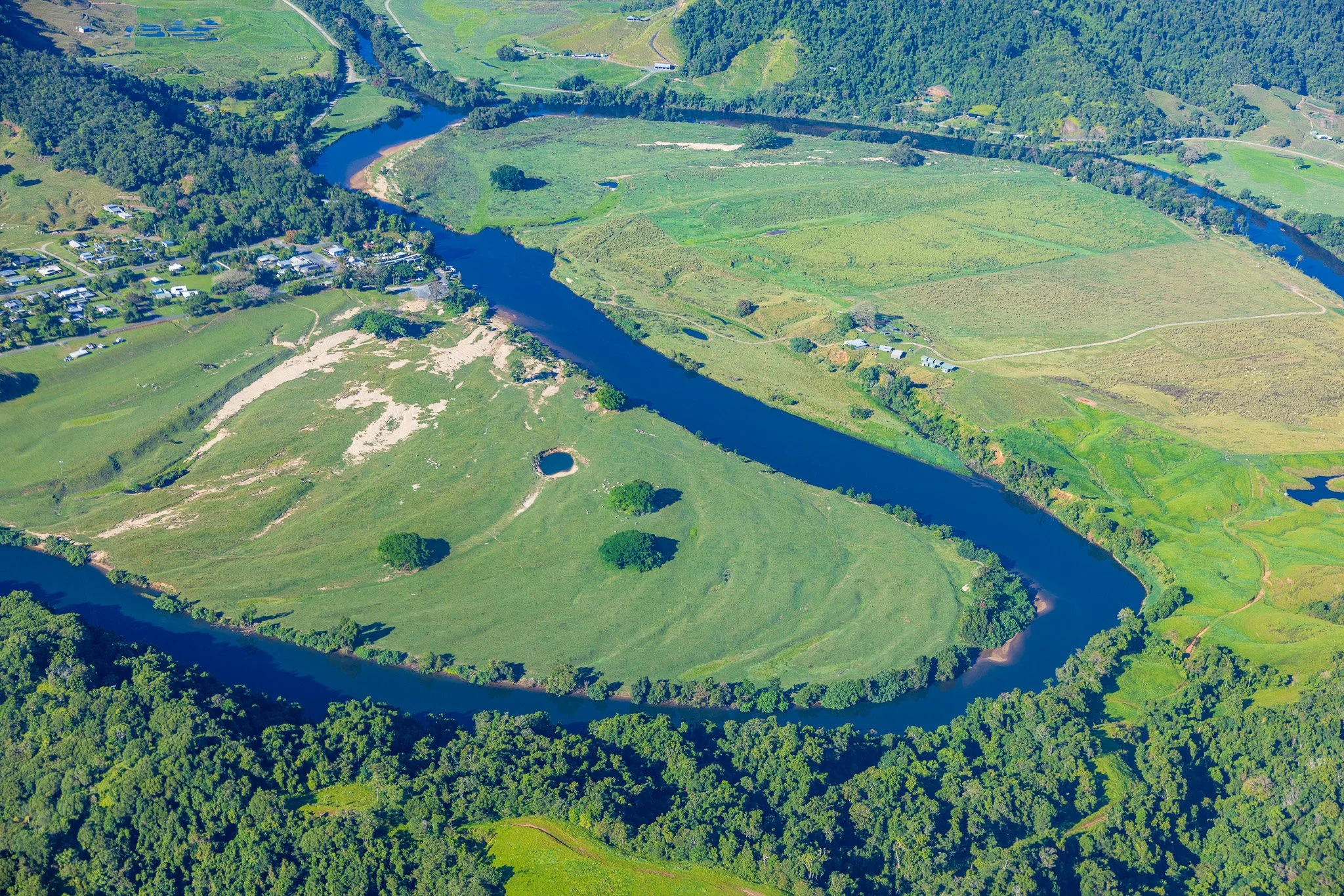
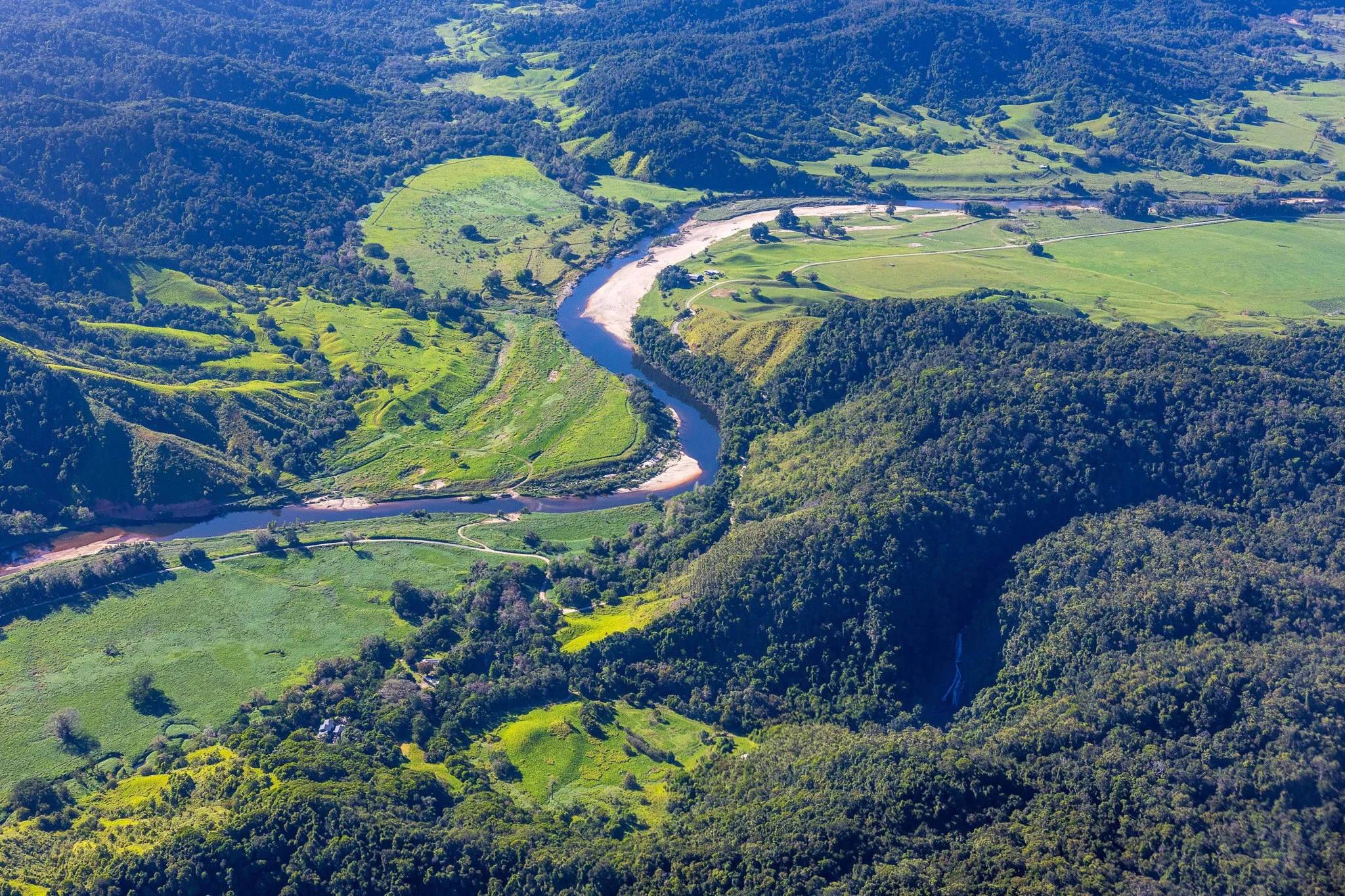
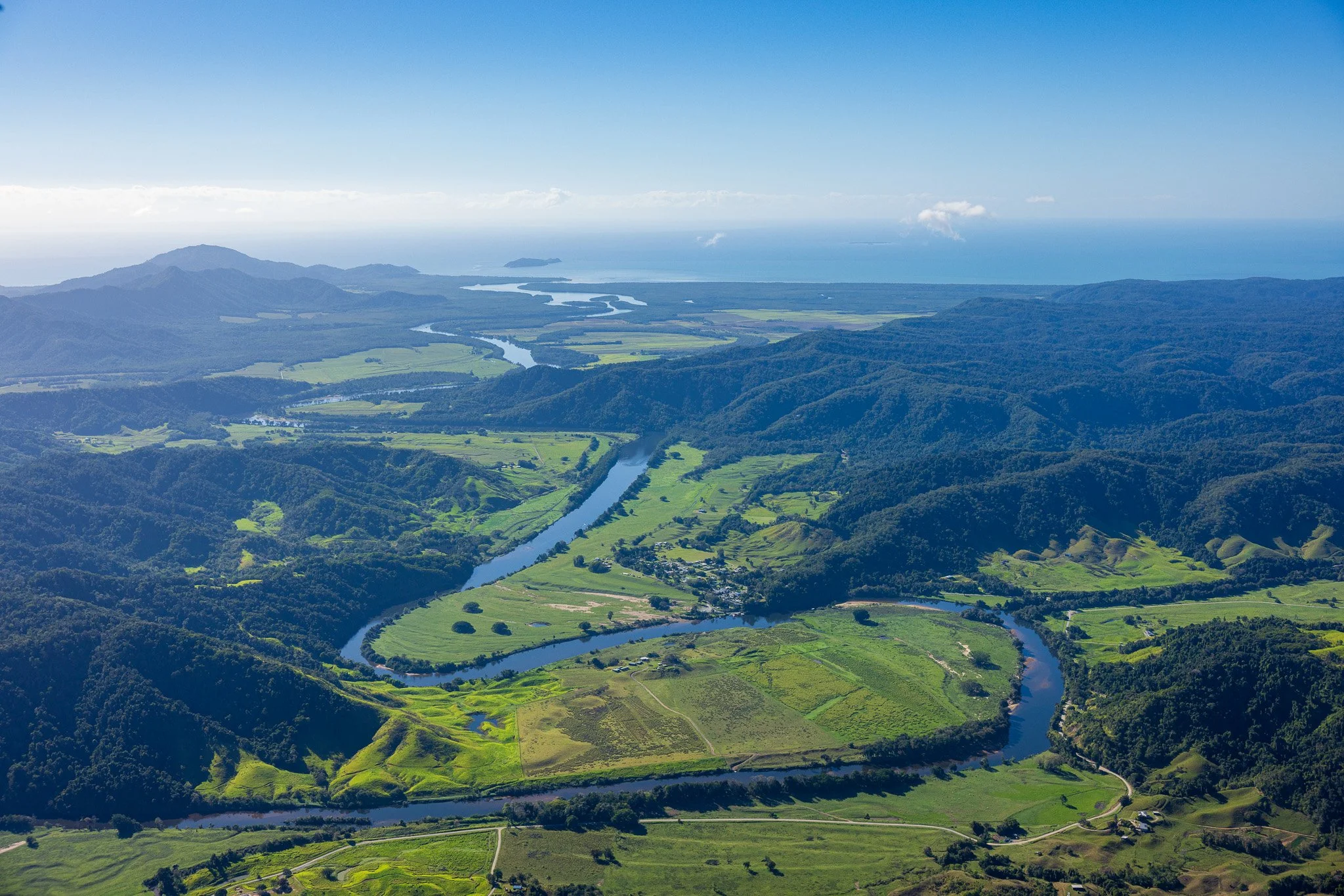
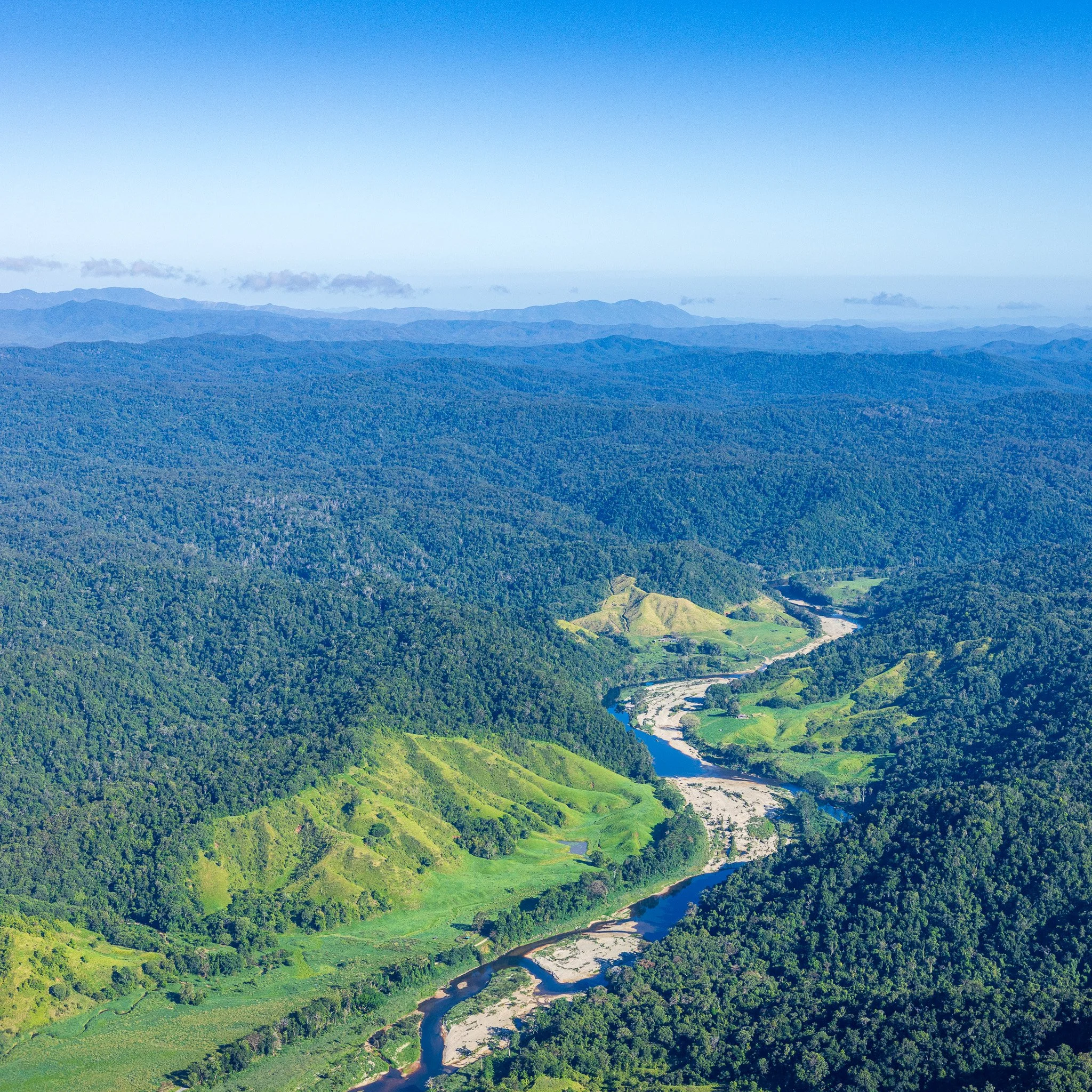
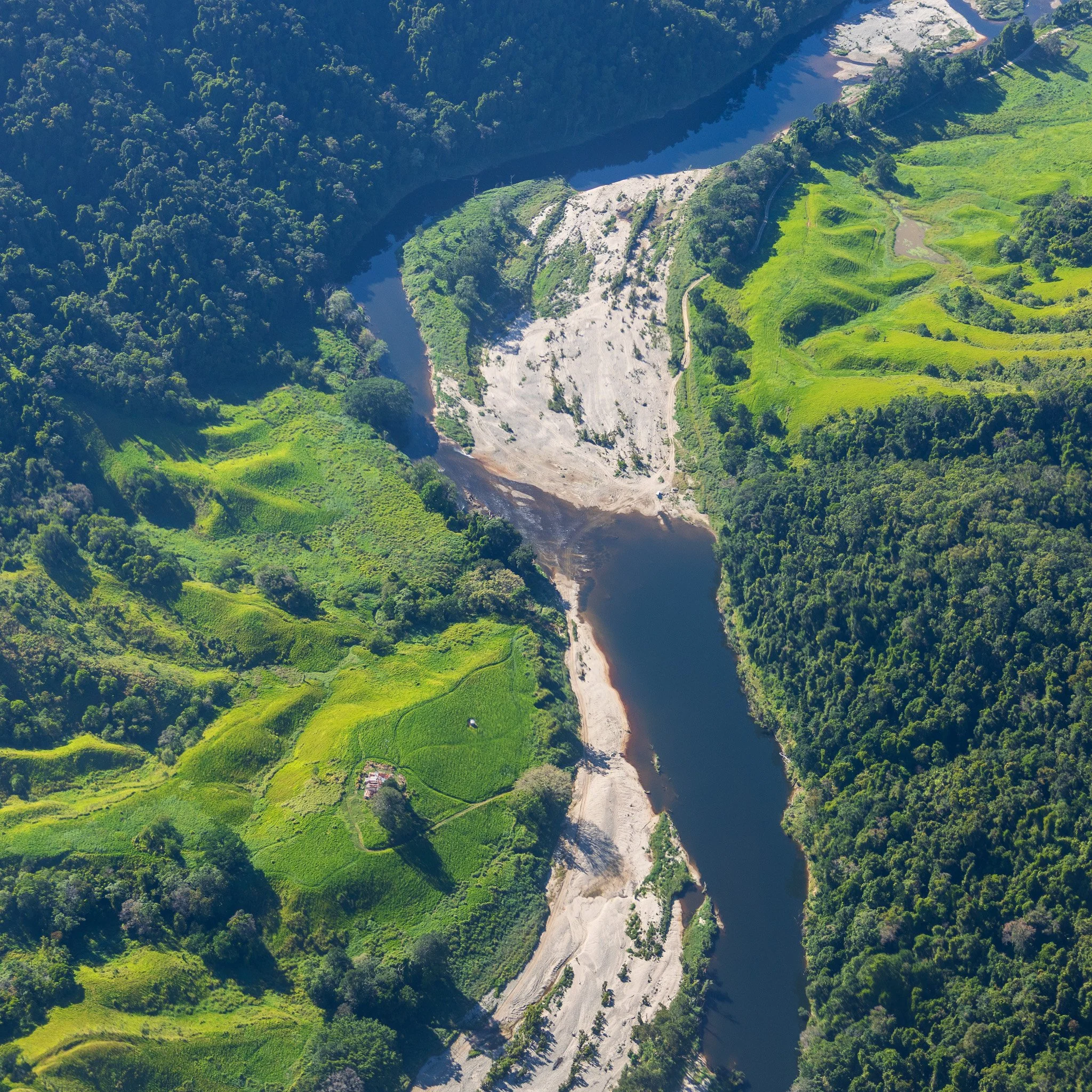
I was recently looking back through these aerial photos when I noticed the Daintree’s striking back-and-forth bends. The river seems to ricochet from one side of its valley to the other. I hadn’t really noticed that pattern before, and it made me wonder what was going on—so I started looking into how rivers meander, and what happens when the landscape leaves them little room to move.
Rivers naturally meander. Their bends are shaped by the interaction of water, sediment and the ground around the channel. The river’s slope, discharge and speed affect its erosive power. Bank material influences how easily the channel can shift, while vegetation can help hold banks together.
A small deflection can grow into a bend. Moving water has momentum: as the channel curves, the flow keeps pushing toward the outside bank. Faster water there erodes the bank, while slower water on the inside deposits sediment. This shifts the channel sideways and can make the bend grow. On a broad floodplain, bends may eventually meet and the river can cut a shorter route, leaving an abandoned loop.
But in this reach, the Daintree has less room to move. Its valley is narrow, and the bends appear constrained by the surrounding high ground. The river swings across the flats, reaches the valley edge, then turns back. The landscape seems to set the limits of its meanders.
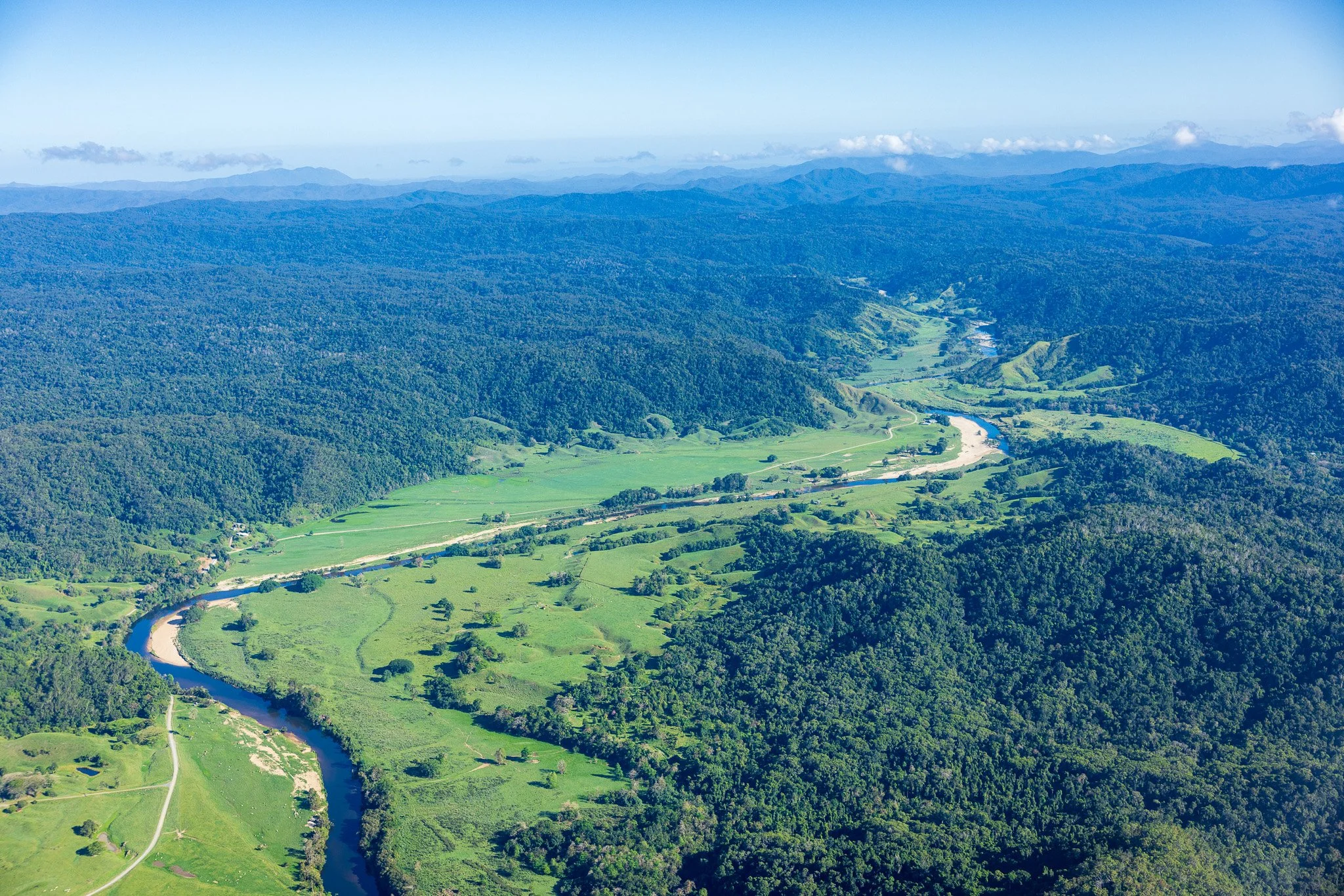
Farther downstream, the valley opens onto the coastal plain. There, the river has more room to meander, and bends can migrate or be cut off. The dark, tree-lined arc in the fields may be a remnant of an abandoned bend—an oxbow. It offers a glimpse of how the river has changed course over time.
The Daintree’s ricochet is a vivid reminder that a river’s shape reflects both the momentum of moving water and the landscape that contains it.