Aerial perspectives on one of Australia's youngest volcanoes
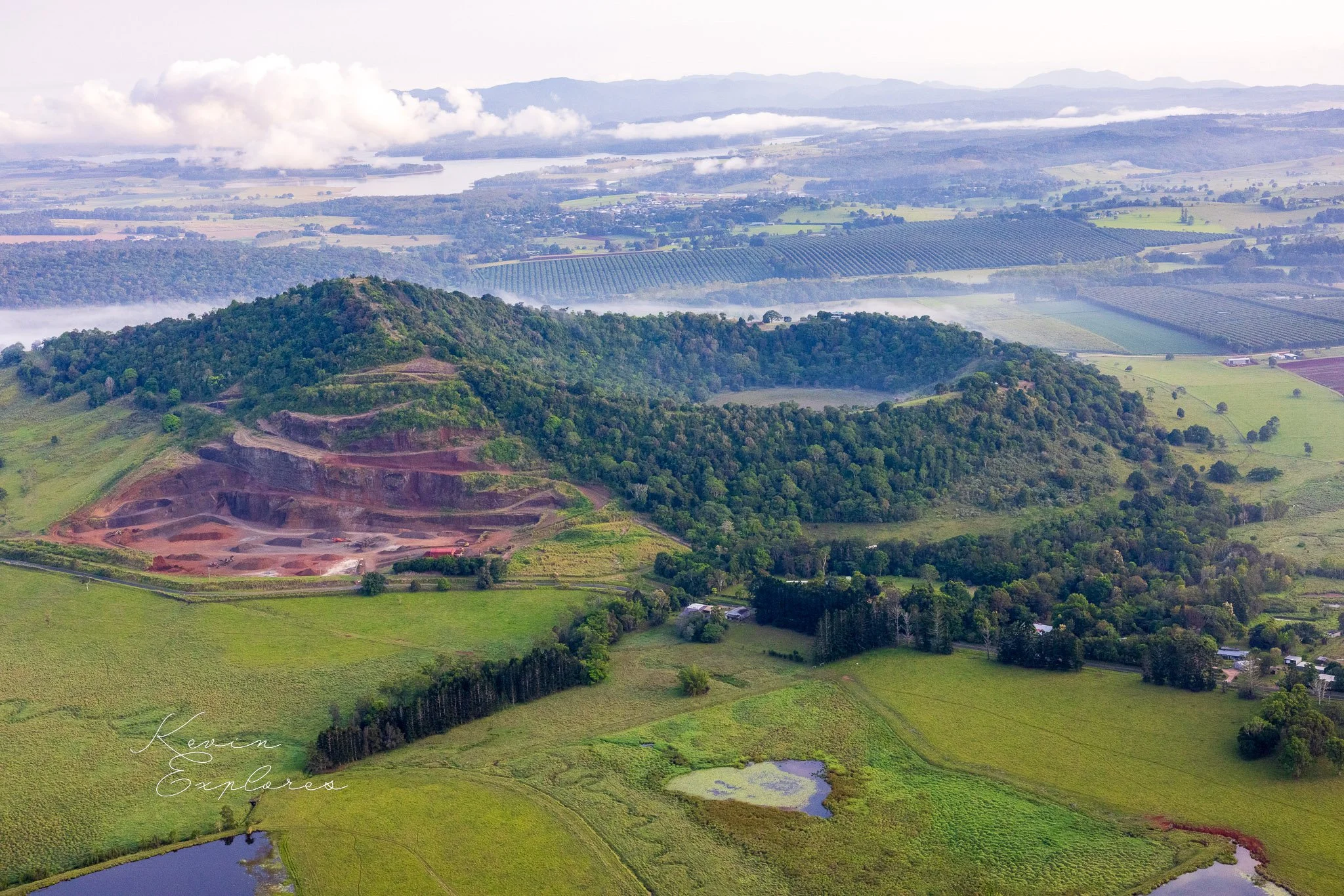
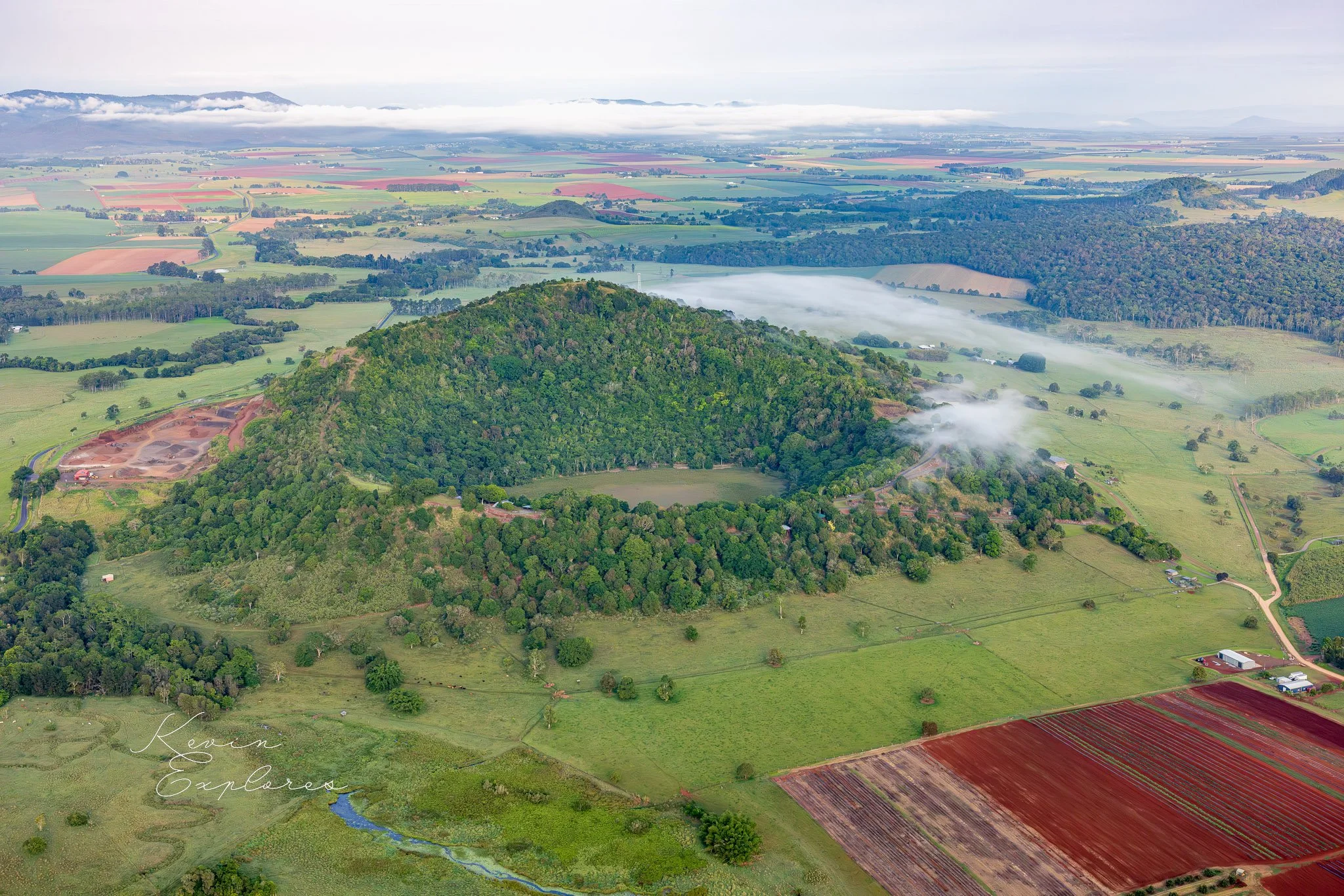
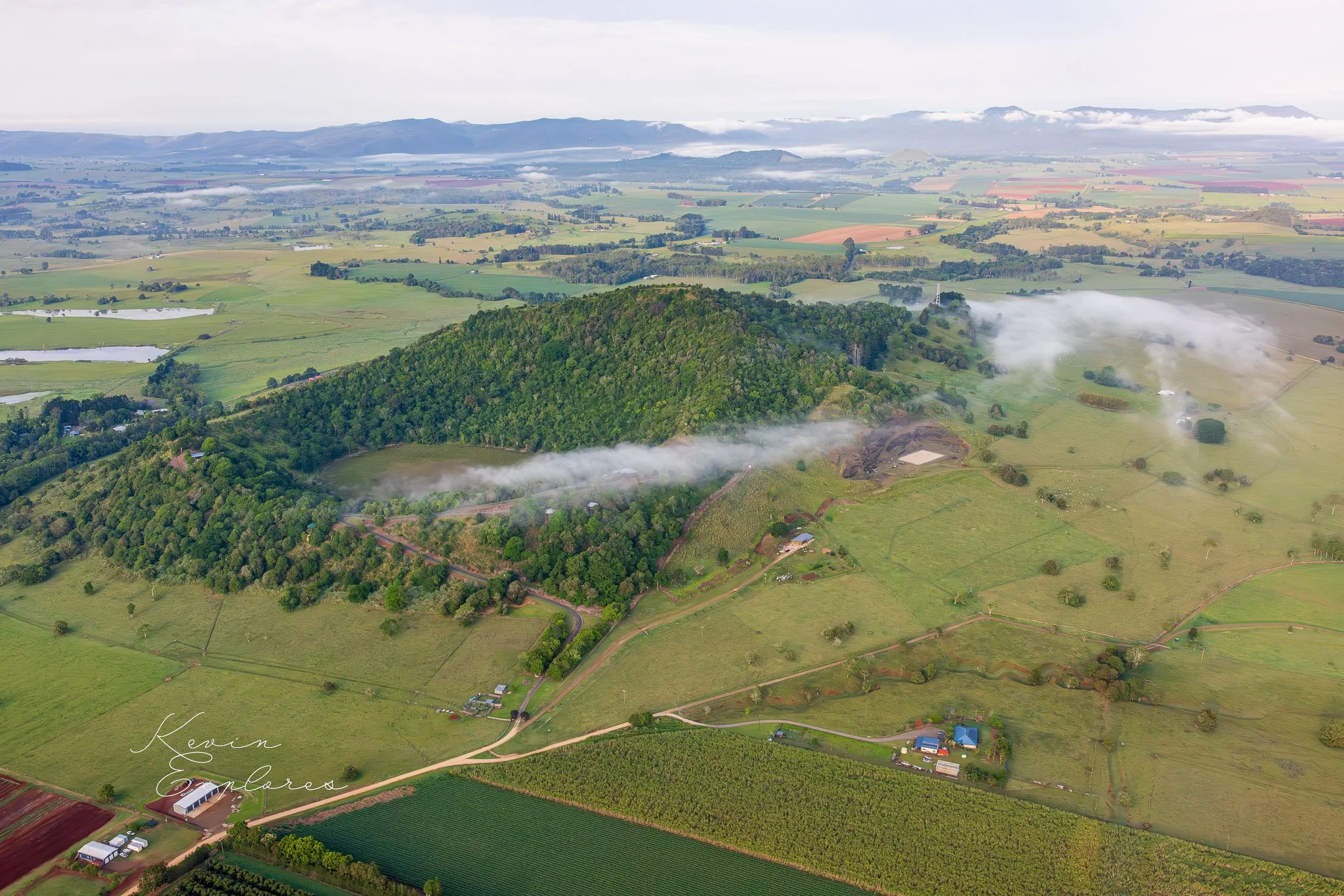
This morning, I had the privilege of capturing Mt Quincan from my aircraft—a perspective that reveals the true character of this remarkable volcanic feature on the Atherton Tablelands. For anyone interested in the dramatic geological forces that shaped Far North Queensland, Mt Quincan represents a fascinating chapter in a volcanic story that spans 7 million years.
A Shift in Volcanic Character
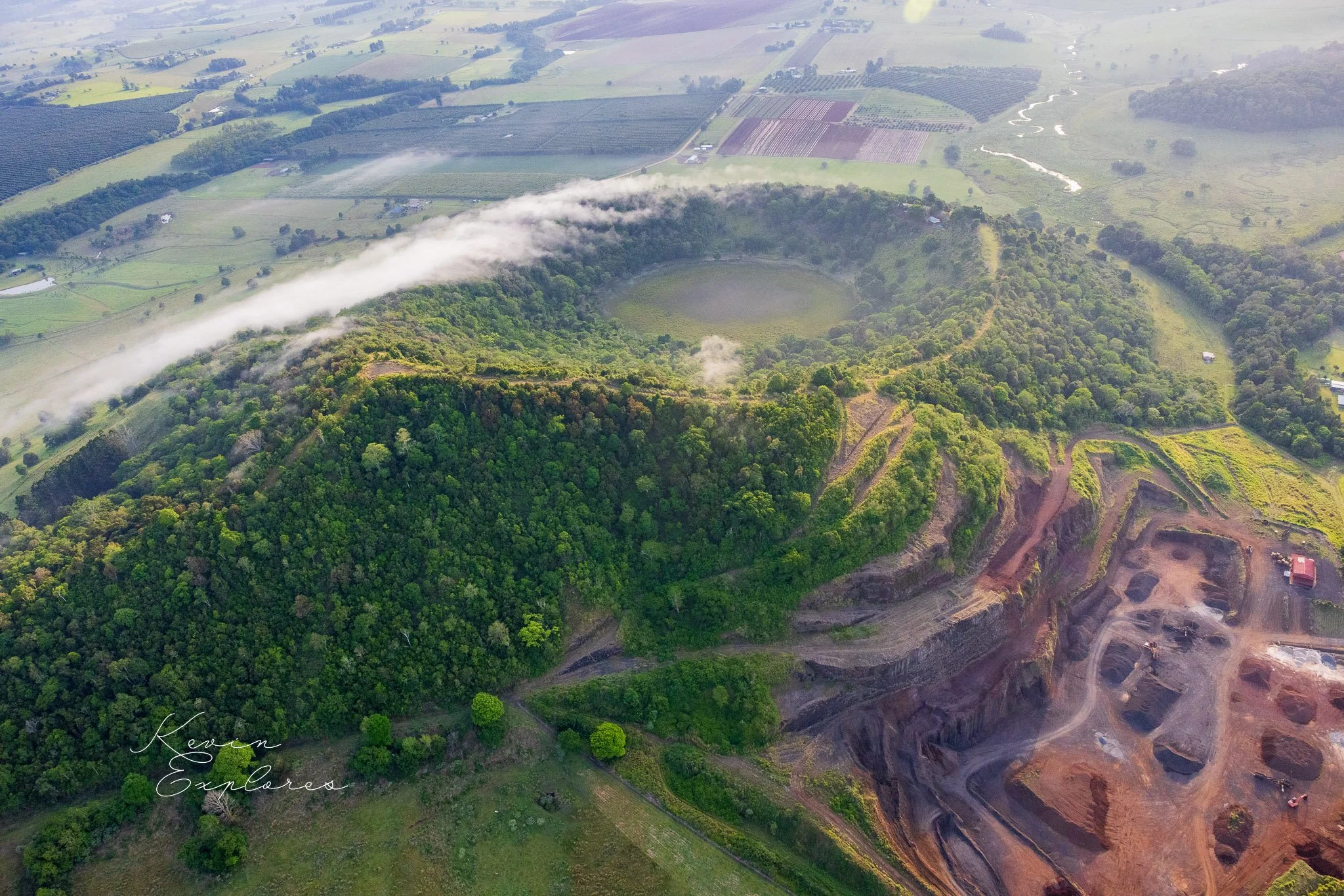
Mt Quincan stands 189 metres above the surrounding landscape near Yungaburra, its steep-sided profile immediately distinguishing it from the older, gentler shield volcanoes that characterise much of the Tablelands. This distinction isn't merely aesthetic—it represents a fundamental change in the nature of volcanic activity in this region.
According to research by Whitehead et al. (2007) published in the Australian Journal of Earth Sciences, the Atherton Basalt Province experienced a dramatic shift in eruption style around 1 million years ago. The early volcanic period (7.1 to 1 million years ago) was dominated by effusive eruptions that built large shield volcanoes like Malanda and Hallorans Hill, with voluminous lava flows that filled ancient valleys and created the elevated plateau we know today.
But around 1 million years ago, something changed. The voluminous shield-building eruptions ceased, replaced by smaller, more explosive events that created pyroclastic features—cinder cones like Mt Quincan, and maar craters like nearby Lakes Eacham, Barrine, and Euramoo.
The Formation of a Cinder Cone
Mt Quincan is classified as a cinder cone (also called a scoria cone), formed when gas-rich magma reaches the surface and expands rapidly. This expansion fragments the molten rock into small pieces called cinders or scoria, which cool quickly in the air before landing around the vent. Layer by layer, these fragments build a steep-sided cone with slope angles typically between 30 and 40 degrees—much steeper than the gentle slopes (less than 5 degrees) of shield volcanoes.
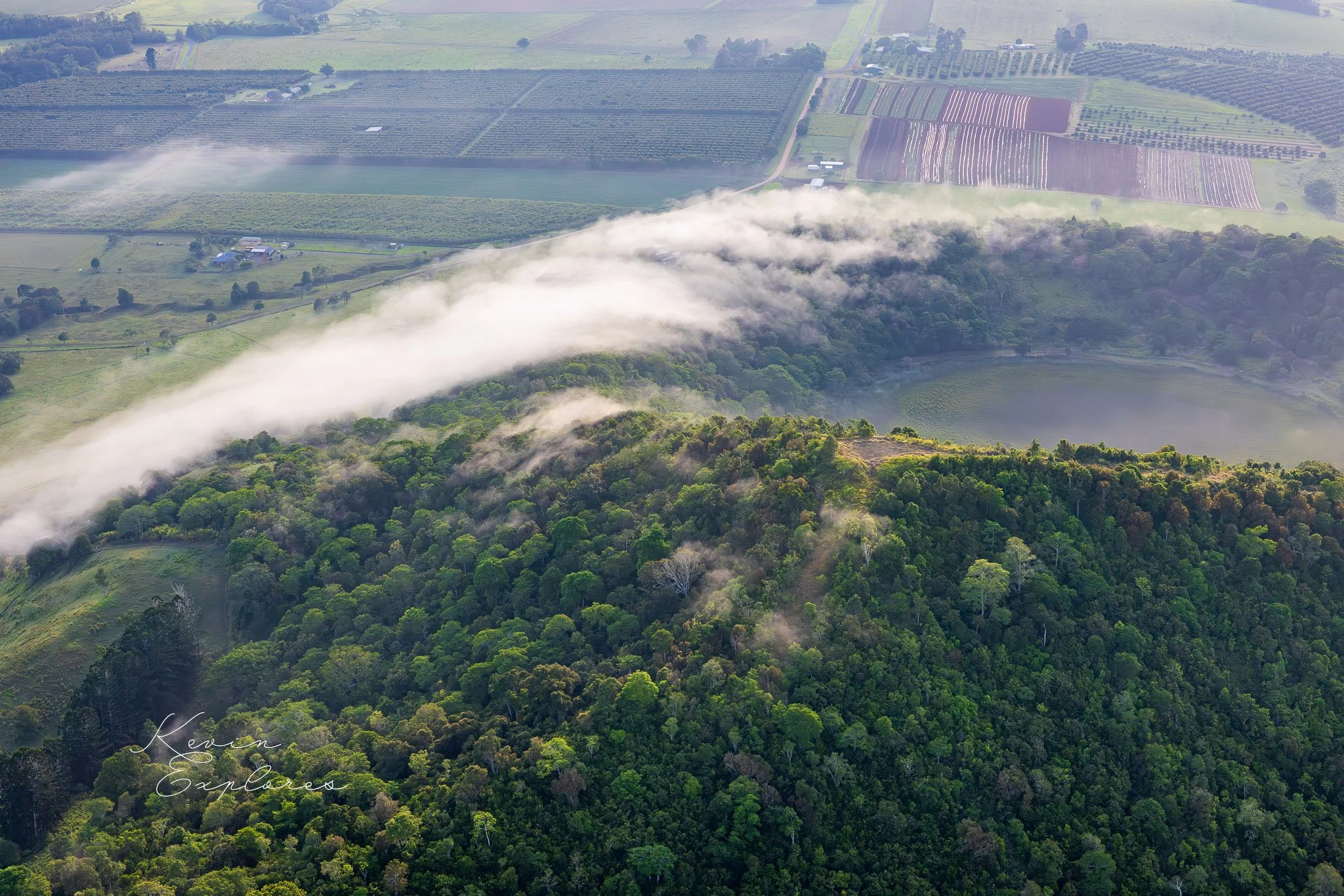
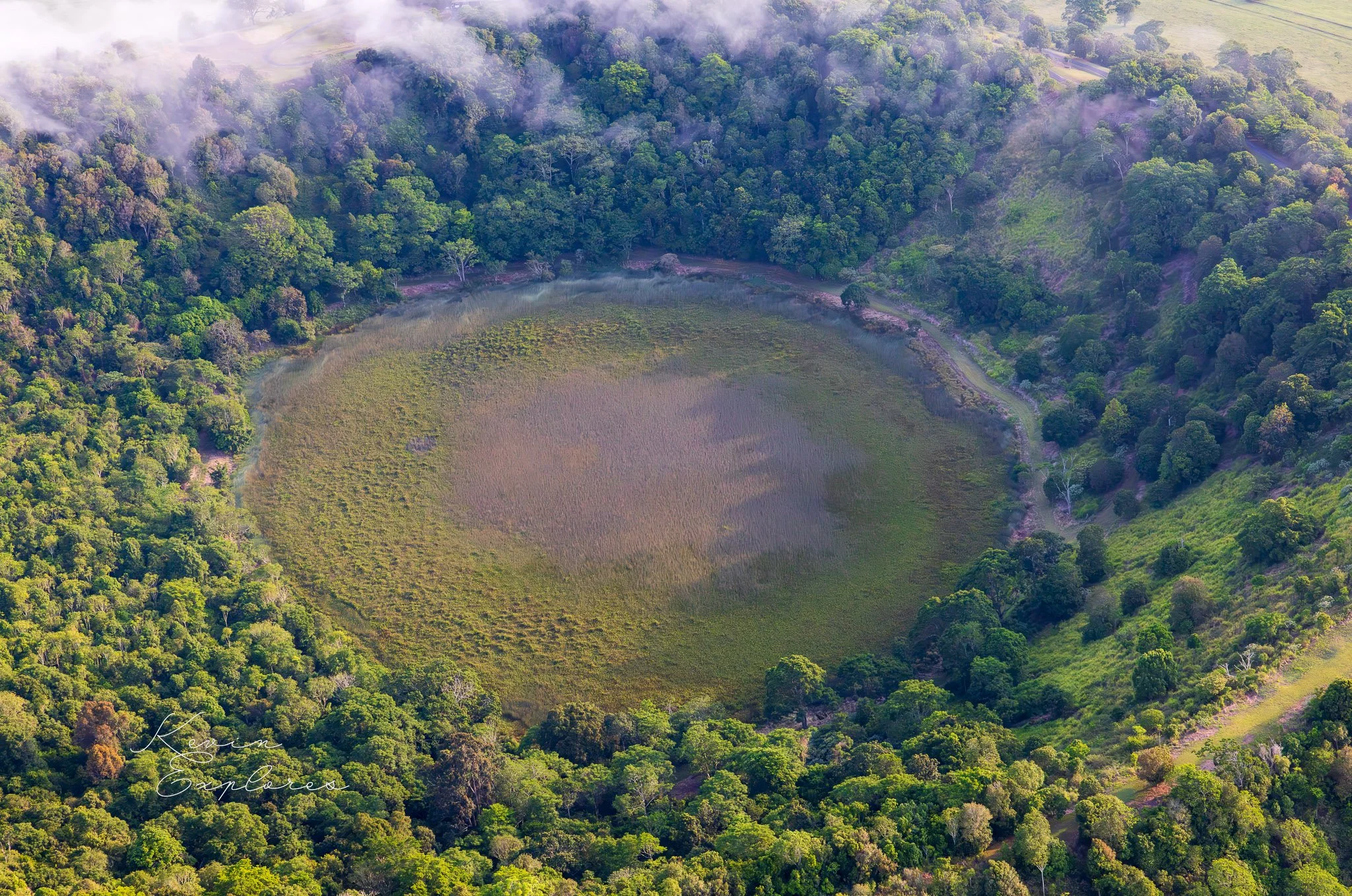
The crater at Mt Quincan's summit measures approximately 650 metres across and now contains a small lake and swamp. Radiocarbon dating of sediments within this crater by Kershaw (1971) yielded an age of just 7,250 years, making Mt Quincan one of the youngest volcanic features in the Atherton Basalt Province. This places its eruption well within the period of human habitation in the region.
Aboriginal Oral History
The young age of Mt Quincan and other recent volcanic features on the Tablelands has profound cultural significance. Dixon (1972) recorded Aboriginal oral traditions that describe volcanic eruptions in remarkably accurate terms—stories that speak of fire and flames erupting from rocks and rains of stones falling on the surrounding landscape. For Lakes Barrine, Eacham, and Euramoo, Aboriginal people tell specific stories of explosive events that created these maar craters.
Given Mt Quincan's age of just over 7,000 years, it's entirely possible that Aboriginal oral histories preserve actual eyewitness accounts of this volcano's formation—a remarkable example of intergenerational knowledge transmission spanning thousands of years.
Understanding the Volcanic Evolution
The transition from shield volcanoes to cinder cones reflects changes in the nature of the magma source beneath the Atherton Tablelands. The early voluminous tholeiitic basalts that built the shield volcanoes were generated by extensive partial melting at higher levels in the mantle. These massive eruptions would have depleted the upper mantle source region of material.
Following this depletion, later magmas came from progressively deeper levels in the mantle, resulting in smaller volumes of more alkalic basalts. These deeper-sourced magmas often contain more volatiles (dissolved gases), which contribute to the explosive character of cinder cone eruptions.
This pattern—early voluminous tholeiitic flows followed by later, smaller-volume alkalic eruptions—is not unique to the Atherton Tablelands. Similar progressions are observed in the Newer Volcanics Province of Victoria and even in the evolution of individual Hawaiian volcanoes, suggesting this represents a fundamental process in intraplate volcanic systems.
The Aerial Perspective
From the air, Mt Quincan's character becomes immediately apparent. The steep, vegetated slopes rise abruptly from the surrounding agricultural lands, their conical form unmistakable. The crater rim creates a distinctive circular pattern, and on clear days, you can see the small lake nestled within.
What strikes me most from this aerial vantage point is the contrast between Mt Quincan and the older volcanic landscapes around it. The gentle, rolling hills to the west represent the eroded remnants of much older shield volcanoes and lava flows. Mt Quincan, by comparison, stands proud and steep-sided, its relative youth meaning erosion has barely modified its original form.
The rich red soils surrounding the volcano—weathered from volcanic basalt over thousands of years—support the productive dairy farms and crops that have made the Atherton Tablelands one of Queensland's most important agricultural regions. It's a powerful reminder that volcanic landscapes, while born of destruction, ultimately create some of the most fertile lands on Earth.
Part of a Larger Story
Mt Quincan is just one piece in a much larger volcanic puzzle. The Atherton Basalt Province contains 65 identified eruptive centres across approximately 2,500 square kilometres. These range from the 7.1 million-year-old Western Creek flows (the oldest dated eruption in the province) through to maar craters that may be less than 10,000 years old.
The province shows no systematic pattern in the location of volcanic centres over time—unlike hotspot tracks such as Hawaii, where volcanoes get progressively younger along a linear chain as the tectonic plate moves over a fixed mantle plume. Instead, eruptions occurred across an approximately 80-kilometre-diameter region throughout the province's 7-million-year history. This suggests the volcanic activity tapped a large, relatively stationary source region in the lithospheric mantle, rather than a narrow conduit from deep in the Earth.
A Living Laboratory
For aerial landscape interpretation, the Atherton Tablelands offers an exceptional natural laboratory. Within a small geographic area, you can observe shield volcanoes, scoria cones, maar craters, and a rare diatreme (Mt Hypipamee), each formed by different volcanic processes. Understanding how these features formed—and why they formed where and when they did—provides insights into the deep processes operating beneath Australia's seemingly stable crust.
Today's flight over Mt Quincan reminds me why I'm so passionate about aerial landscape interpretation. From ground level, you see trees, farms, and roads. From the air, you see geological time—the deep forces that built mountains, filled valleys with molten rock, and created explosive craters. You see the interplay between ancient bedrock, volcanic landscapes, erosional processes, and human land use.
Every flight is an opportunity to read the land's story, and Mt Quincan's story is particularly compelling—a young volcano in a landscape shaped by millions of years of volcanic activity, standing as testament to forces that remain active beneath this seemingly peaceful agricultural plateau.
Practical Information for Visitors
Mt Quincan can be visited via the Mt Quincan Crater Retreat (private property), which offers luxury treehouses and walking trails around the crater rim. The crater rim walk provides stunning views of the surrounding rainforest and the crater itself. Interpretive signs provide information about the volcano's geology and the area's rich biodiversity.
Nearby volcanic features include:
Lake Eacham and Lake Barrine (maar craters with walking tracks and swimming)
Mt Hypipamee (diatreme crater with viewing platform)
The Seven Sisters (a series of cinder cones along a fissure)
Hallorans Hill (shield volcano at Atherton)
For those interested in understanding the region's volcanic diversity, I've previously written about the different volcanic types found on the Tablelands, which you can find on my blog.
References:
Whitehead, P.W., Stephenson, P.J., McDougall, I., Hopkins, M.S., Graham, A.W., Collerson, K.D. and Johnson, D.P. (2007). Temporal development of the Atherton Basalt Province, north Queensland. Australian Journal of Earth Sciences, 54:5, 691-709.
Kershaw, A.P. (1971). A pollen diagram from Quincan crater, north-east Queensland, Australia. New Phytologist, 70, 669-681.
Dixon, R.M.W. (1972). The Dyirbal Language of North Queensland. Cambridge University Press.