Emerald Creek - A Different Personality
Standing at Barron Falls last week, I found myself reflecting on the differences between the country and geology of the gorge compared to the granite landforms at Emerald Creek, a completely different "personality" despite being just 30 minutes from the falls.
Waterfalls are windows into geology - they expose the deep rock architecture that's usually hidden beneath soil and vegetation. What you're seeing at each waterfall isn't just water and scenery, it's a reveal of the fundamental geological story shaping that entire landscape.
That contrast got me planning a drone flight today to capture the differences. Weather had other ideas - rangers closed access to Emerald Creek - so I'm drawing on images from my library. Many of you will visit Emerald Creek, and understanding what you're seeing adds another layer to the experience.
Here's what I've come to understand: Barron Falls flows over metamorphic rocks from the ancient Hodgkinson Formation - sediments laid down on an ancient seabed, then transformed by heat and pressure but never melted. These denser rocks have a compact character.
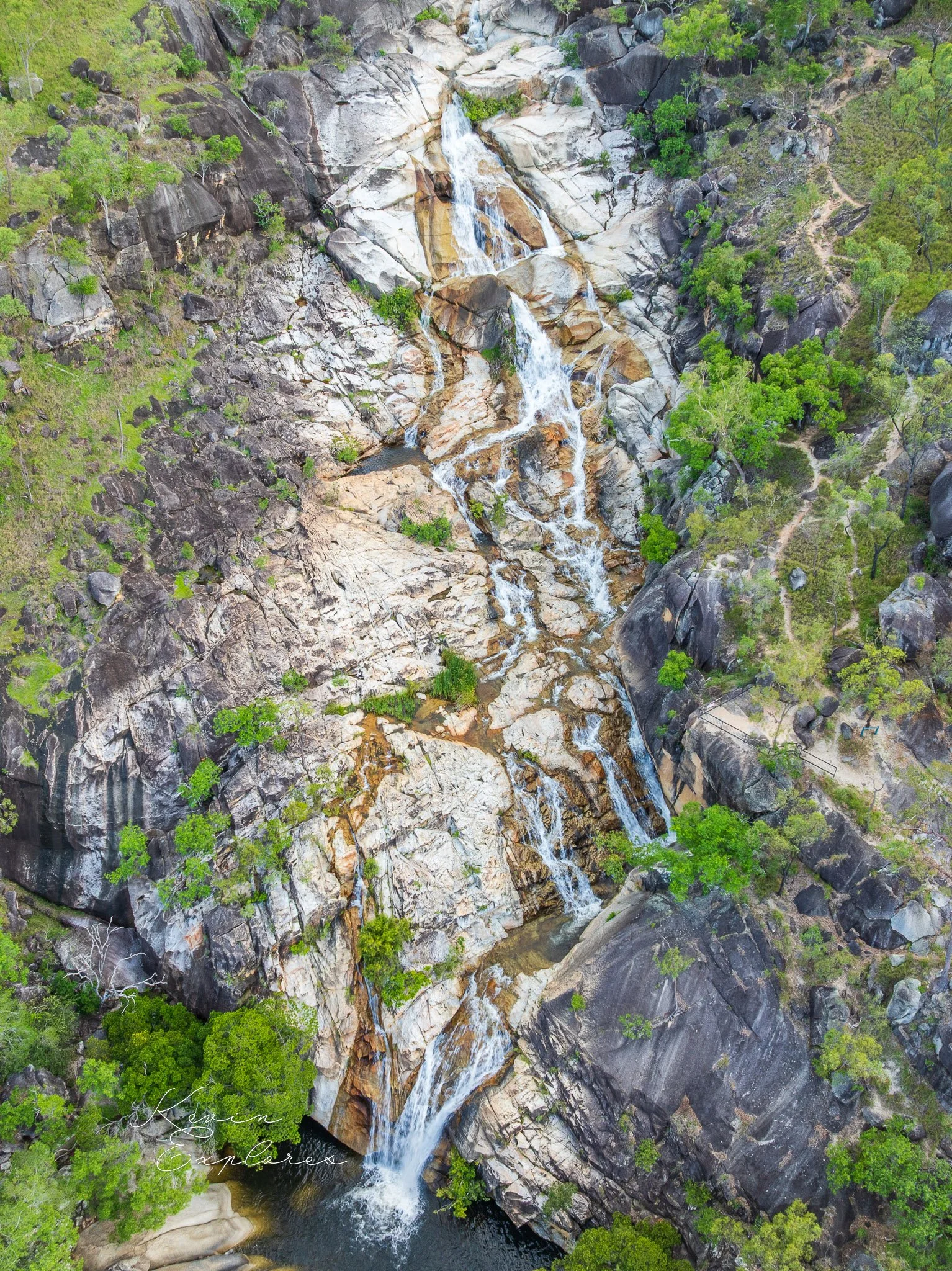
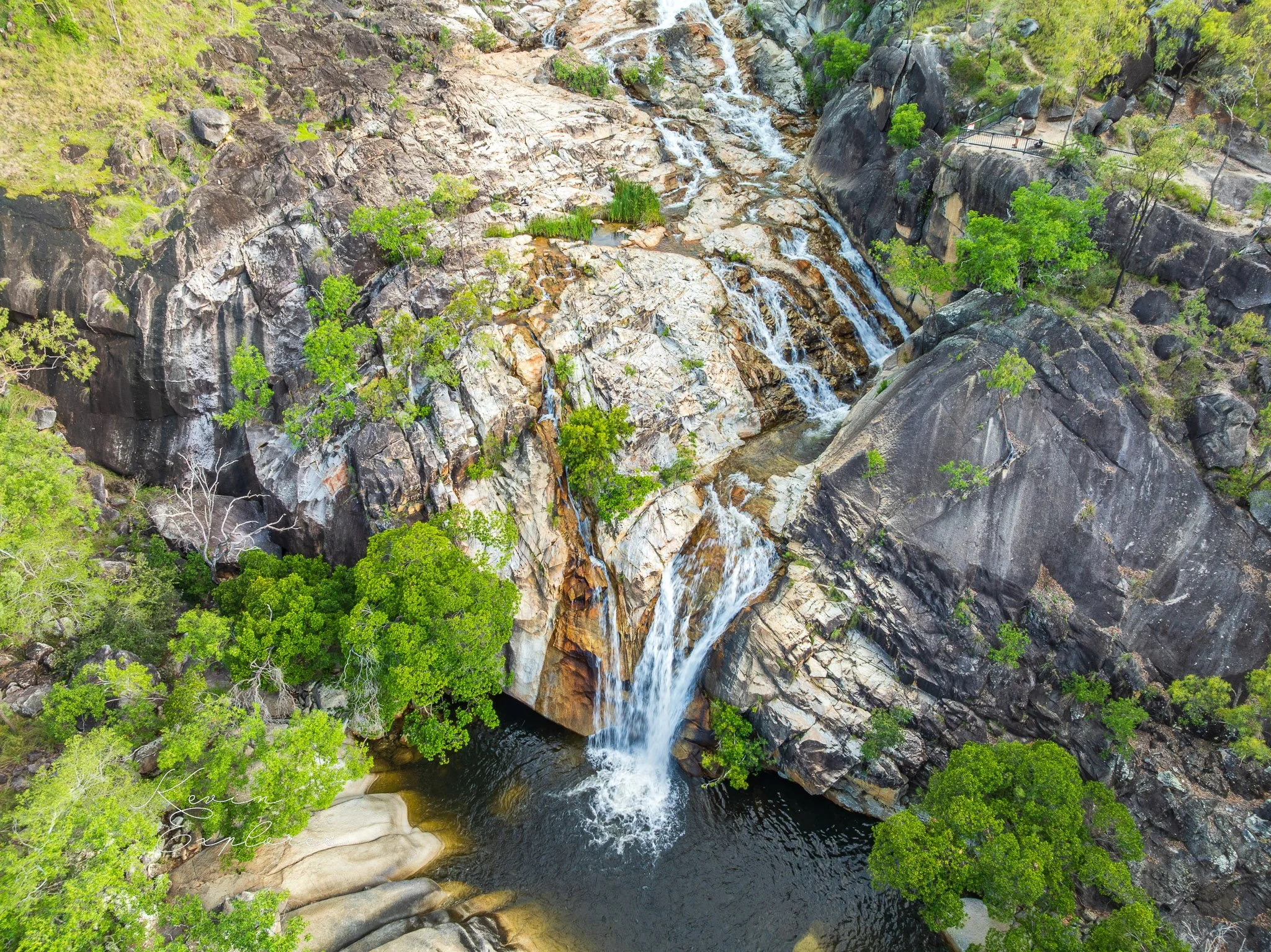
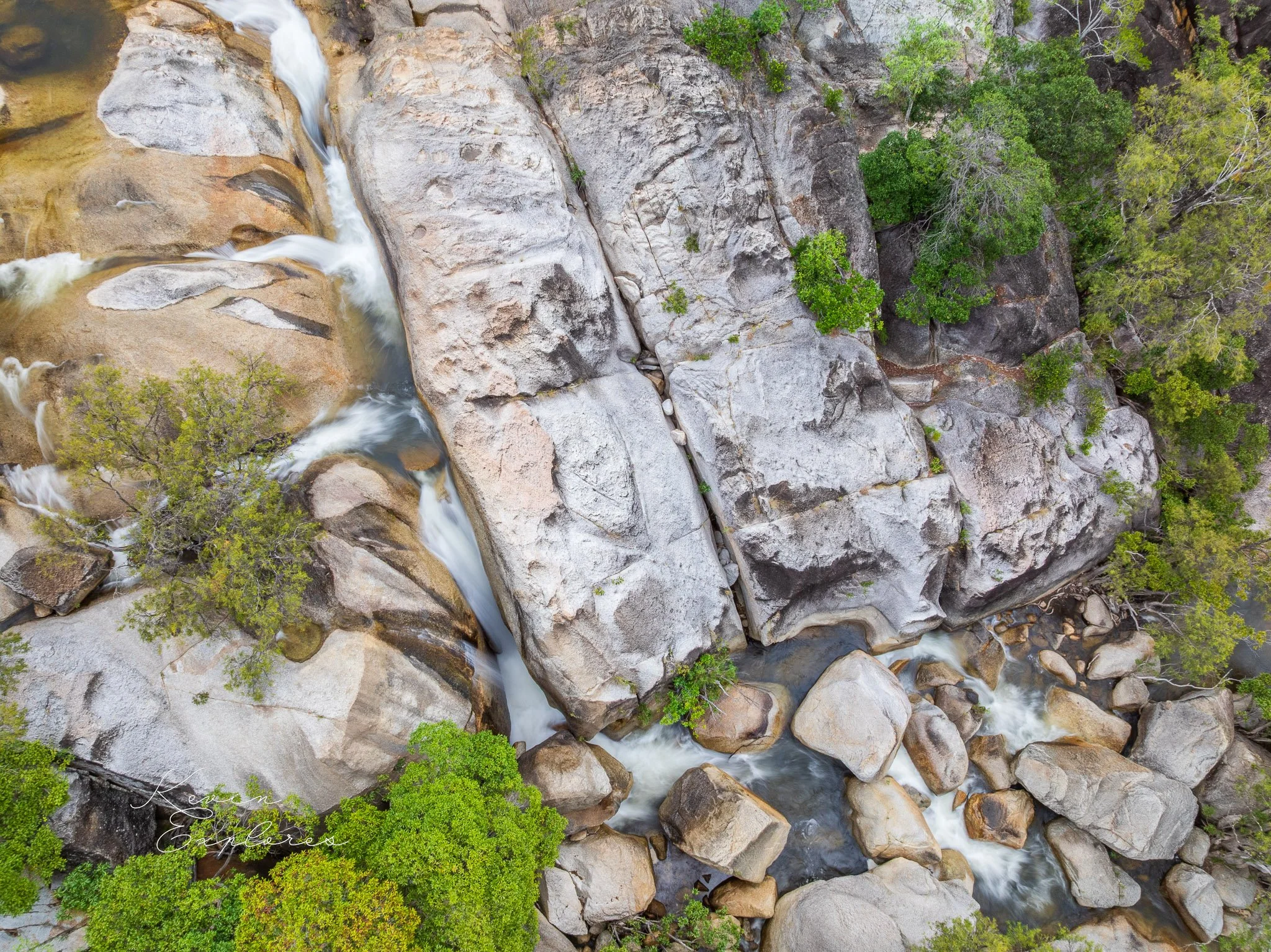
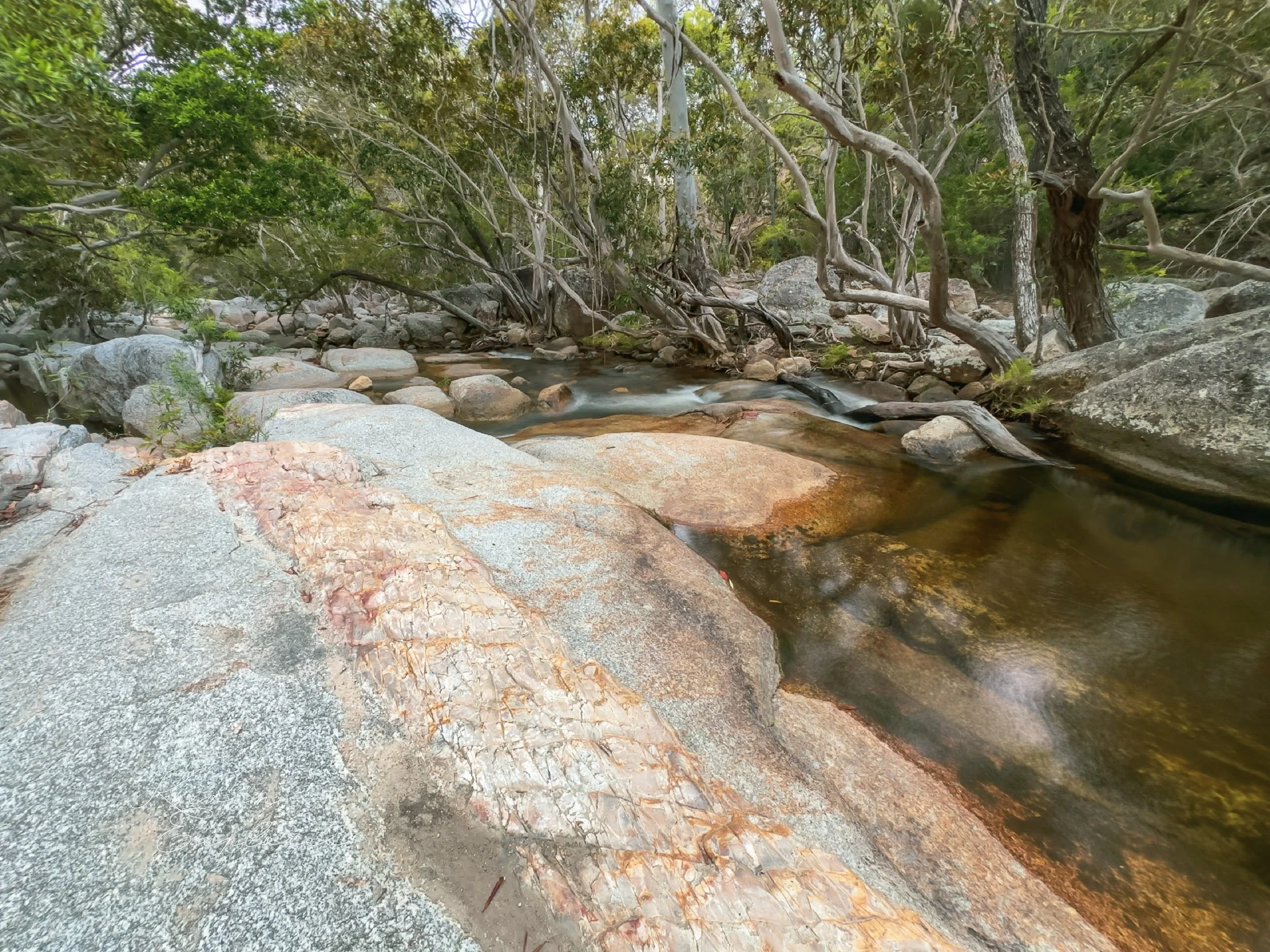
Emerald Creek flows through granite that intruded into those same metamorphic rocks millions of years later - molten magma that pushed up from below, slowly cooling deep underground. As erosion gradually stripped away the overlying rock, that release of pressure caused the granite to fracture along those geometric joint patterns you can see - which then became pathways for water to exploit and carve even deeper.
Those fractures do something else too: they create aquifer systems within the granite. Water infiltrates and moves through this network of joints, which is why these granite creeks maintain flow year-round, even through the dry season when many other creeks stop running. The flow reduces, but it doesn't stop.
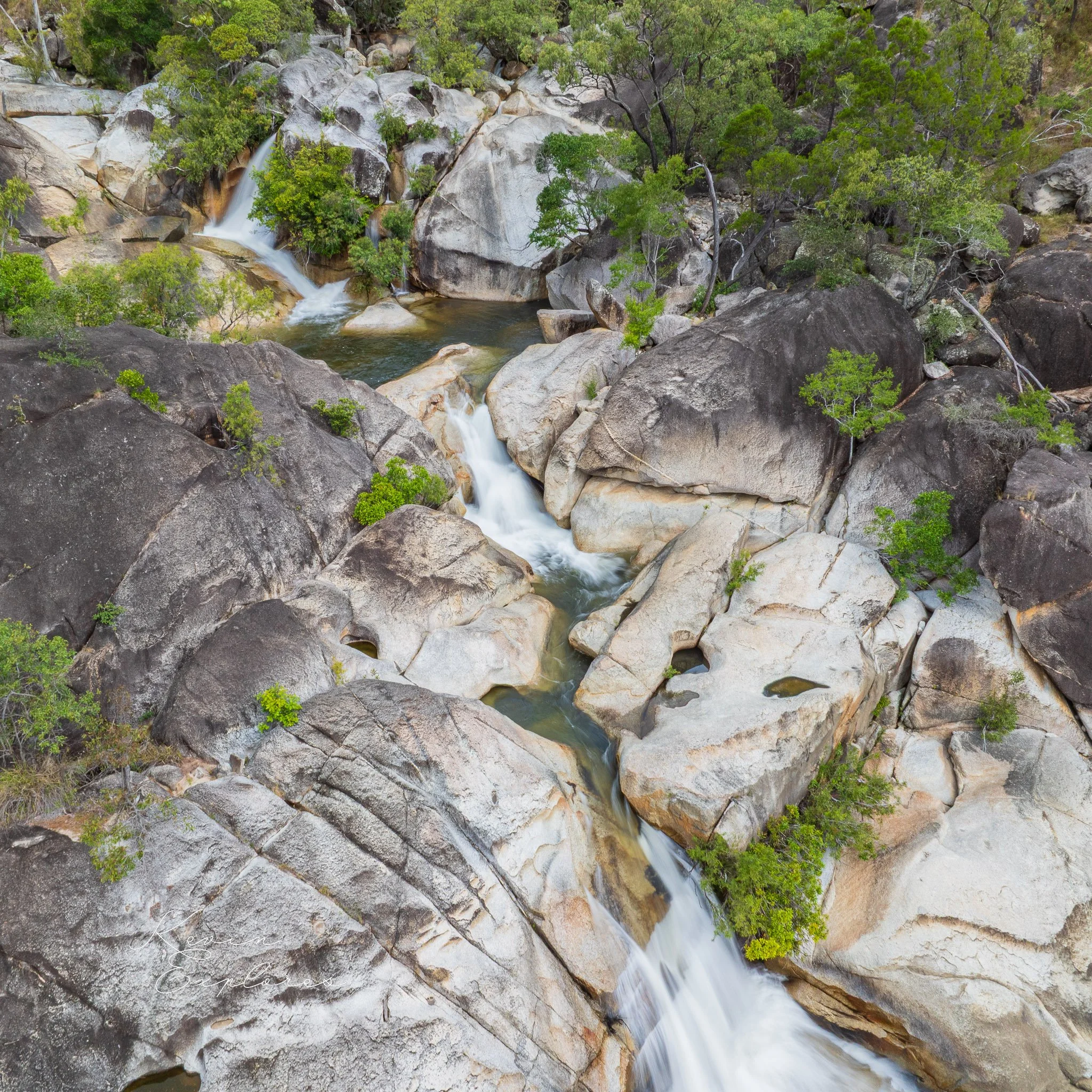
Here's something that surprised me: those rounded granite boulders you see? Much of that rounding happens underground through chemical weathering along the joint planes. Water moving through the fractures slowly dissolves and rounds the granite blocks before they're even exposed. That's why you sometimes see these smooth, rounded boulders appearing to emerge from the ground, seemingly unconnected to surrounding rock - they were shaped beneath the surface, then erosion of surrounding material revealed them and surface weathering continues shaping them further.
The differences you can see: Granite creates those blocky, stepped cascades where water moves across angular benches and pools. The rock itself is lighter - greys and pinks rather than the darker, denser metamorphic tones at Barron.
Those lines cutting through? Dykes - even younger injections of molten rock that sliced through the already-solid granite. At Emerald Creek, the major waterfall flows over a 35m wide diagonal dyke. The dyke rock is harder and more resistant to erosion than the surrounding granite, creating a natural barrier that the creek cascades over.
Next up in this series: how water behaves completely differently again when it flows over basalt - the youngest volcanic rocks on the Tablelands. Three rock types, three distinct waterfalls, three windows into the geological history beneath our feet.