Geological Events Contributing to Fracturing at Emerald Creek
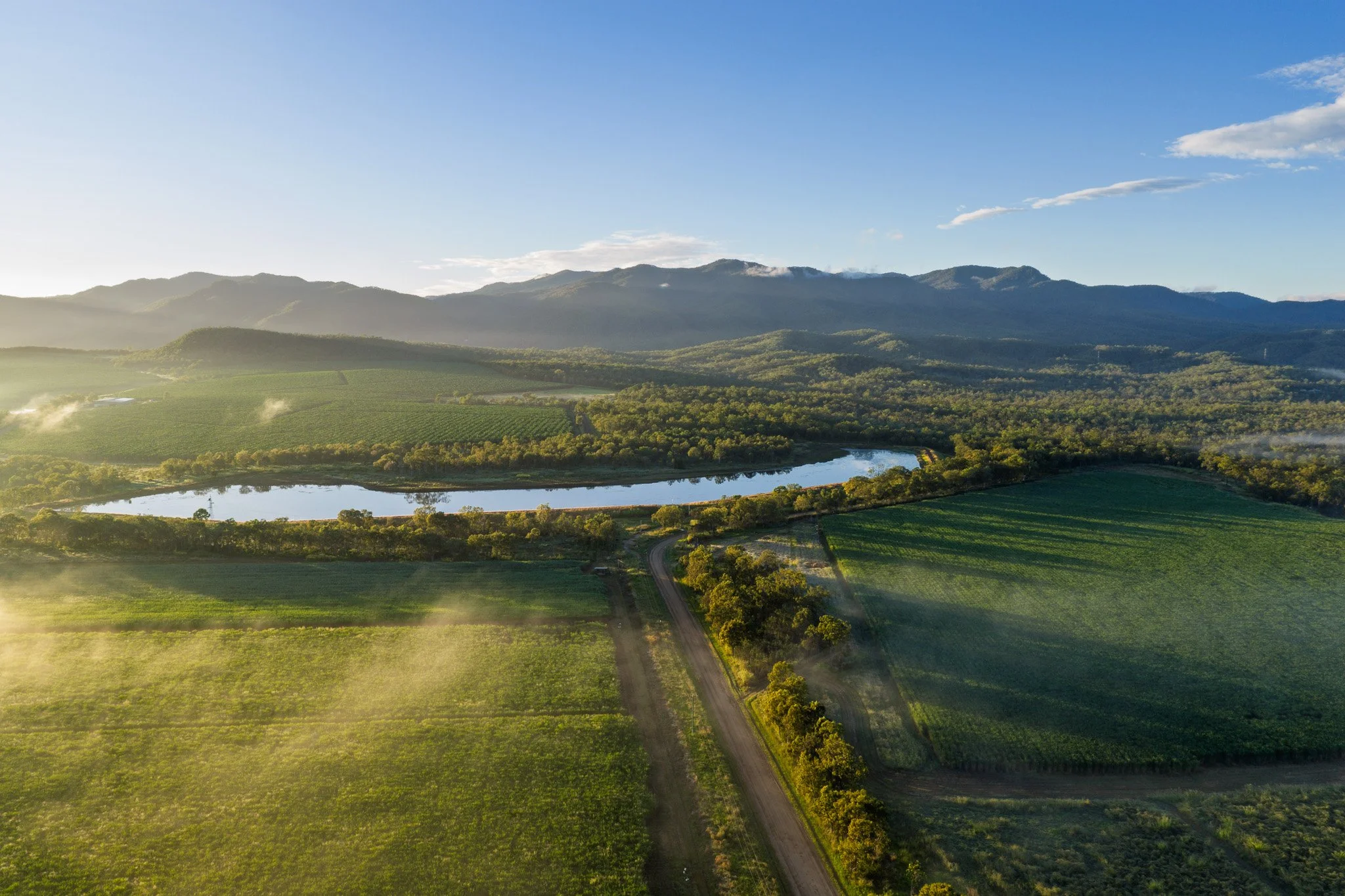
Event 1 - An ancient sea floor
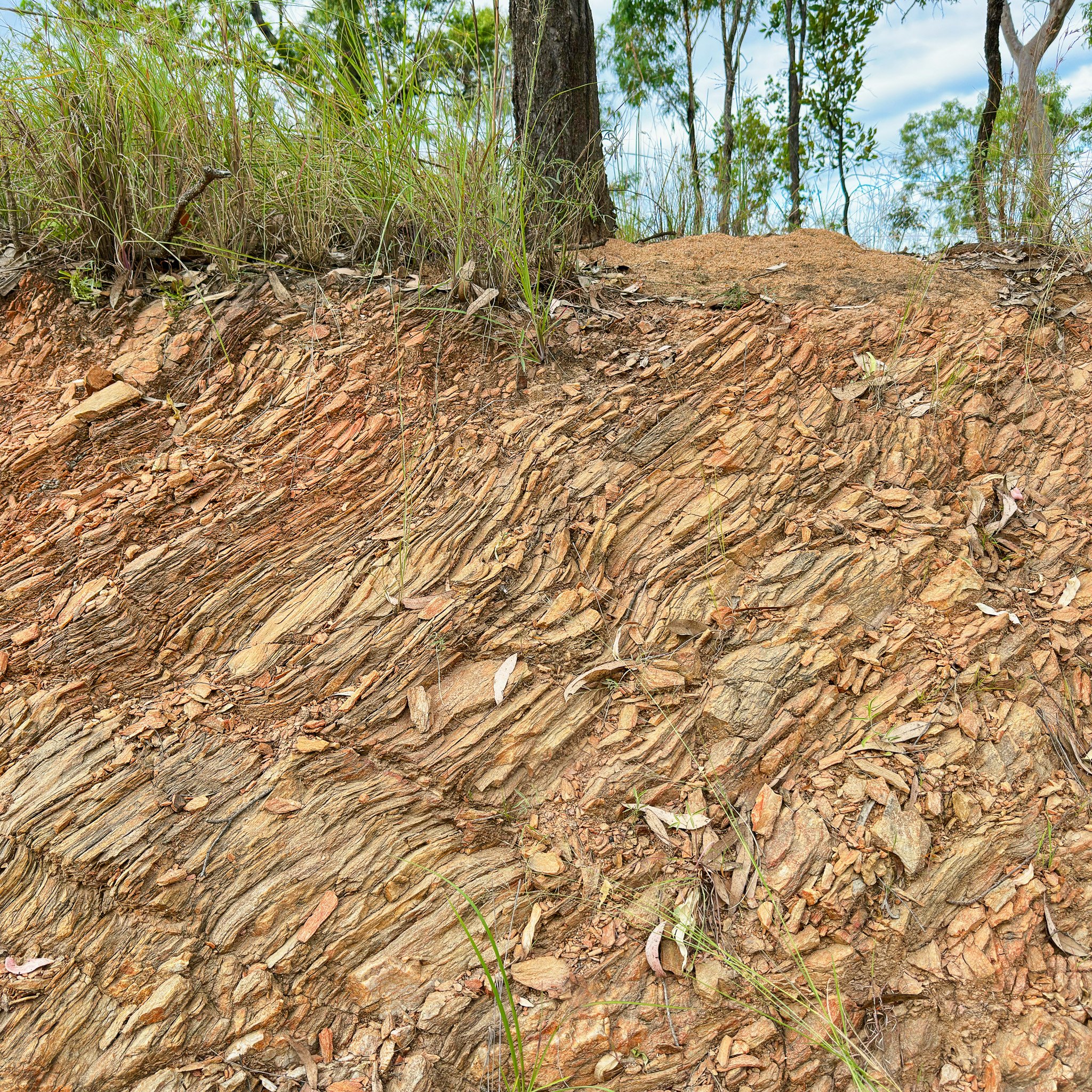
Long before the events that shaped the rocks we see today, the area that is now the Atherton Tablelands lay beneath an ancient ocean. Mud and sand accumulated on that ocean floor over an extended period, building up thick sequences of sediment. These sediments are the origin of the Hodgkinson Formation — the ancient country rock into which everything else was later intruded. The evidence for this ancient sea floor is visible today on the drive in to Emerald Creek Falls — the thinly layered, steeply tilted rock exposed at the road cutting on Emerald Falls Road is those same sediments, transformed almost beyond recognition by everything that followed.
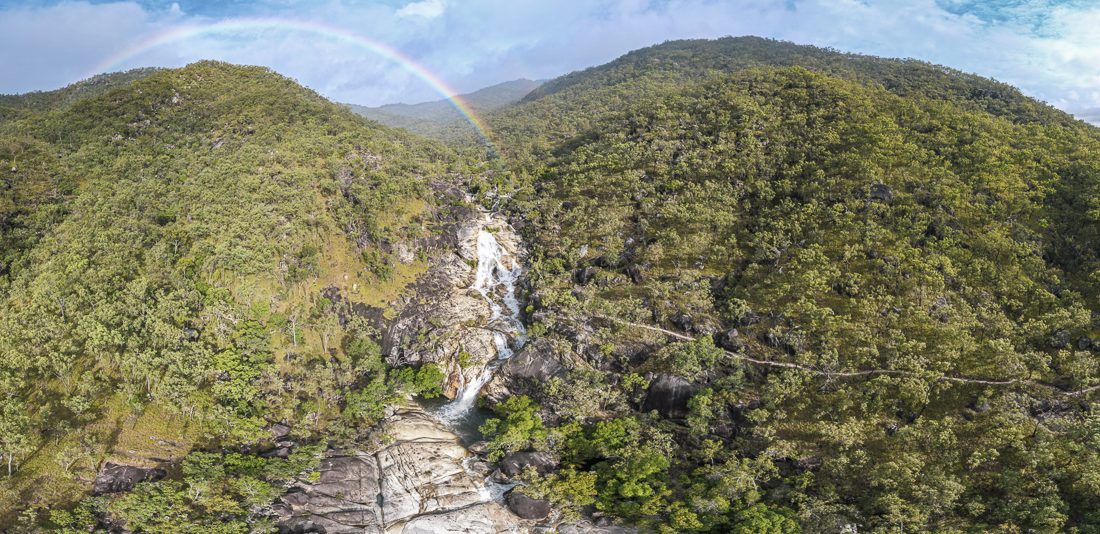
Event 2- Kanimblan Orogeny, ~300 million years ago
Powerful compressional forces deformed the Hodgkinson Formation sediments — folding, faulting and metamorphosing them into the schist visible today at the road cutting. This inscribed the first major fracture network into the rocks of the area — the regional joint sets that would subsequently control everything that followed. The dominant joint orientations on the creek bed slabs likely originate here.
Event 3 - Intrusion of Emerald Creek Microgranite
A body of magma rising through the crust encountered the Hodgkinson Formation and exploited its pre-existing fracture network to move upward and outward. It eventually pooled and crystallised as the Emerald Creek Microgranite pluton — believed by Willmott to be older than the surrounding Tinaroo Granite, though this is not certain. As the granite cooled and contracted it developed its own additional cooling joints superimposed on the fractures already present in the ancient rock.
It is worth pausing to picture where all of this was happening. These intrusions were not surface events. The magma was forcing its way through rock kilometres below the ground surface under enormous pressure. The schist, the granite, the aplite dykes — all of it solidified deep underground. What we walk on today at Emerald Creek was once buried beneath kilometres of rock that no longer exists, removed grain by grain over hundreds of millions of years of erosion until the creek and the waterfall and the slab surfaces were finally exposed.
Event 4 - Intrusion of the aplite dykes
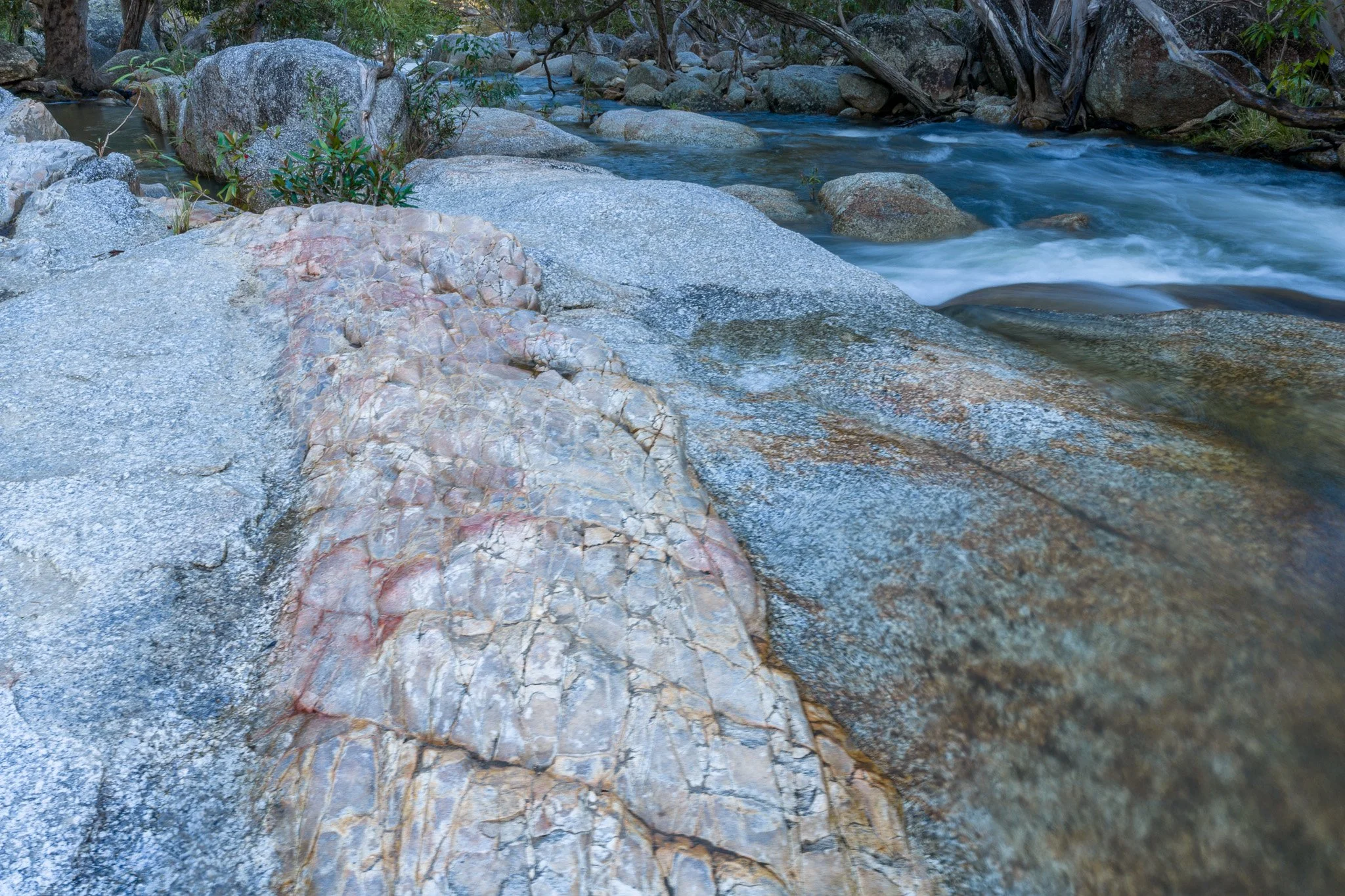
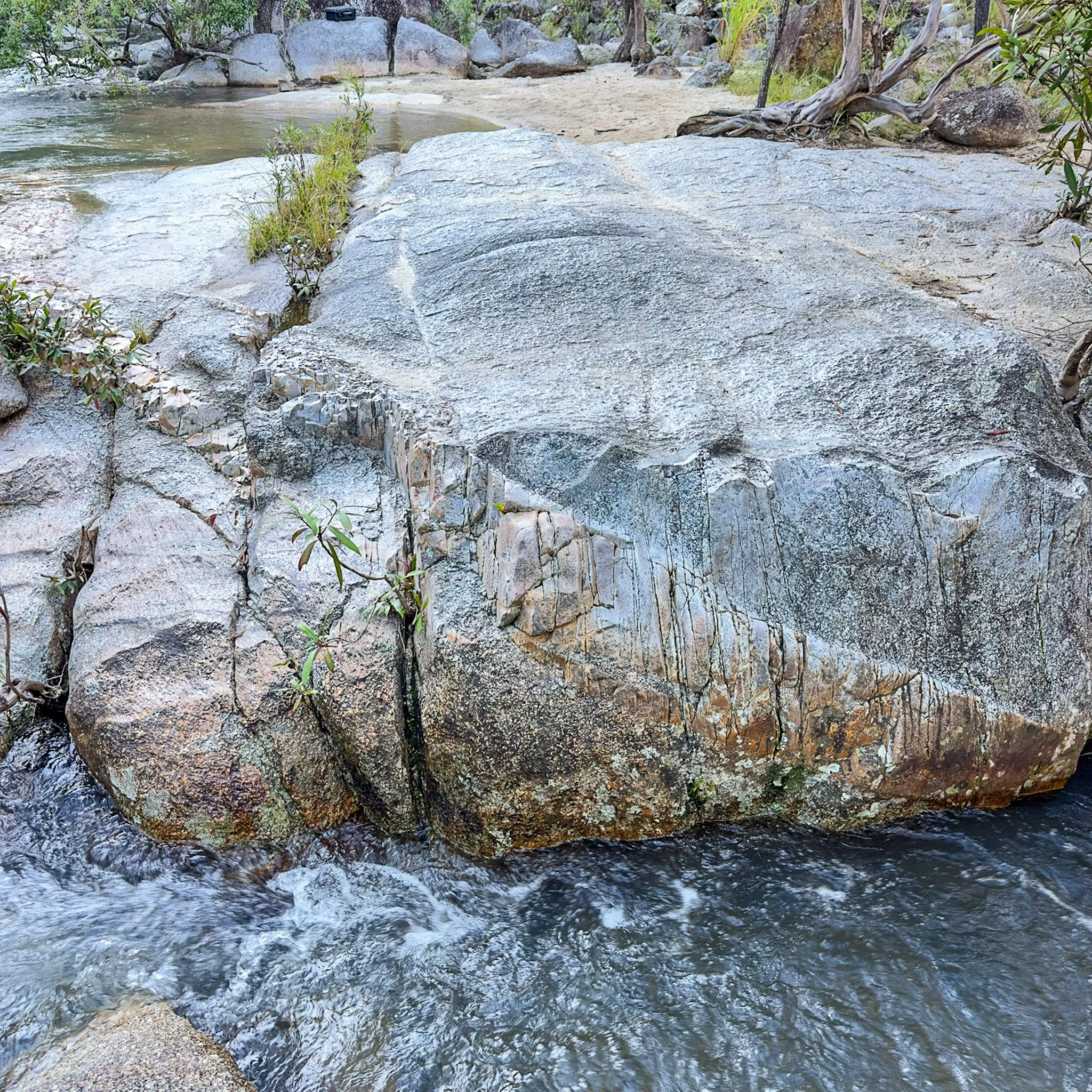
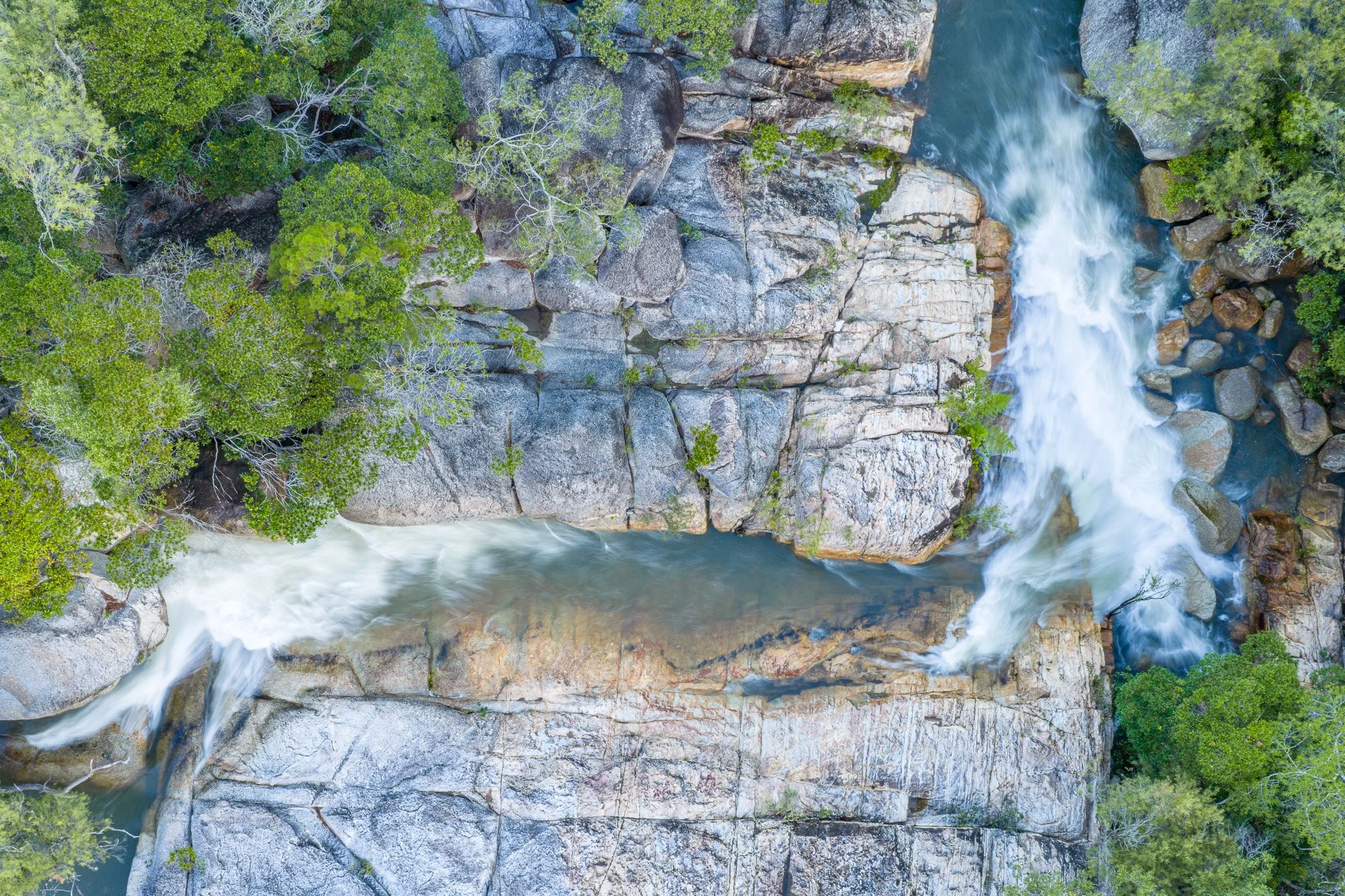
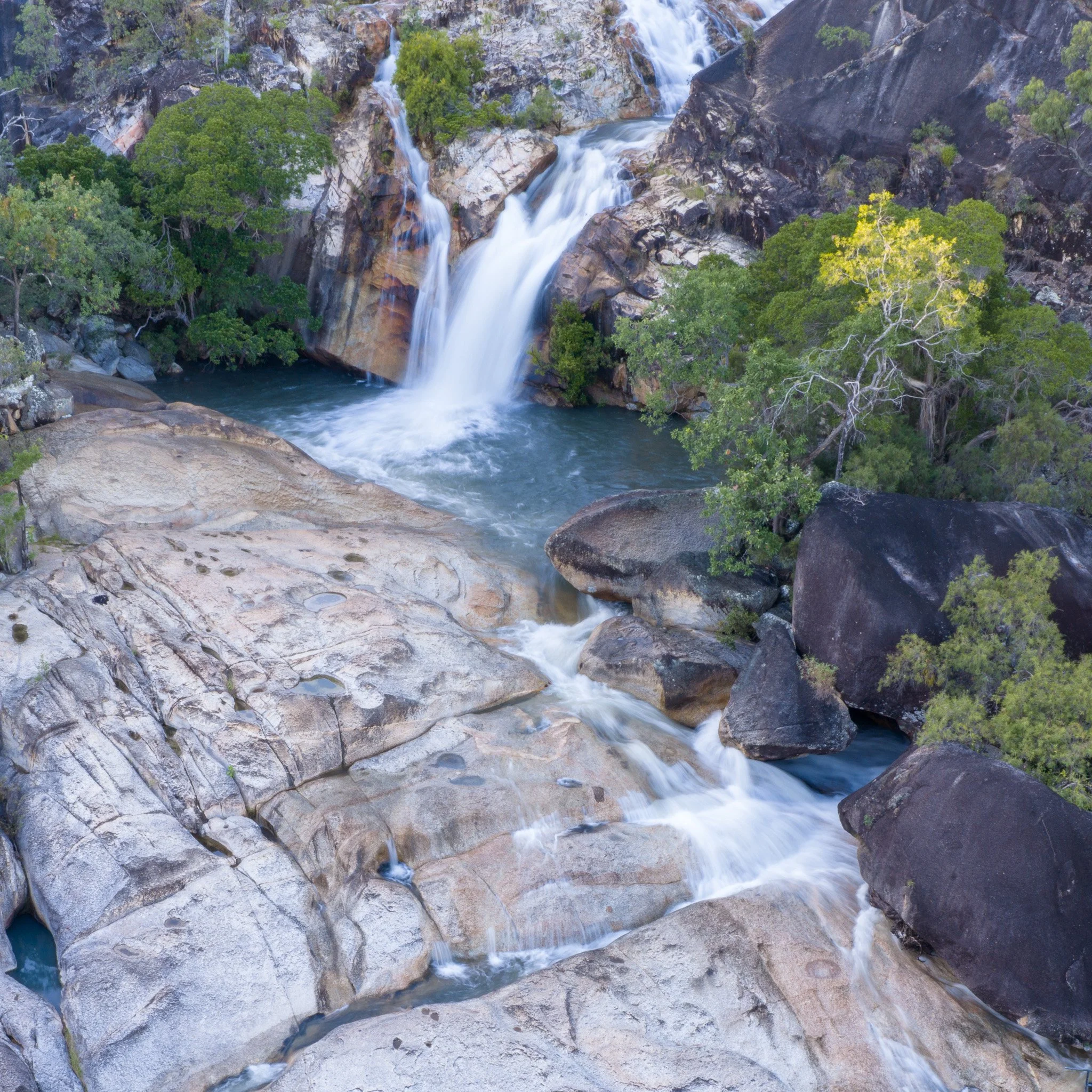
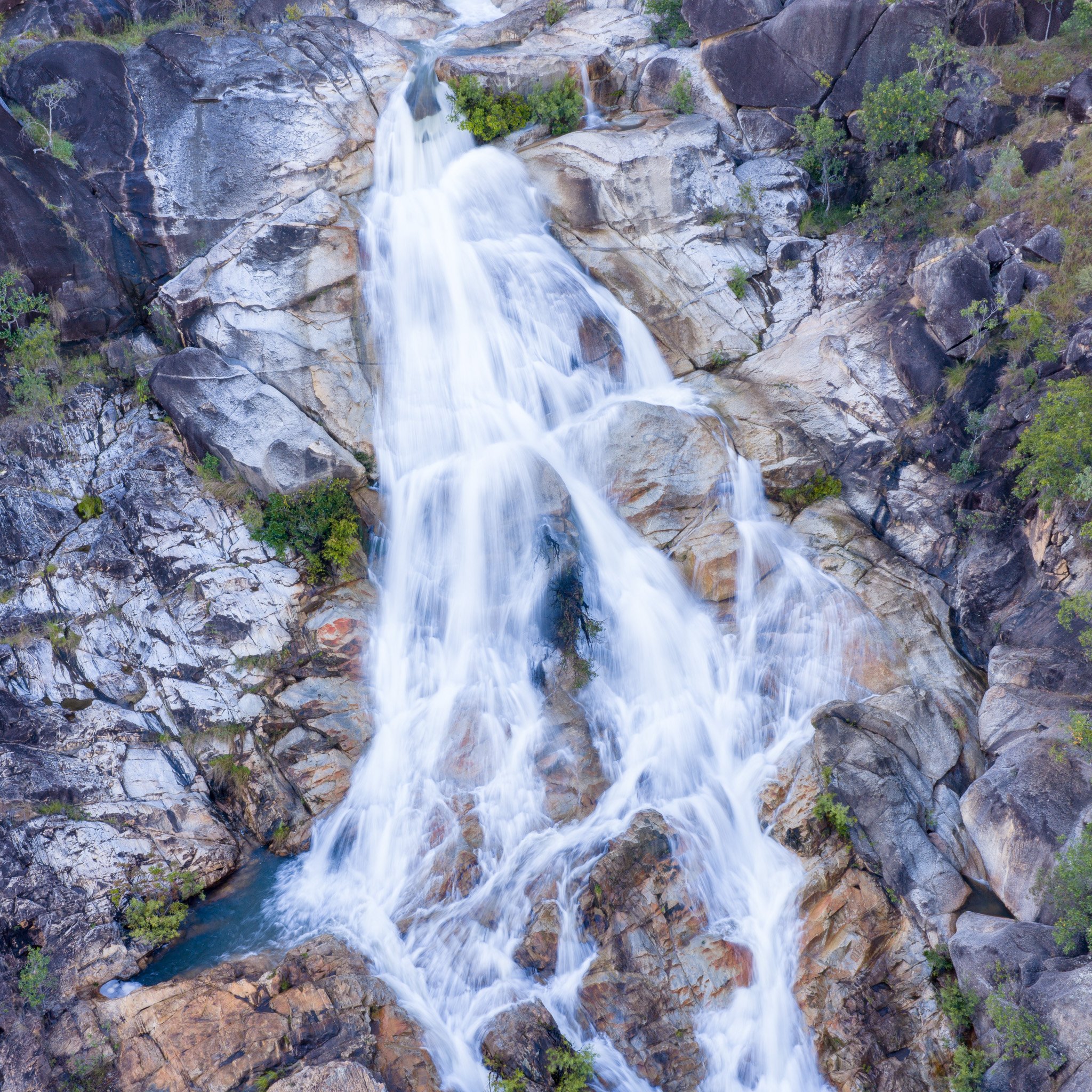
Later pulses of residual magmatic fluid — water-rich, silica-rich, and fast cooling — exploited the existing fracture network to intrude as flat sheets across and through the microgranite. Multiple aplite dykes are present at Emerald Creek: the main falls dyke, over 30 metres wide and more resistant than the surrounding microgranite, which Willmott identifies as creating the main waterfall drop; and smaller pink aplite dykes visible in the creek bed downstream.
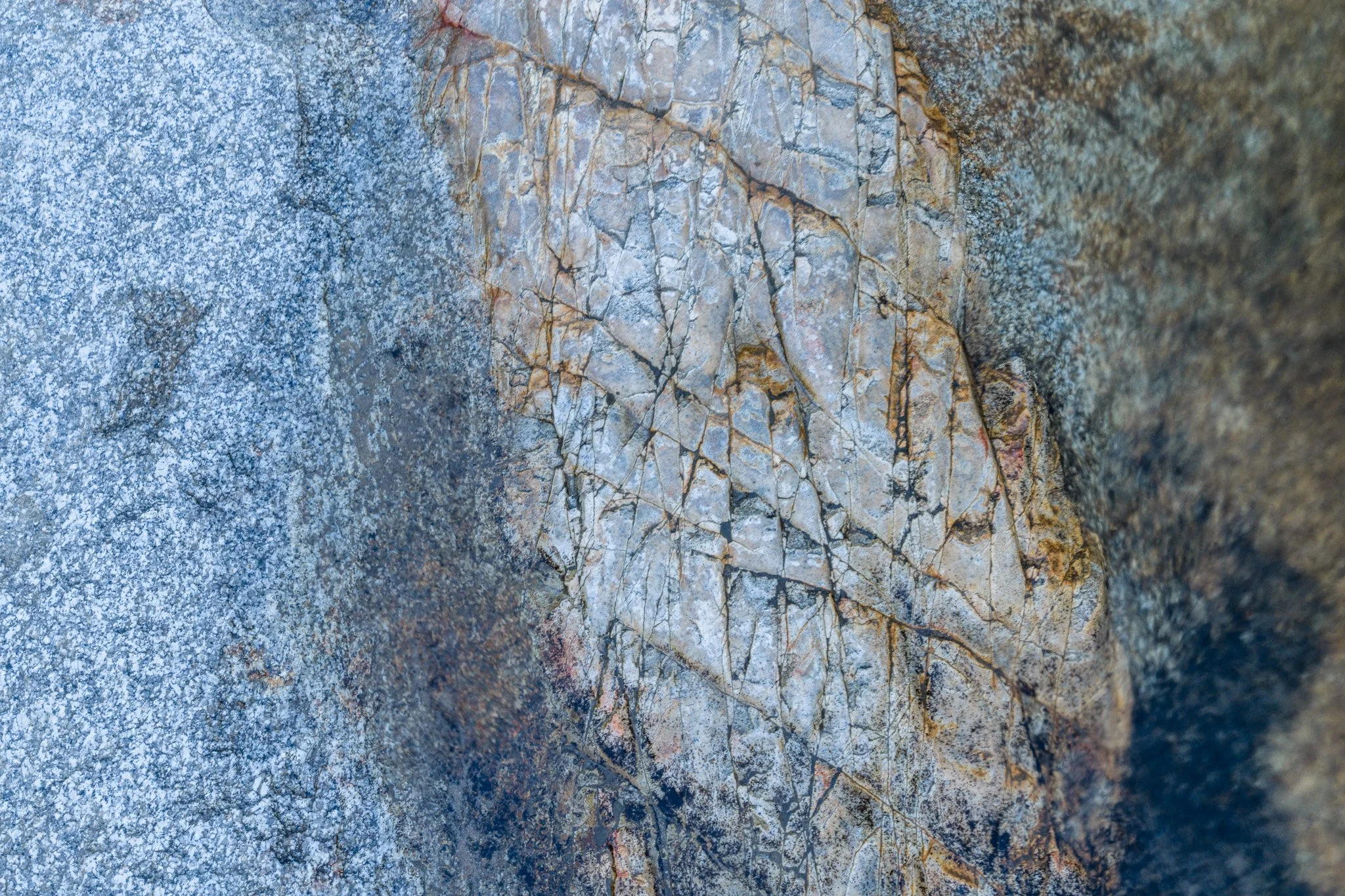
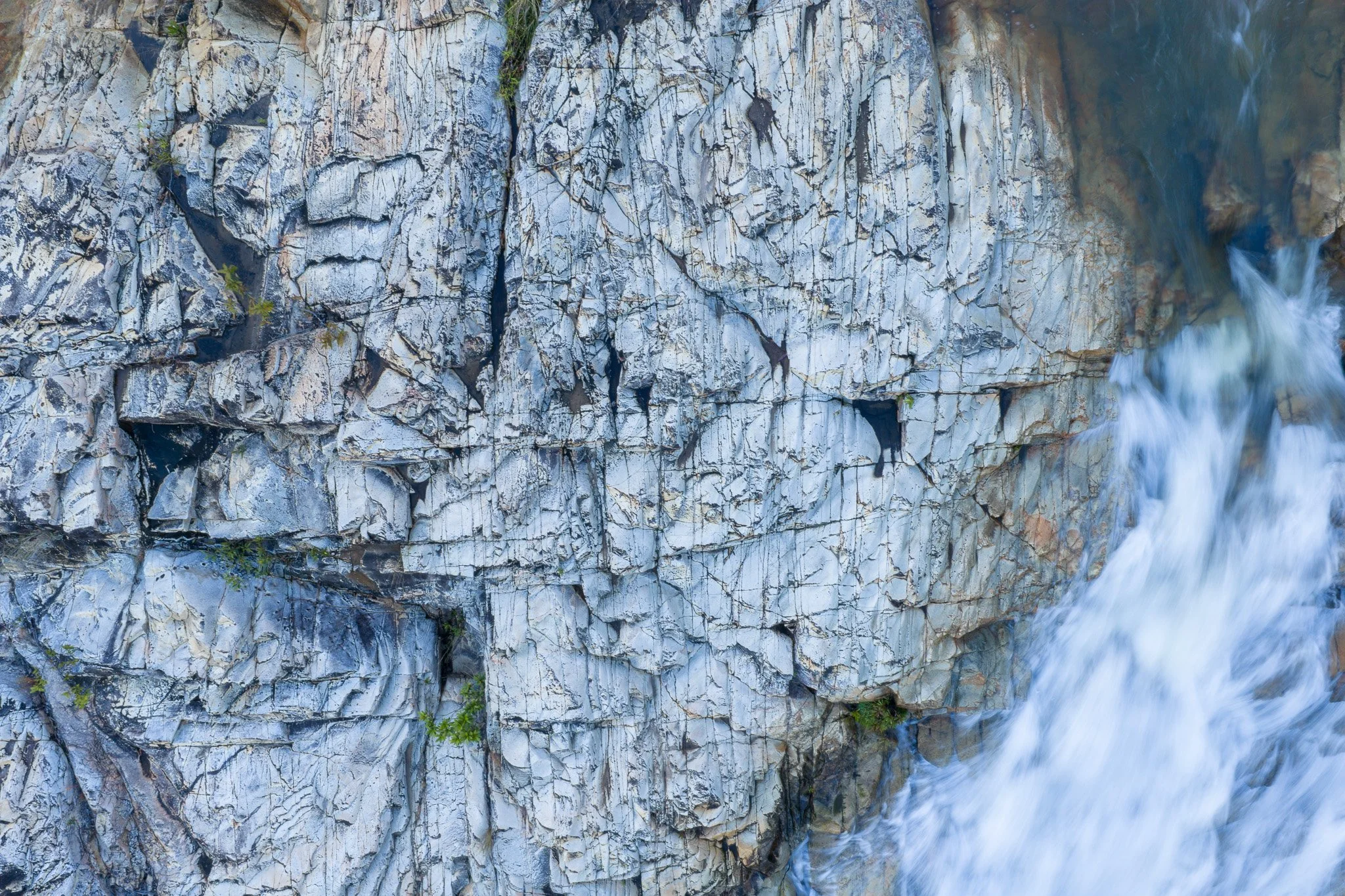
On cooling, each dyke developed its own internal fracture network. The fracture pattern within the aplite is distinctly more intense and regular than in the surrounding microgranite — a direct consequence of the fine-grained homogeneous nature of the rock allowing fractures to propagate in very straight lines. The sharp contact between dyke and host rock is clearly visible in some images.
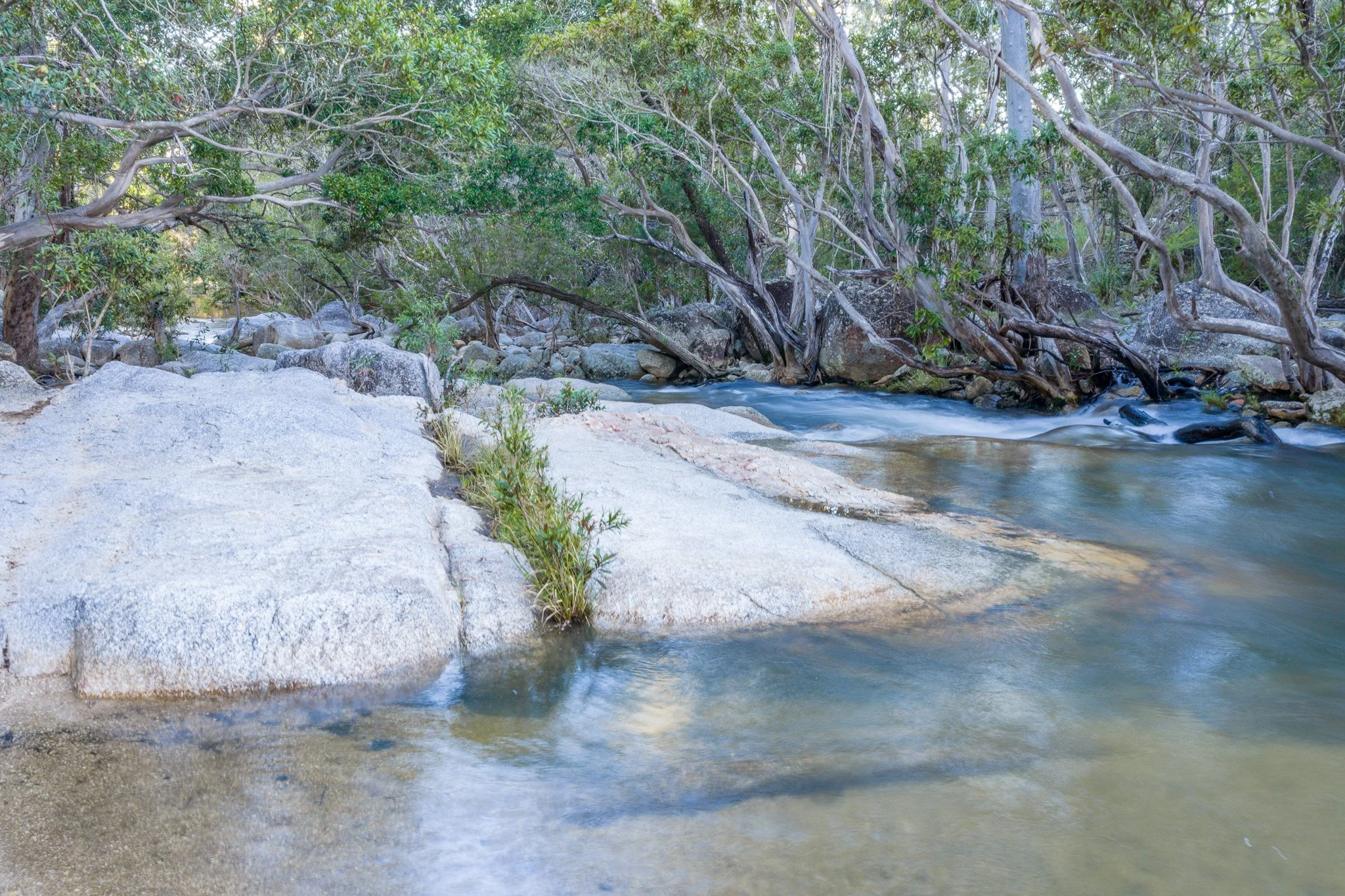
Event 5 - Erosion, pressure release and further fracturing
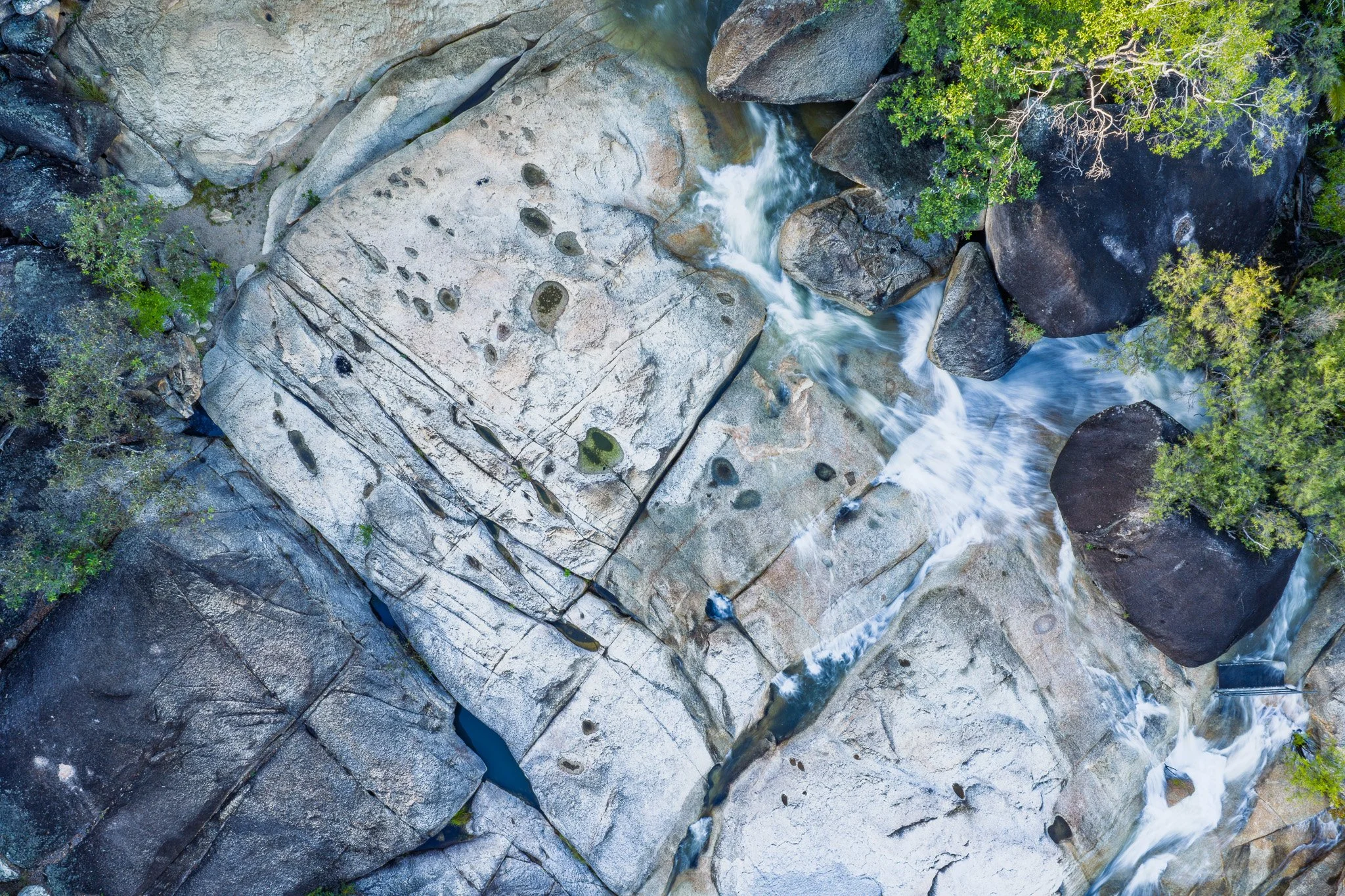
As millions of years of erosion stripped the overlying rock, pressure on the granite below was progressively released. The granite expanded upward and developed sheeting joints broadly parallel to the surface and to the original dome geometry of the intrusion — producing the broad flat slab surfaces visible upstream of the falls.
The same pressure release process also affected the aplite dykes, which responded differently to unloading than the surrounding coarser granite. Additional fractures developed within the already-jointed dyke rock. Whether these represent pressure release fractures, longitudinal cooling contraction along the dyke length, or a later tectonic stress event cannot be determined from images alone.
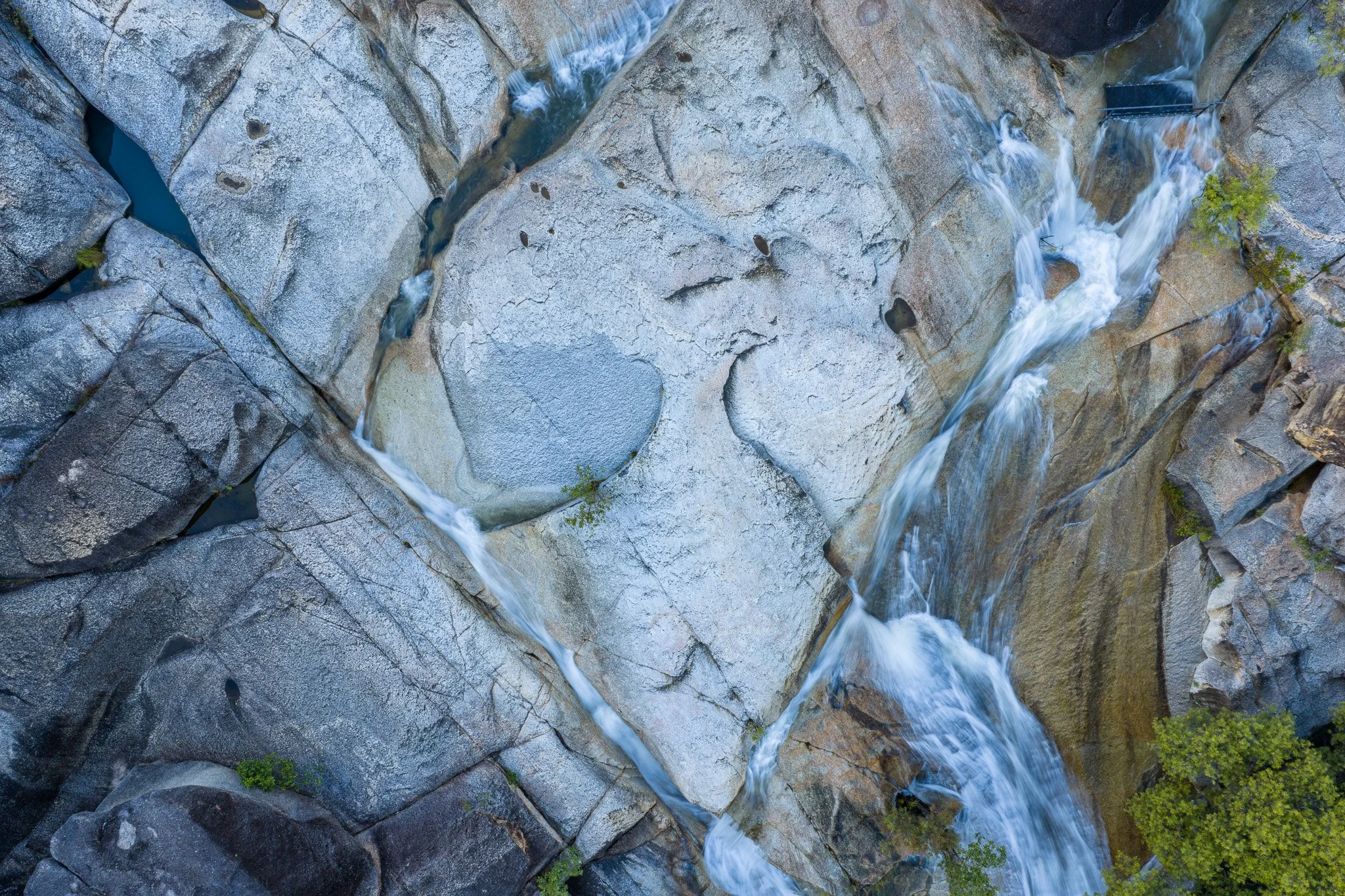
What is clear is that the cumulative result of all fracture generations is visible in the ground level close-up images — multiple intersecting fracture sets of different orientations and ages, stained by mineralised fluids, dividing the aplite into angular blocks that are now being progressively removed by the creek.
What the visitor sees today
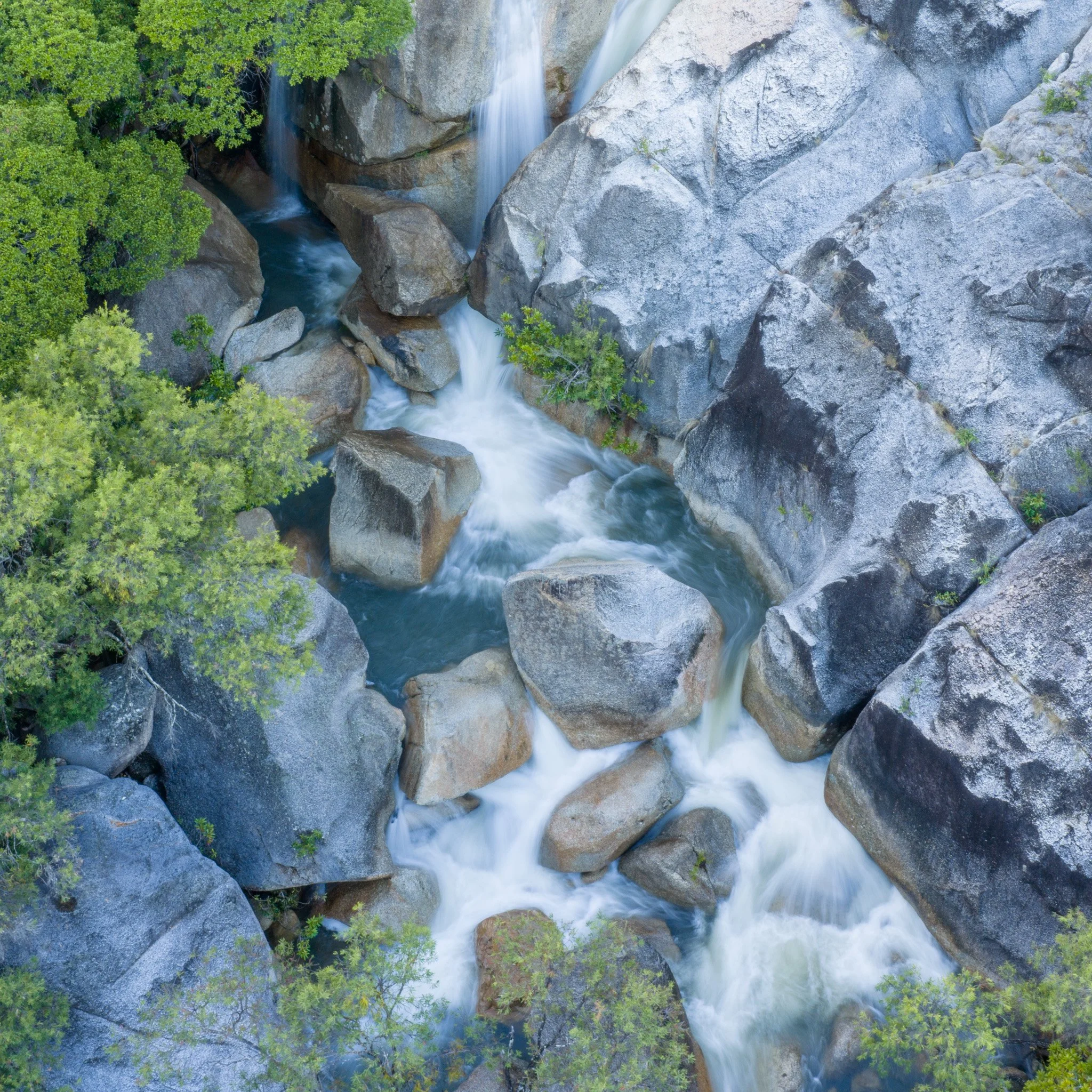
The landscape at Emerald Creek is the cumulative expression of all four events simultaneously. The flat slabs are Event 5. The rectangular fracture grid on the dyke faces is Event 4. The orthogonal joint traces controlling the creek path are Events 2 and 3. The waterfall exists because Event 4 delivered resistant rock across the creek’s path. And the creek — patient, persistent, exploiting every fracture in the system — is the ongoing fifth event, still writing the next chapter.
The next chapter about Emerald Creek Falls (work in progress) is Surface Features on the Granite Slab — Fluvial Erosion Impacts.
Follow me on Substack for more field notes - https://kevinexplores.substack.com/