Fungi and Geoscience: A Strange Story
From Lake Eacham to Mt Mulligan
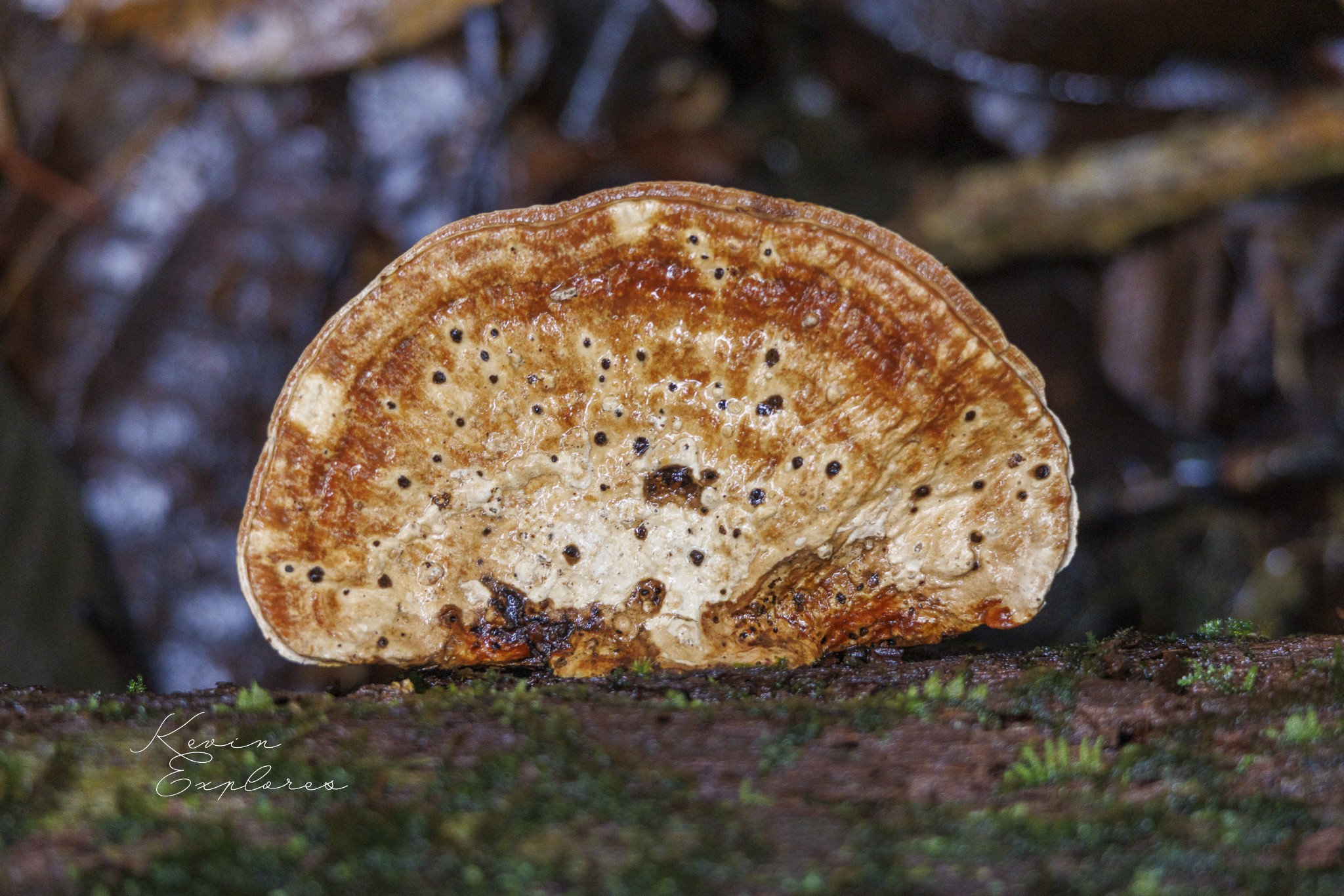
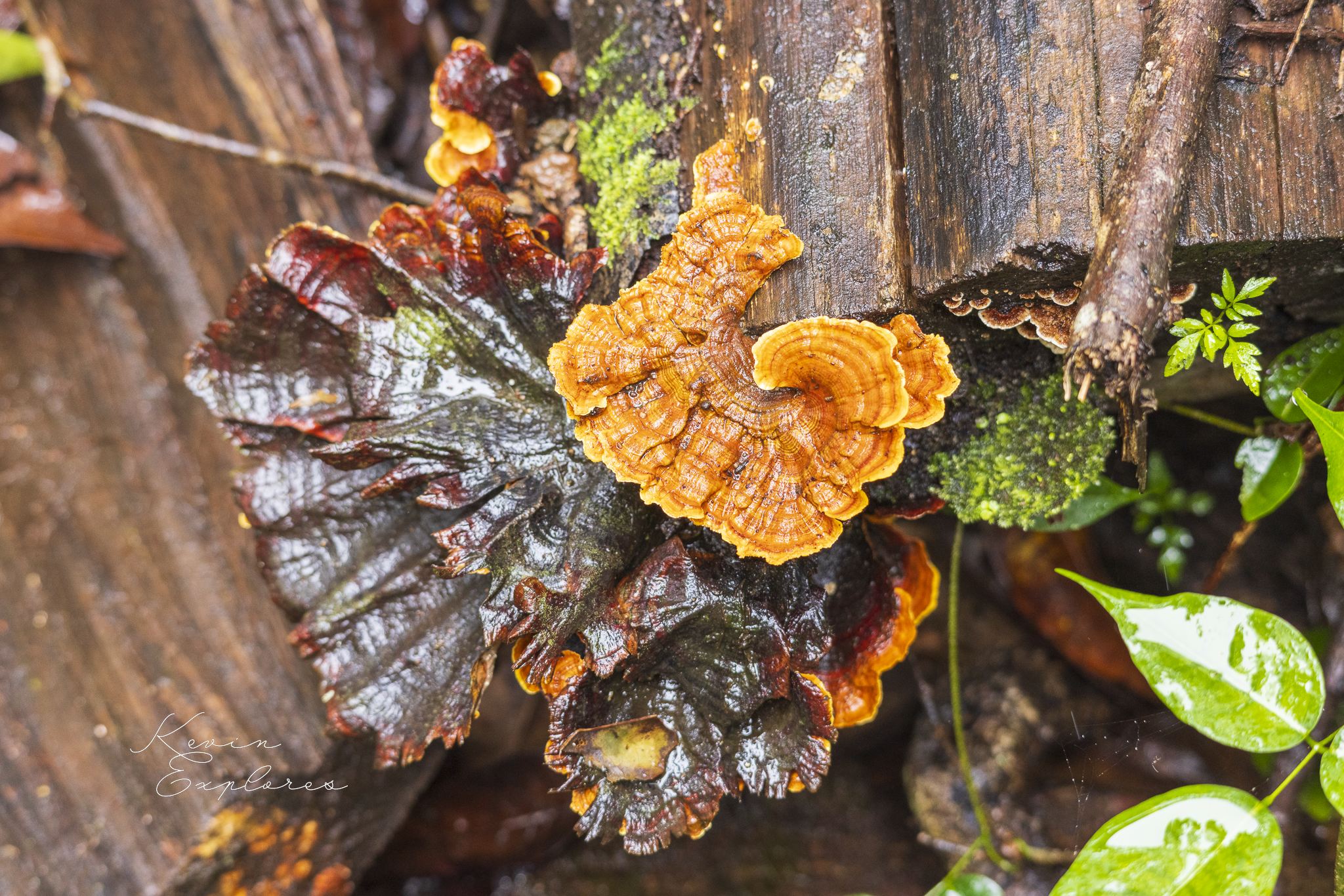
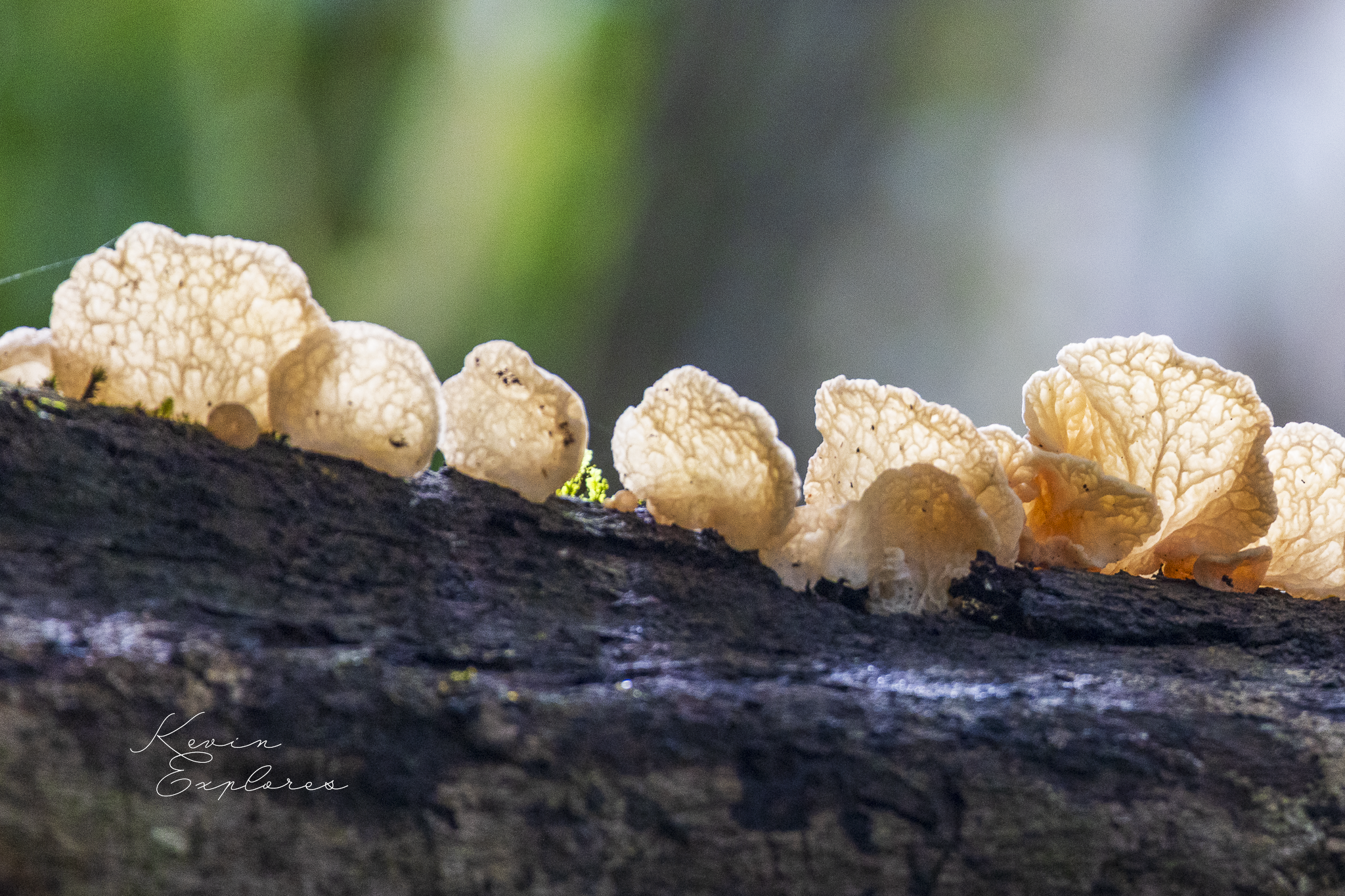
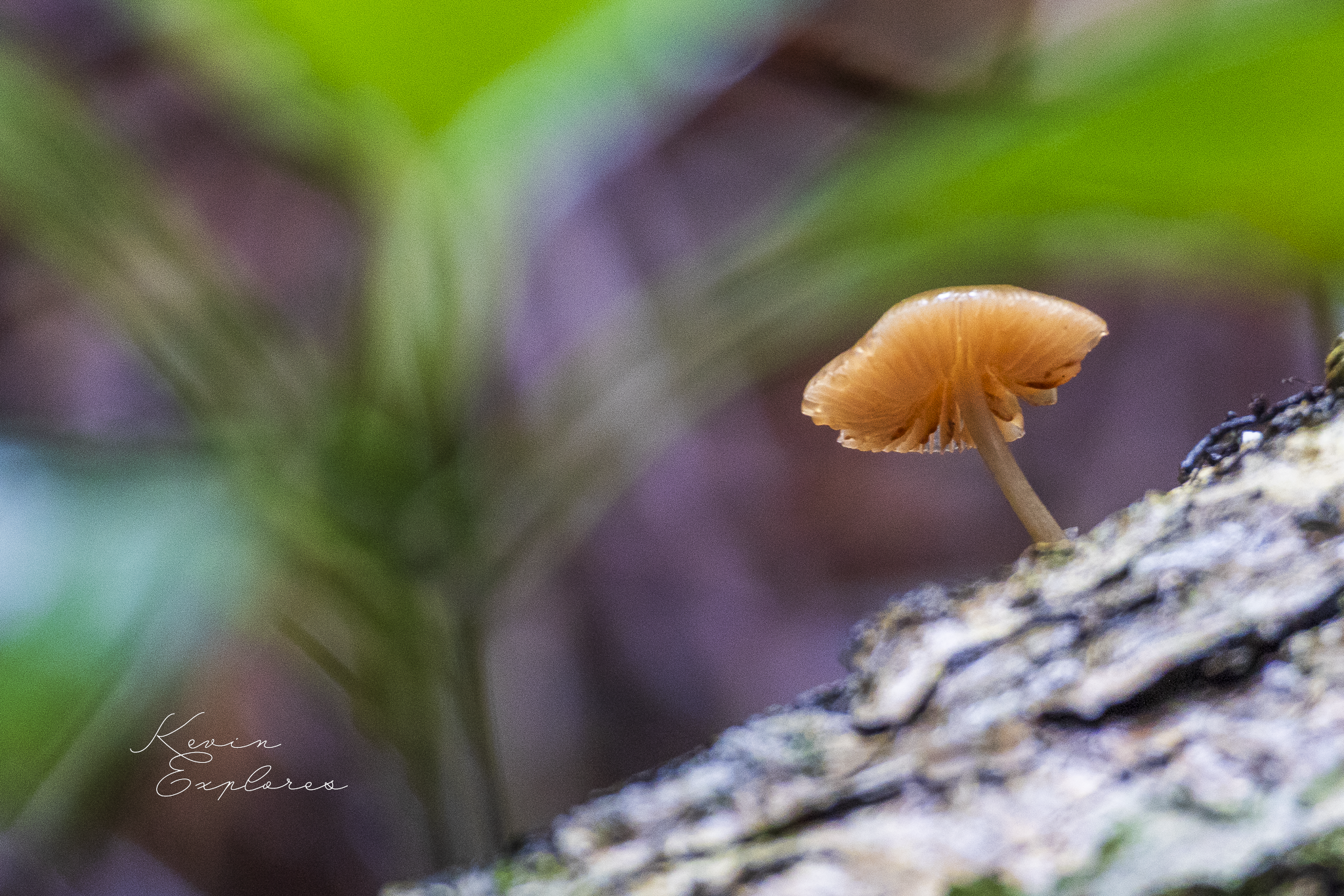
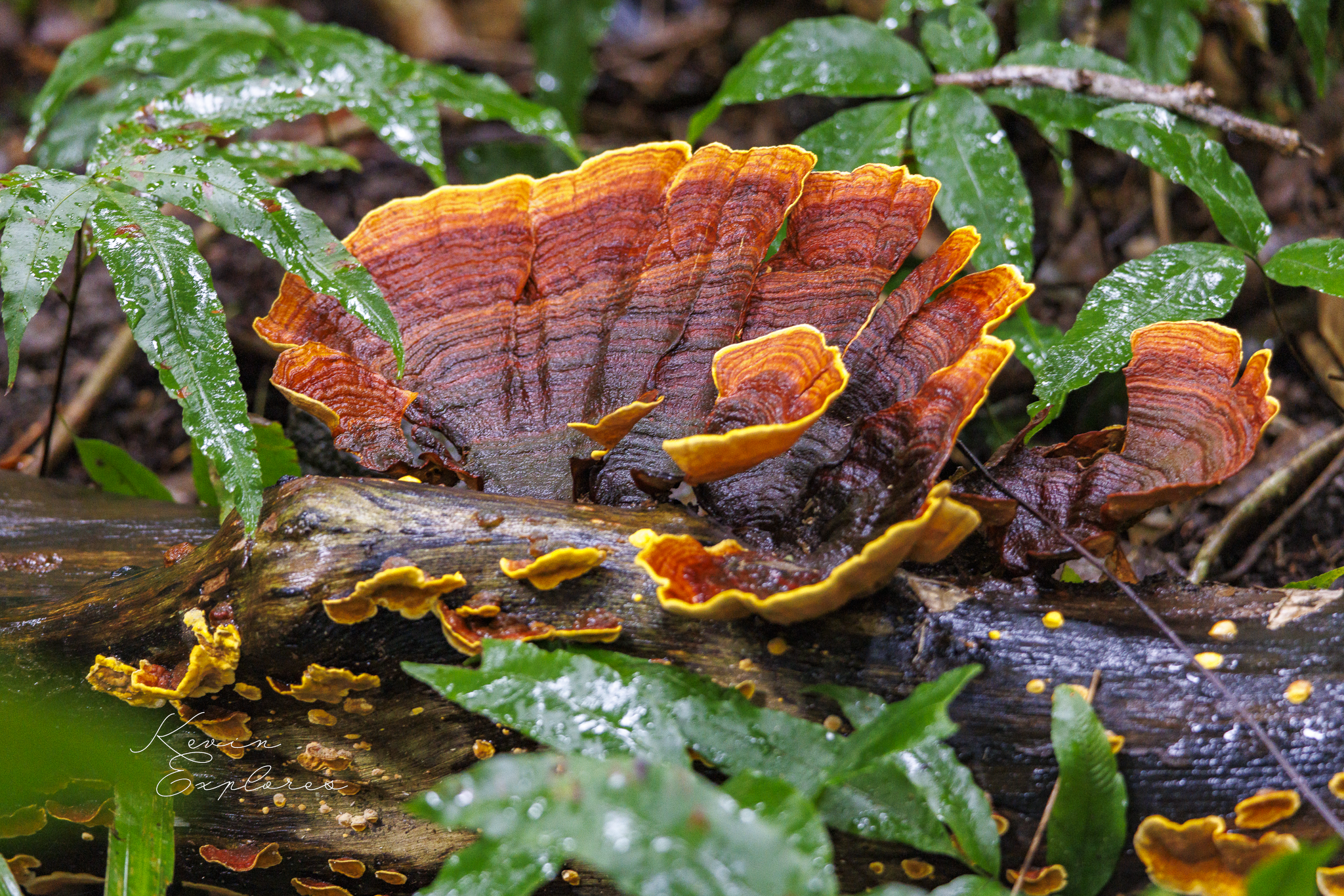
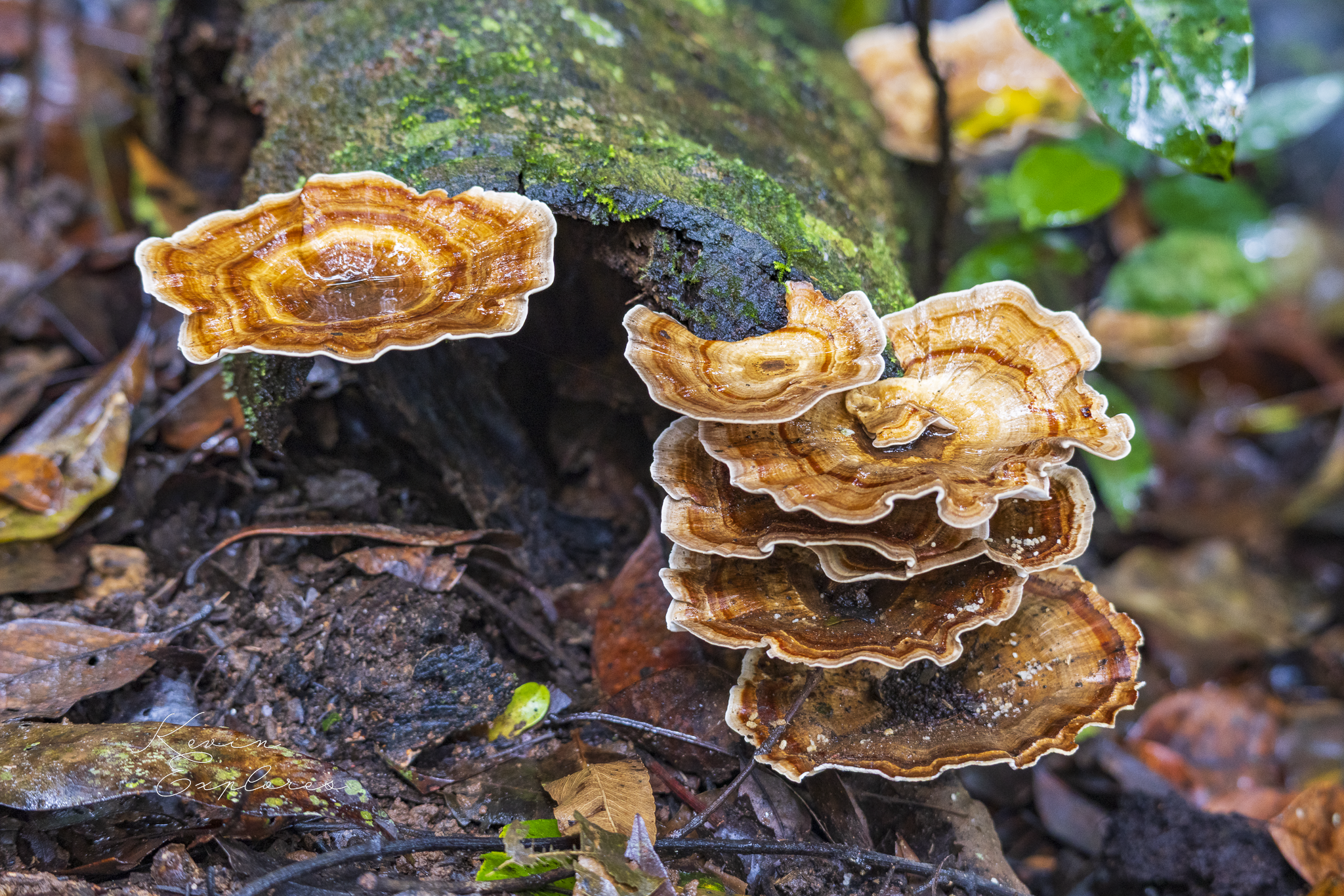
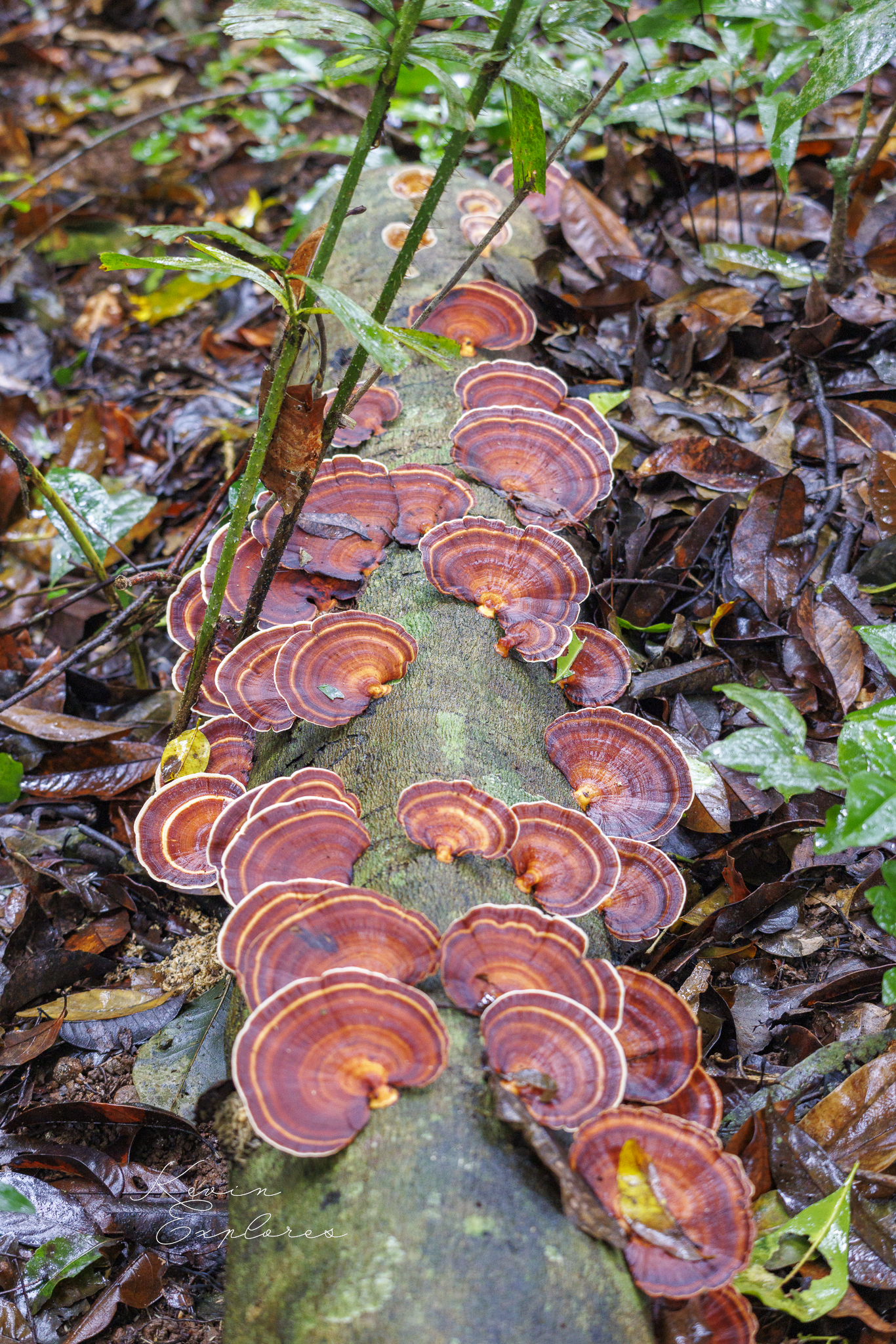
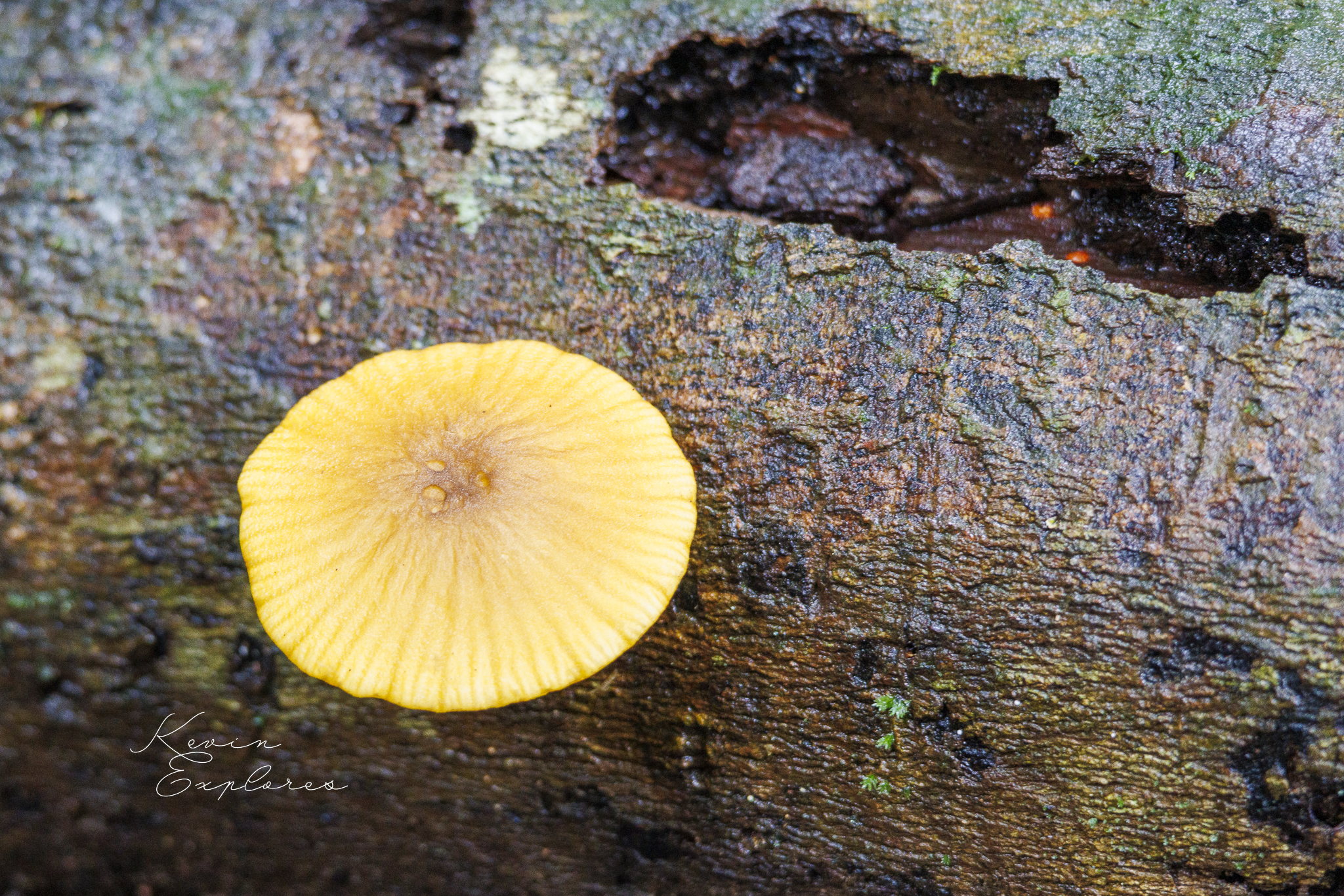
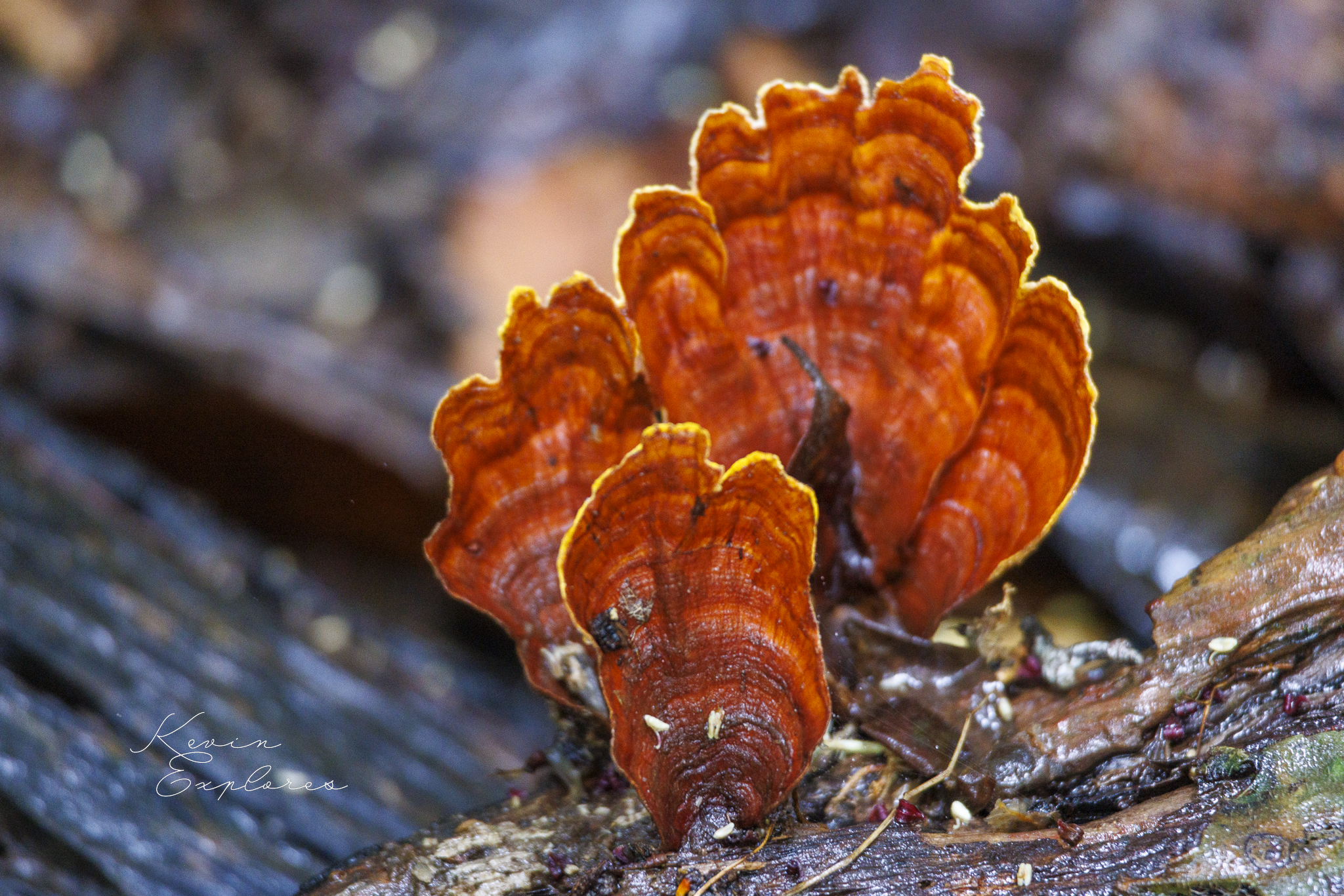
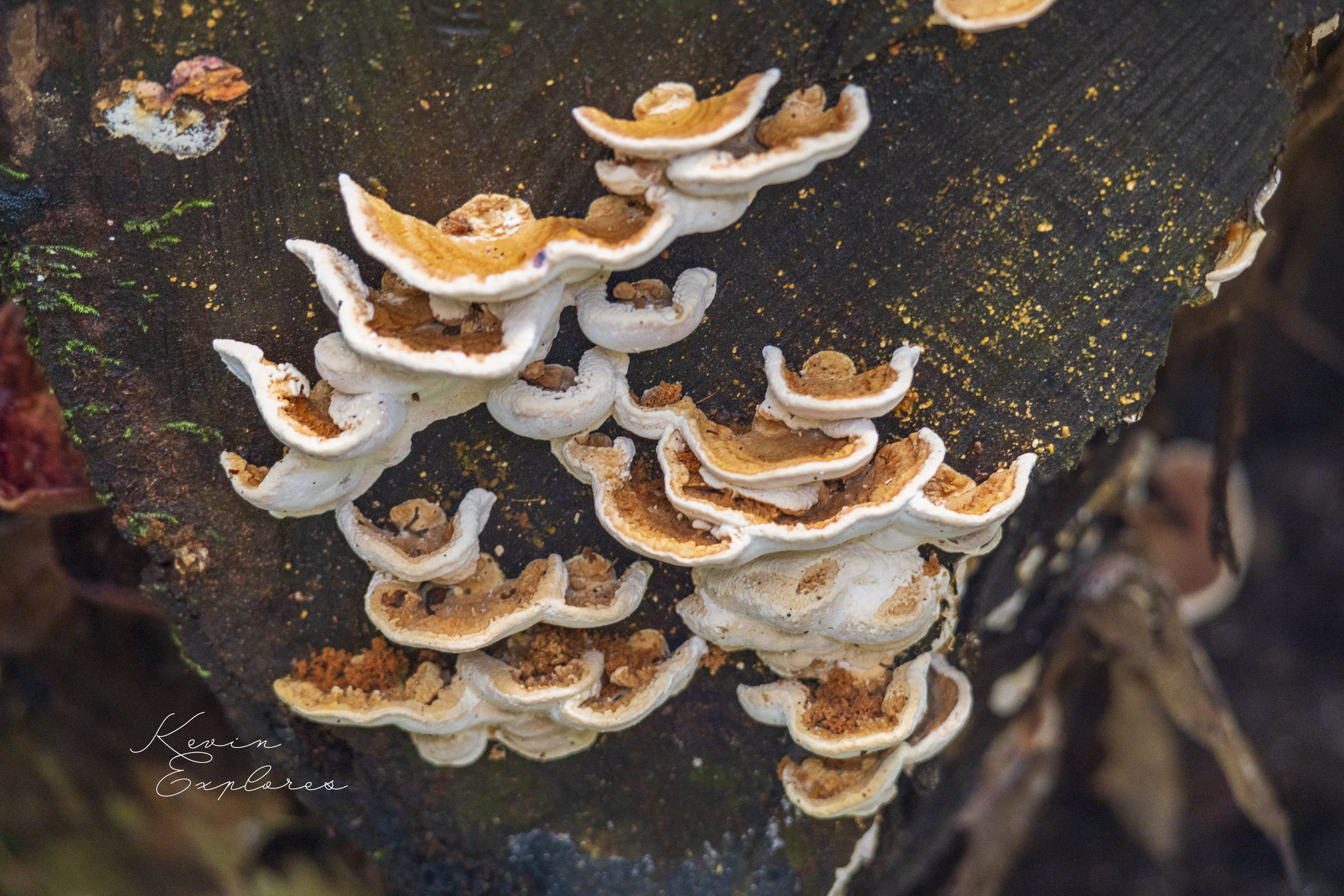
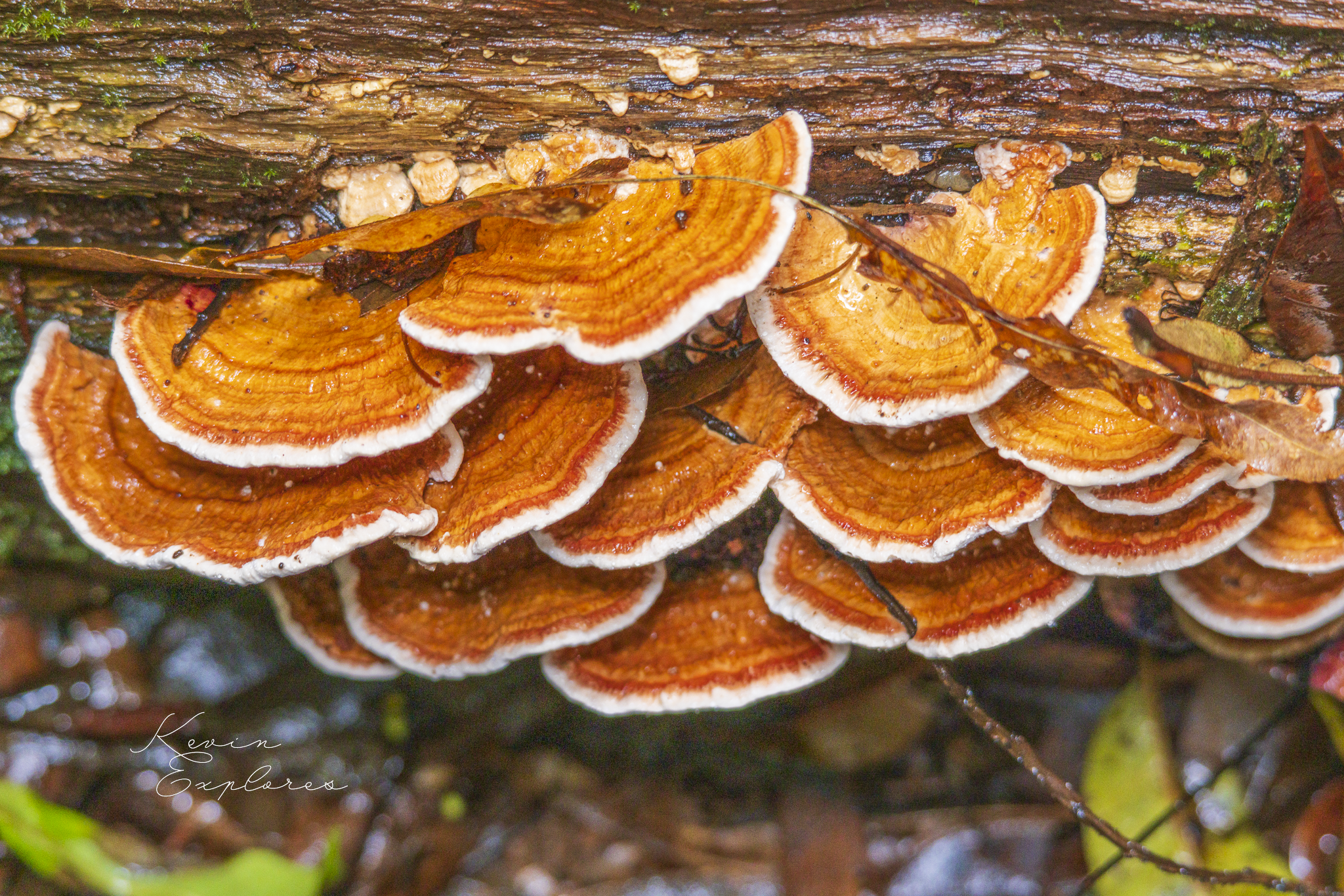
This is what fungi look like at work, right now, in a Tablelands rainforest. The brackets fanning out across this fallen log at Lake Eacham are the visible fruiting bodies of a decomposer fungus, the spore-releasing surface of an organism whose real body, a fine mesh of hyphae, is spreading through the dead wood itself, breaking it down from within. It's quiet, ordinary work. It's also, oddly, a story that runs backward through deep time in two directions at once, toward coal in one, toward soil in the other.
Rolling Back to Coal
Wind that fungus back roughly 300 million years and the same kind of organism finds itself outmatched. By the Carboniferous period, plants had evolved lignin, the rigid compound that lets a trunk stand upright, and vast swampy forests grew thick with it. The leading explanation for what happened next is the fungal lag hypothesis: no decomposer yet had the enzymes needed to break lignin down. So dead wood piled up instead of rotting, settling into peat in the standing, oxygen-poor water of the swamp floor.
Peat alone isn't coal, though. It needs burial, and burial needs the ground itself to sink. As these swamp basins slowly subsided, drowned peat was carried down and buried under new sediment before it could erode away, making room for the next layer to begin. Repeated over millions of years, that cycle of accumulation and burial let heat and pressure compress the buried peat into coal.
How much of this is actually about fungi is genuinely contested. The fungal lag idea rests on a 2012 genomic study showing the relevant lignin-degrading enzymes, in the lineage leading to white-rot fungi, evolved around the end of the Carboniferous, just as global coal accumulation dropped off. But a 2016 paper took the opposite view, arguing that decay was actually common throughout the period regardless of lignin content, and that the real drivers were physical: a wet tropical climate and basins subsiding fast enough to keep burying peat. Mt Mulligan sits awkwardly across this argument either way. Its coal isn't Carboniferous at all, it's Late Permian, formed roughly 260 to 252 million years ago in a down-faulted rift basin, tens of millions of years after the lignin-digesting enzymes are thought to have already evolved. If the fungal gap were the whole explanation, coal on this scale shouldn't have kept forming long after it closed. It did, here and elsewhere, which is exactly the pattern the skeptics point to.
Rolling Back Further, to Soil
Wind the clock back again, this time 450 million years, past the swamps entirely, to a planet with no soil at all. Just rock, bare to the horizon, with nothing growing on it because there was nothing yet to grow in.
The earliest land plants couldn't reach the minerals locked inside that rock. Fungi couldn't make their own food. So they struck a deal: the plant fed the fungus sugar, and the fungus, its hyphae already prising into microscopic cracks, delivered the rock's freed minerals back to the plant, working the rock apart both chemically, with acids, and physically, by swelling inside fractures until they split. This is mycorrhizae, and the mechanisms behind it aren't a special fungal category, they're the same physical and chemical weathering geology has always described, just carried out by something alive rather than by ice or rain.
What that actually looks like was captured vividly by ecologist Steve Morton, writing on Australian deserts. A colleague of his, pulling a small spinifex clump from a sand dune, found no roots at all, just an enveloping mass of fine fungal tissue, soft as fairy floss, wrapped entirely around the plant's root system underground. Morton notes this partnership occurs in over 90 percent of plant families and is thought to have arisen around 400 million years ago, right as plants first moved onto land, and that in Australia's notoriously poor soils, it isn't a bonus. It's what makes growth possible at all.
The loose, weathered rock this partnership produced wasn't yet soil. What made it soil was the same fungal threads binding the mineral fragments into stable clumps, mixed with the decomposing remains of dead plants and fungi. Better soil grew bigger plants. Bigger plants weathered more rock. The cycle fed itself, underground, for hundreds of millions of years, and in its more primitive form, still does.
One Kingdom, Two Jobs
What connects a bracket fungus at Lake Eacham to a coal seam at Mt Mulligan to an invisible mesh of hyphae under a spinifex clump is the same fungal kingdom, doing genuinely different jobs in genuinely different lineages, at different points in deep time. One branch learned to dissolve rock and build the first soil. A separate, later branch eventually learned to break down lignin, closing a gap that may, or may not, have been the real reason the age of coal wound down. The argument isn't settled. The fungus on that log is still part of it.