The Mulgrave River at Goldsborough is a geologist's time machine. Within this valley you can read three distinct chapters of Earth's history, each written in a different type of rock spanning hundreds of millions of years.
The Ancient Foundation: Granite
The oldest story stands high above the valley. The granite cores of Mount Bellenden Ker and Mount Bartle Frere formed between 310 and 260 million years ago, when massive pools of molten rock (magma) pushed upward into Earth's crust. This magma cooled slowly deep underground, crystallizing into coarse-grained granite with large feldspar crystals.
You won't see much of this granite in the riverbed itself—it forms the resistant mountain peaks that tower over the valley. But travel up to Kearneys Falls and you'll find granite boulders that have rolled down from the slopes above, and the falls themselves cascade over granite slabs at the edge of the Bellenden Ker batholith. This is the structural backbone of the landscape, the rock that refused to erode away.
The Deformed Middle: Hodgkinson Metamorphics
The second story is written in the rocks the river actually cuts through. The Hodgkinson Formation began as sediments deposited in a deep marine basin more than 300 million years ago—even before the granite intruded. Over time, these sediments were buried, squeezed, and baked by heat and pressure, transforming them into metamorphic rocks.
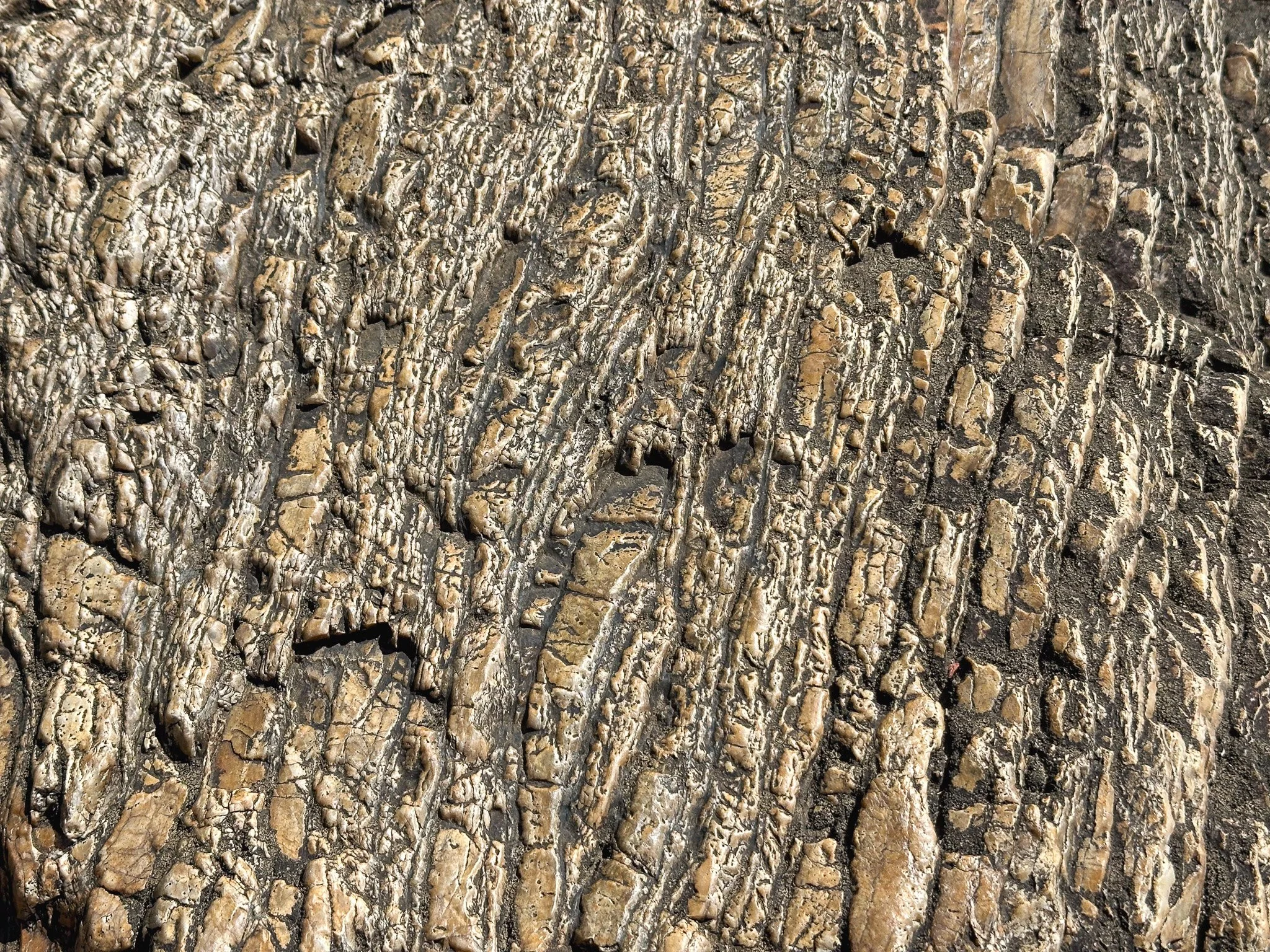
What you see in the riverbed today are layered, banded rocks with a fractured, crumpled texture—a record of immense tectonic forces. These meta-sediments proved less resistant than granite. The Mulgrave River preferentially eroded these softer rocks, carving the valley and separating Mount Bellenden Ker from the western tableland. The river found weakness and exploited it, creating the landscape we see today.
The Volcanic Interruption: Atherton Basalts
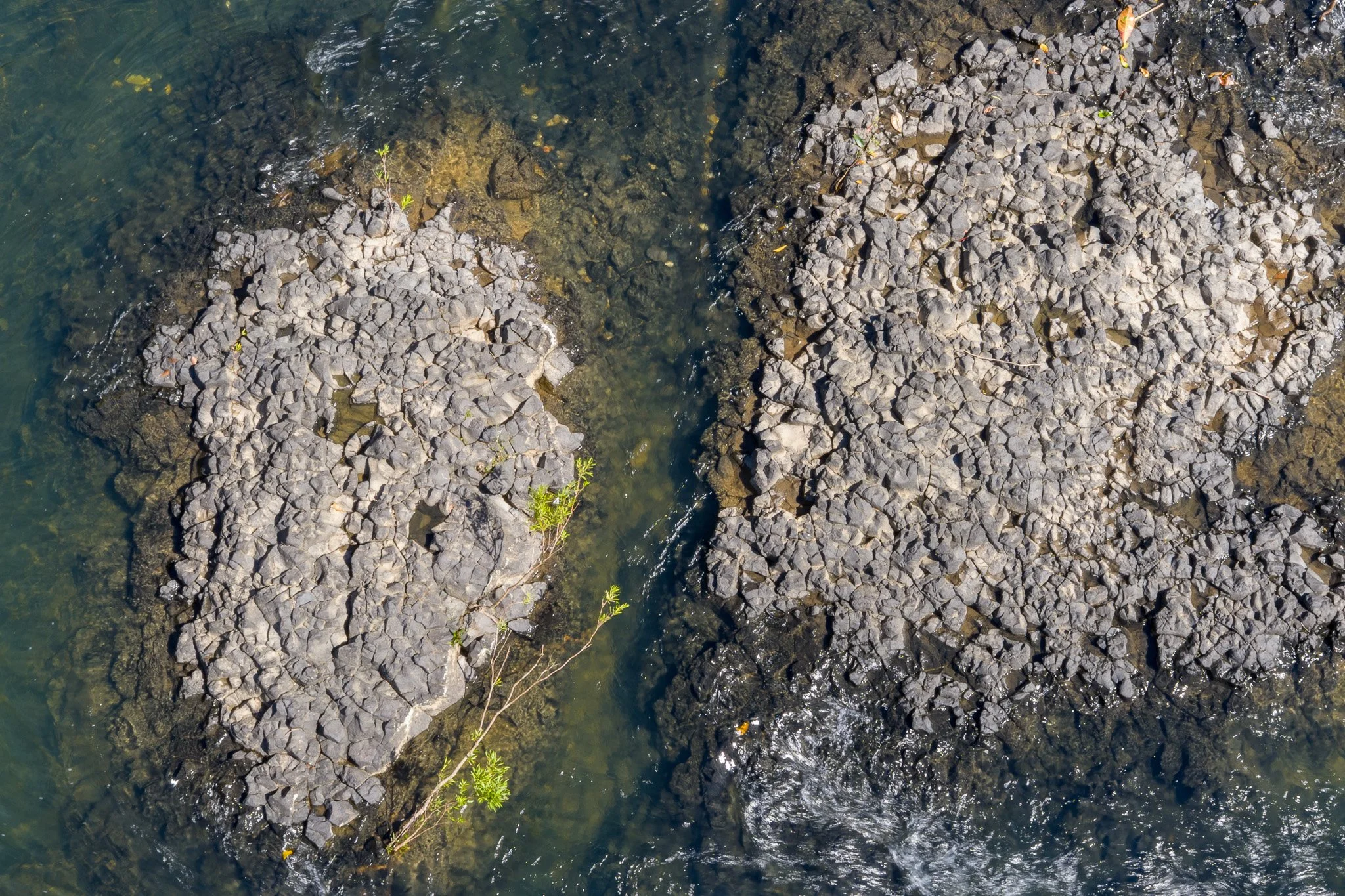
The youngest story comes from fire, not water. Scattered through the river are outcrops of basalt, formed from lava flows that erupted from the Atherton Volcanic Province only a few million years ago. Around 2 million years ago, The Fisheries Volcano burst out downstream, its lava flows temporarily damming the Mulgrave River.
As the lava cooled, it cracked into polygonal columns—the blocky, almost geometric patterns you can see in the riverbed today.
Three Chapters, One Landscape
Together, these three rock types tell a dramatic story:
Bellenden Ker Granite (280 million years old) — the resistant foundation, forming mountain peaks that anchor the landscape
Hodgkinson Metamorphics (300+ million years old) — ancient, deformed, layered, carrying memories of deep oceans and mountain-building, now preferentially eroded into valleys
Atherton Basalts (2 million years old) — young, volcanic, geometric, frozen remains of a fiery landscape that briefly transformed the valley
At Goldsborough, the Mulgrave River doesn't just carve a path through stone—it carves through time itself, revealing three distinct episodes of Earth's history. The granite stands high, the meta-sediments give way beneath the current, and the basalt platforms create the flat rocks where Malanbarra people have fished for thousands of years. Each rock type plays its role in shaping this landscape where geology, erosion, and culture interweave.