The Granite Story of Emerald Creek Falls near Mareeba
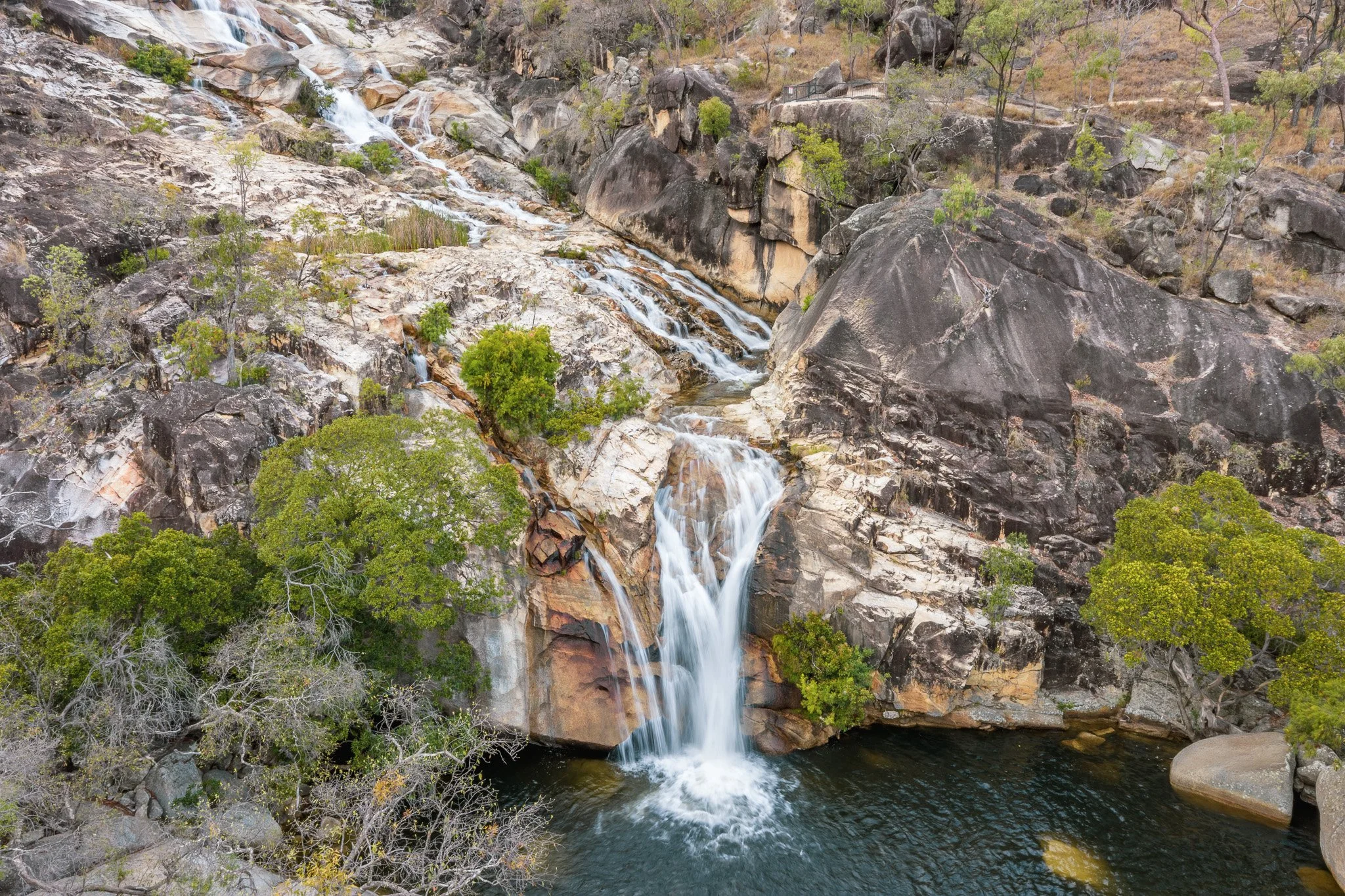
Emerald Creek Falls offers a spectacular window into the forces that shape our landscape. Not just a beautiful waterfall—it's an active laboratory demonstrating how rock formed deep underground millions of years ago continues to evolve under the relentless power of water, weather, and time.
Learning to See More Than the Falls
Every time I visit Emerald Creek Falls, I notice something new in the granite—patterns, textures, and formations that catch my eye but leave me puzzled. What causes those smooth curves juxtaposed amongst straight cracks? Why do some rocks look like giant steps? What's the story behind those different-colored bands cutting through the stone?
This article is my attempt to share what I've been able to discover about the granite at Emerald Creek Falls, combining my observations with recently acquired geological knowledge. Even this past weekend, armed with a better understanding of granite processes, I found myself seeing the landscape with fresh eyes—suddenly the patterns made sense, and the rocks began telling their story.
My hope is that by sharing this geological detective work, you too can move beyond just the "wow" of the waterfall to appreciate the complete picture. The falls are spectacular, but understanding the ancient forces and ongoing processes that created them makes the experience so much richer. Let's explore the granite story together.
What is Granite?
Understanding the Foundation Rock
Granite is a coarse-grained igneous rock composed primarily of quartz, feldspar, and mica. It forms deep underground when magma cools slowly, allowing large crystals to develop over thousands of years. This crystalline structure and mineral composition make granite both remarkably durable and susceptible to specific types of erosion—a combination that creates the spectacular landscapes we see at Emerald Creek Falls.
Geology vs. Geomorphology
Two Sides of the Same Story
To understand Emerald Creek Falls, we need to distinguish between geology (how the granite formed) and geomorphology (how it's being shaped).
The geological story began millions of years ago when magma cooled slowly deep in the Earth's crust, creating the granite foundation. During this cooling process, the rock developed natural fracture patterns called joints—systematic cracks that formed as the granite contracted.
The geomorphological story is happening right now. Water exploits these ancient fractures, chemical weathering attacks the feldspar minerals, and physical forces gradually sculpt the landscape. The falls exist because geological structure created the stage, and geomorphological processes are directing the ongoing performance.
Natural Fractures - The Granite's Weak Points
How Cracks Become Landscape Features
The granite at Emerald Creek Falls is crisscrossed by natural fractures called joints, formed through several key processes:
Cooling contraction created the primary fracture network as the granite magma cooled and solidified, developing tension fractures in regular patterns—typically two or three sets at roughly right angles to each other.
Pressure release occurred when erosion eventually exposed the granite at the surface. The enormous pressure from overlying rock was released, causing the granite to expand slightly and develop sheet joints roughly parallel to the surface.
Tectonic stress from regional geological forces created additional fractures aligned with ancient pressure directions, while thermal expansion and contraction from surface temperature changes propagated existing micro-fractures deeper into the rock mass over geological time.
Dykes - Rock Within Rock
When Later Magmas Cut Through Granite
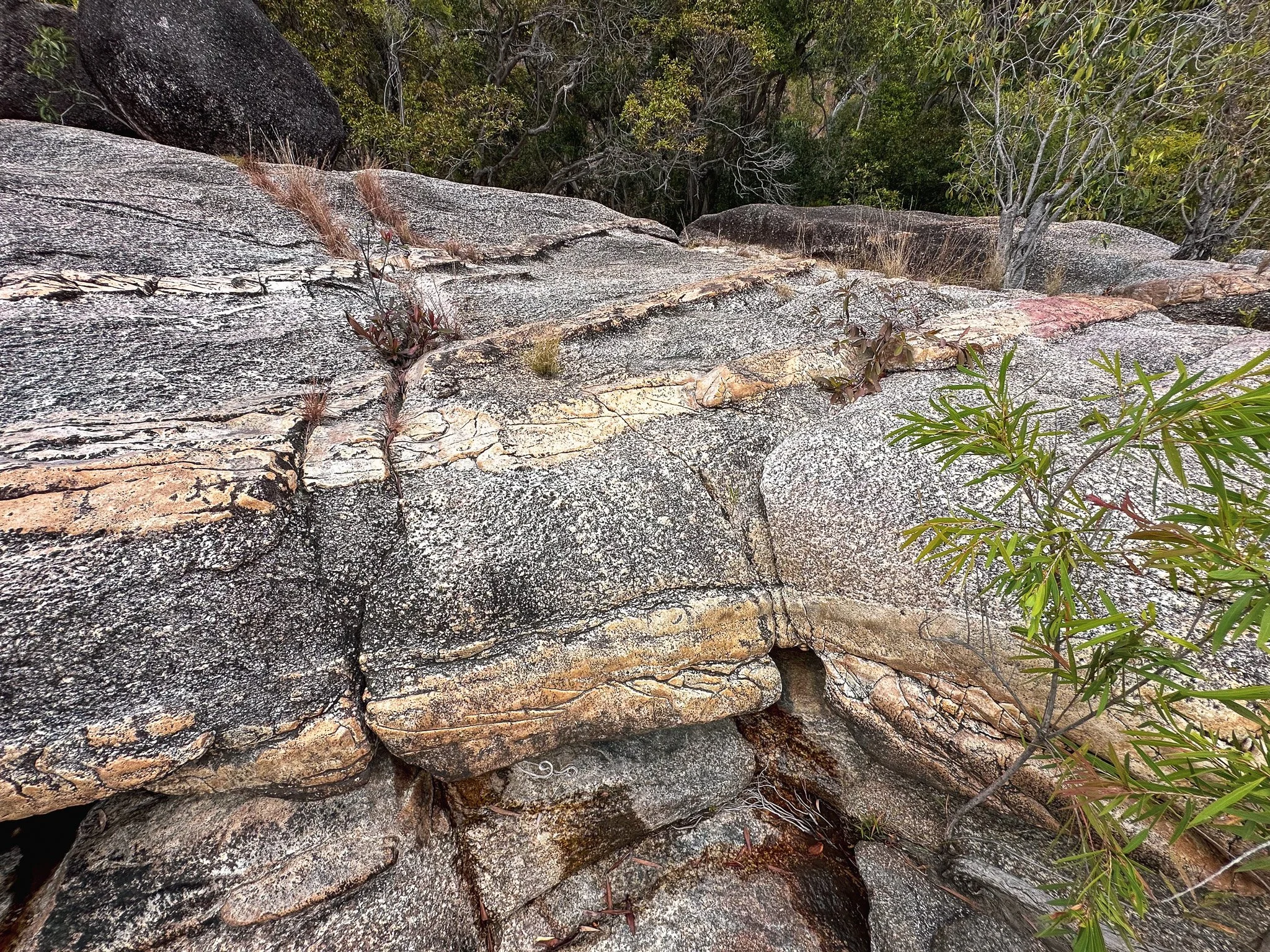
After the granite cooled and solidified, later episodes of magmatic activity generated new magma under pressure. This magma exploited the existing joint systems, injecting itself into fractures and cooling to form dykes—distinct bands of different rock cutting through the granite.
These dykes often have different compositions than their granite host: basaltic dykes appear dark and fine-grained, pegmatite dykes show very coarse crystals, aplite dykes appear light-colored and fine-grained, while quartz veins are nearly pure white quartz.
Their different compositions mean they weather at different rates than the surrounding granite. Resistant dykes like quartz veins stand out as ridges, while less resistant ones create linear depressions that water can follow, adding structural complexity that influences how the creek carves its path.
Active Erosion Processes
How Granite Landscapes are Sculpted
Several erosion processes are actively shaping the granite landscape at Emerald Creek Falls:
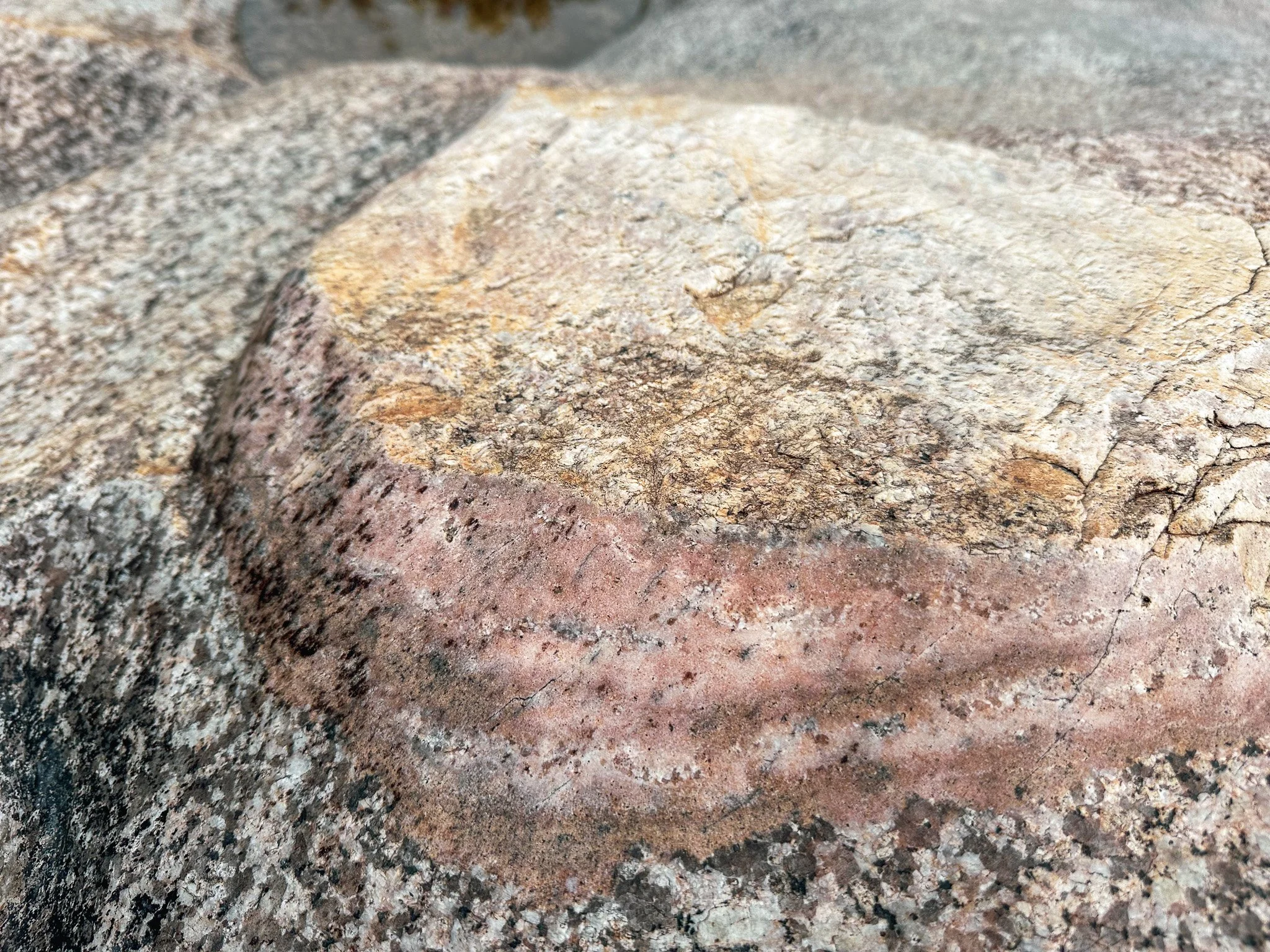
Exfoliation occurs as granite expands and contracts with temperature changes, causing curved sheets of rock to peel away like onion layers, creating the smooth, rounded rock faces and dome-like formations.
Joint weathering happens along natural fractures where water enters cracks, chemically weathers the rock, and gradually widens joints into distinct blocks, creating stepped, angular features.
Chemical weathering breaks down feldspar minerals into clay, causing granite to crumble and creating sandy, gritty material called "grus"—a process accelerated by our warm, humid climate.
Hydraulic action from flowing water physically removes loose material, while abrasion from sediment-laden water acts like sandpaper, smoothing and carving the rock.
Biological weathering from tree roots and organic acids from decomposing vegetation also contributes to granite breakdown.
Transition to Visual Evidence
Seeing the Processes in Action
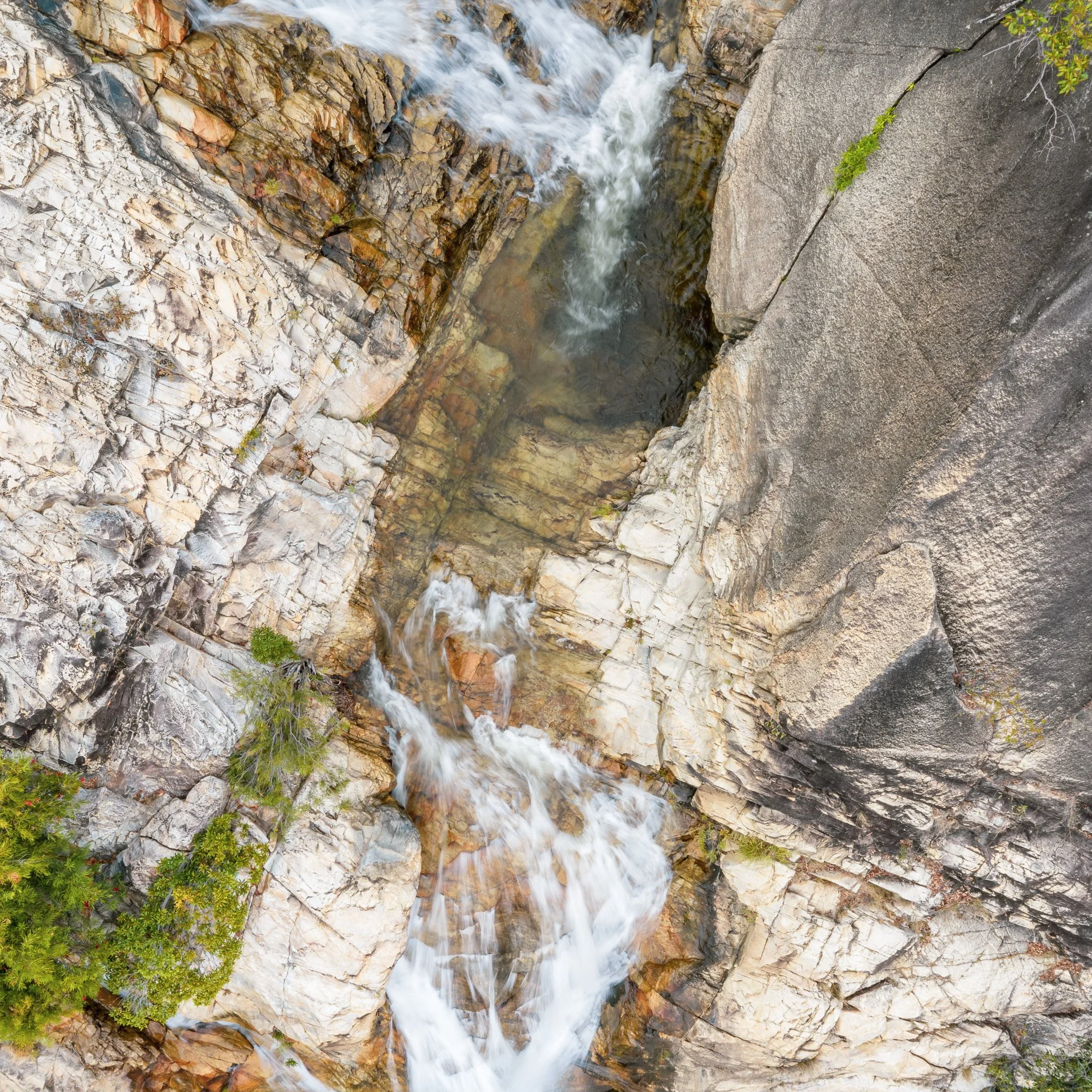
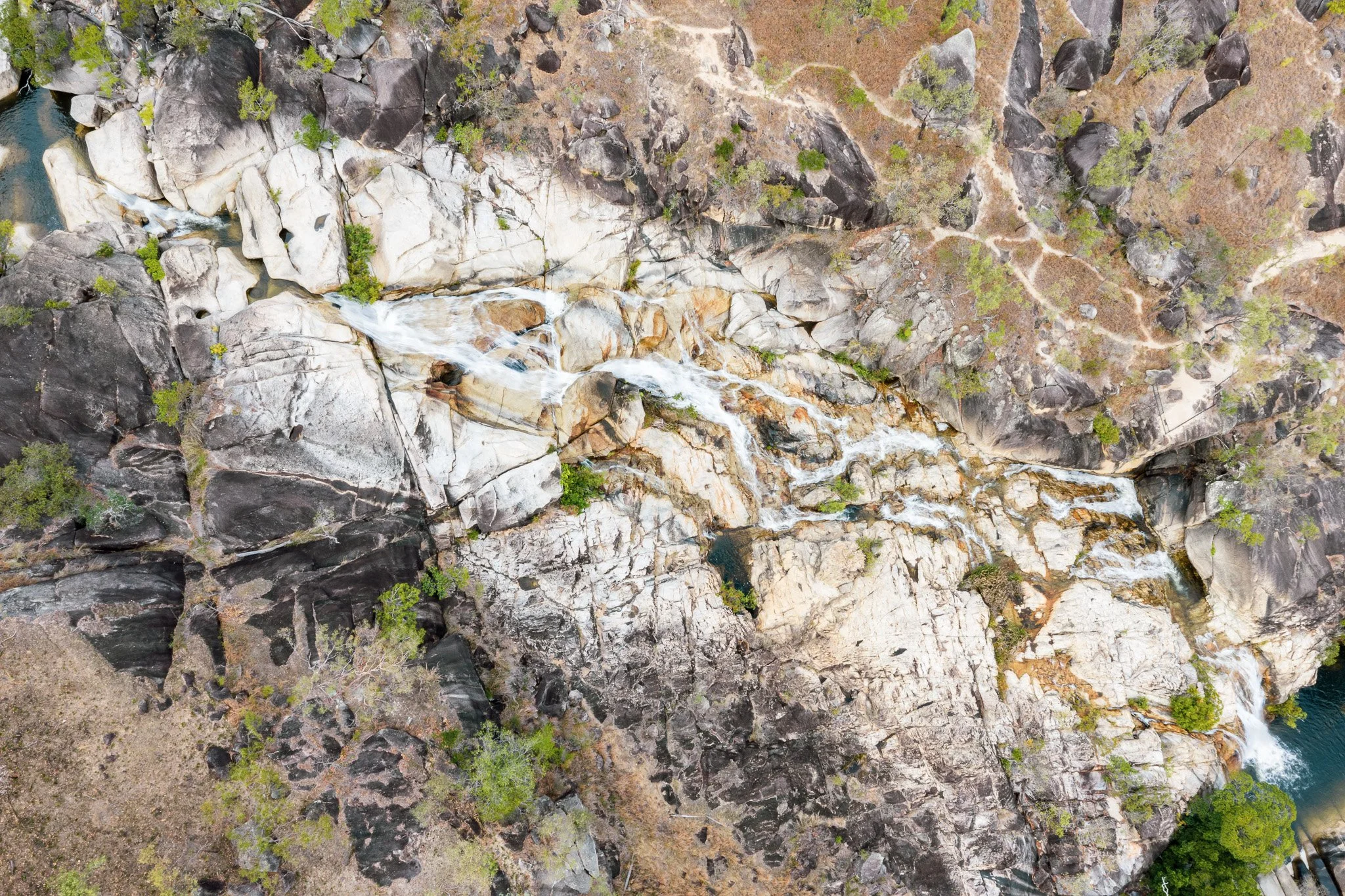
The combination of these geological foundations and active geomorphological processes creates the characteristic granite landscape features you'll see in the following image galleries. Look for smooth water-carved channels following ancient fractures, angular joint-controlled faces where blocks have been removed, rounded exfoliated surfaces where rock sheets have peeled away, and areas of crumbling, weathered granite where chemical processes dominate.
Each photograph tells part of the story—from the ancient cooling fractures that provided the initial weakness, to the ongoing erosion that continues to shape this landscape today.
Reading the Rock Structure
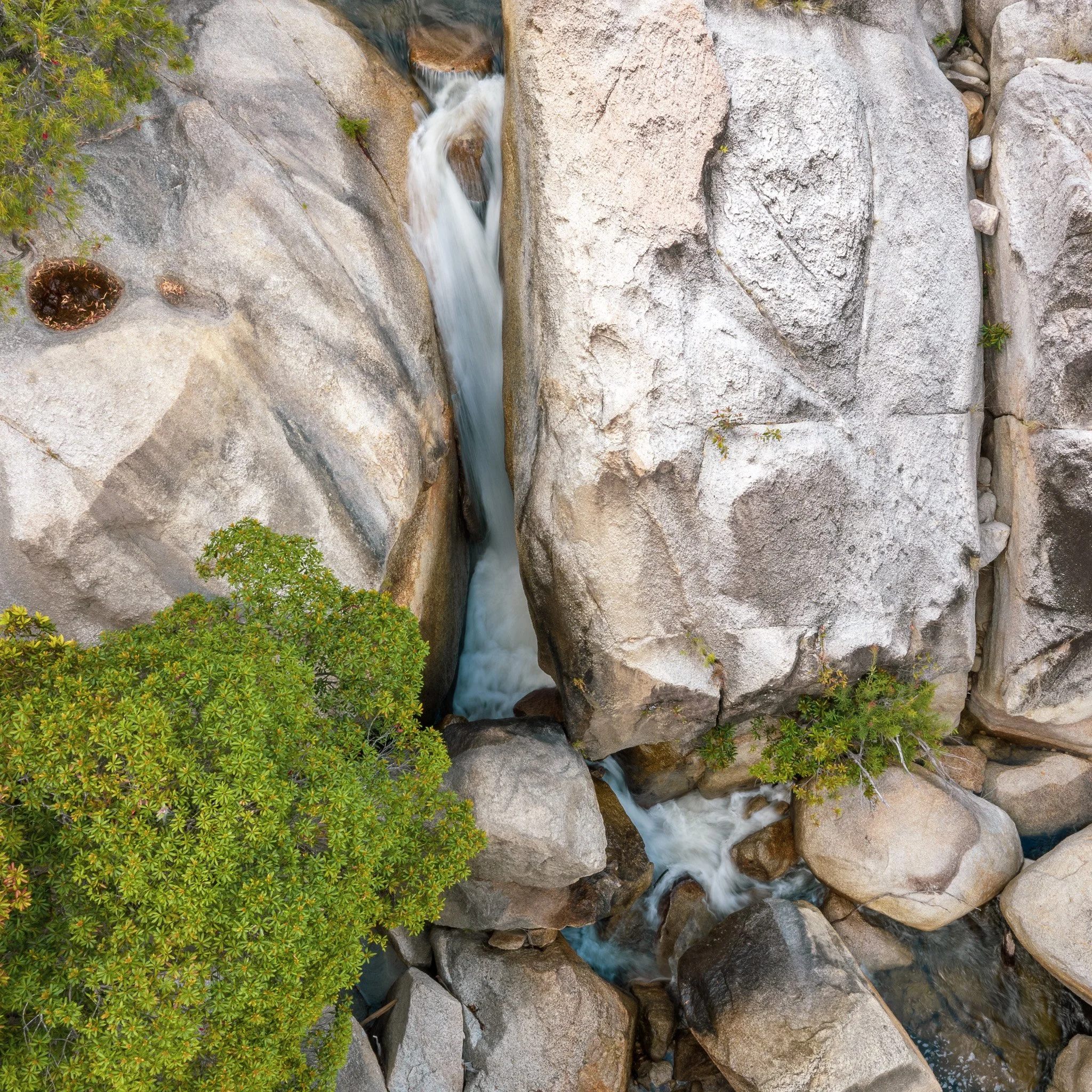
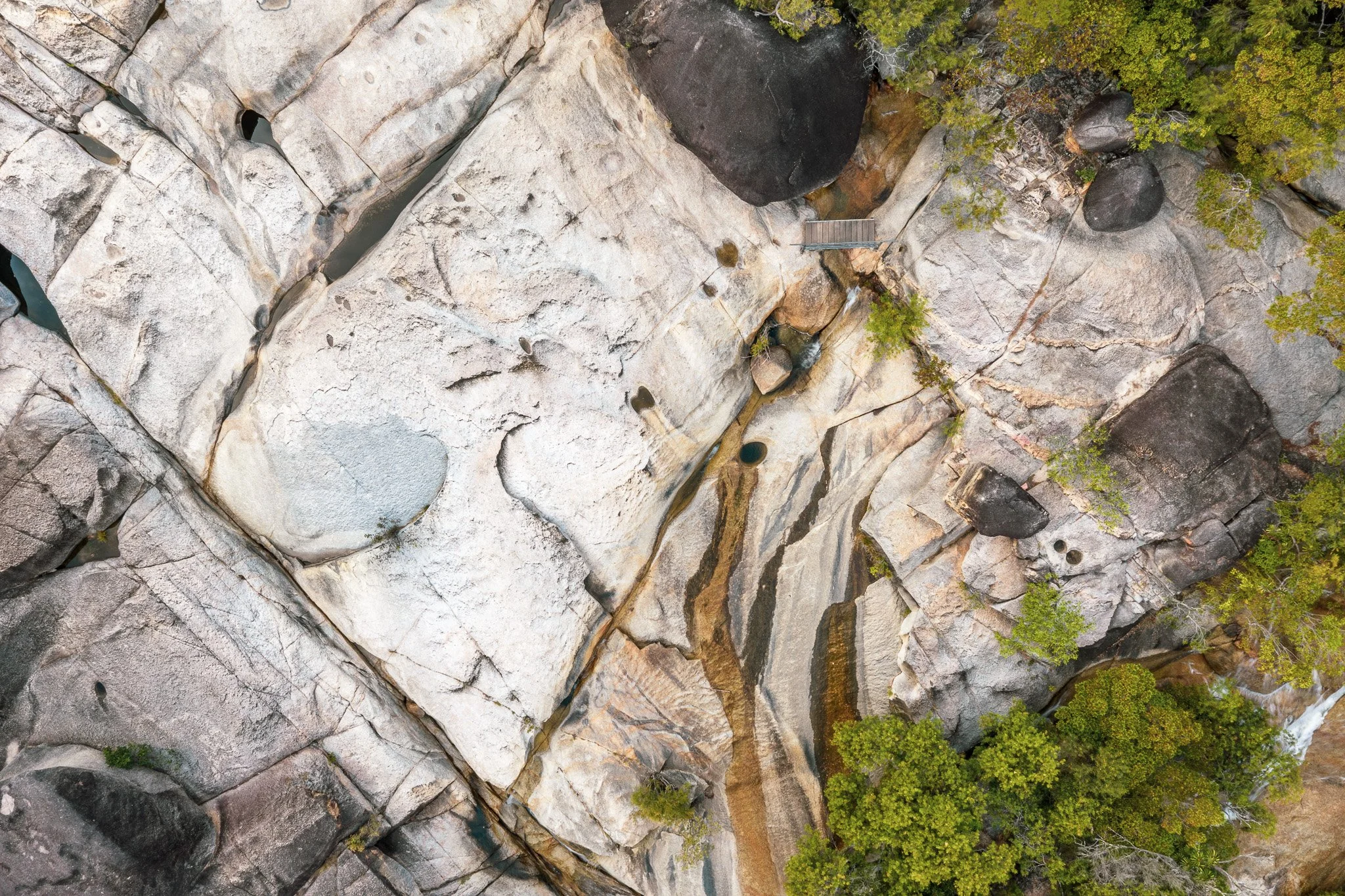
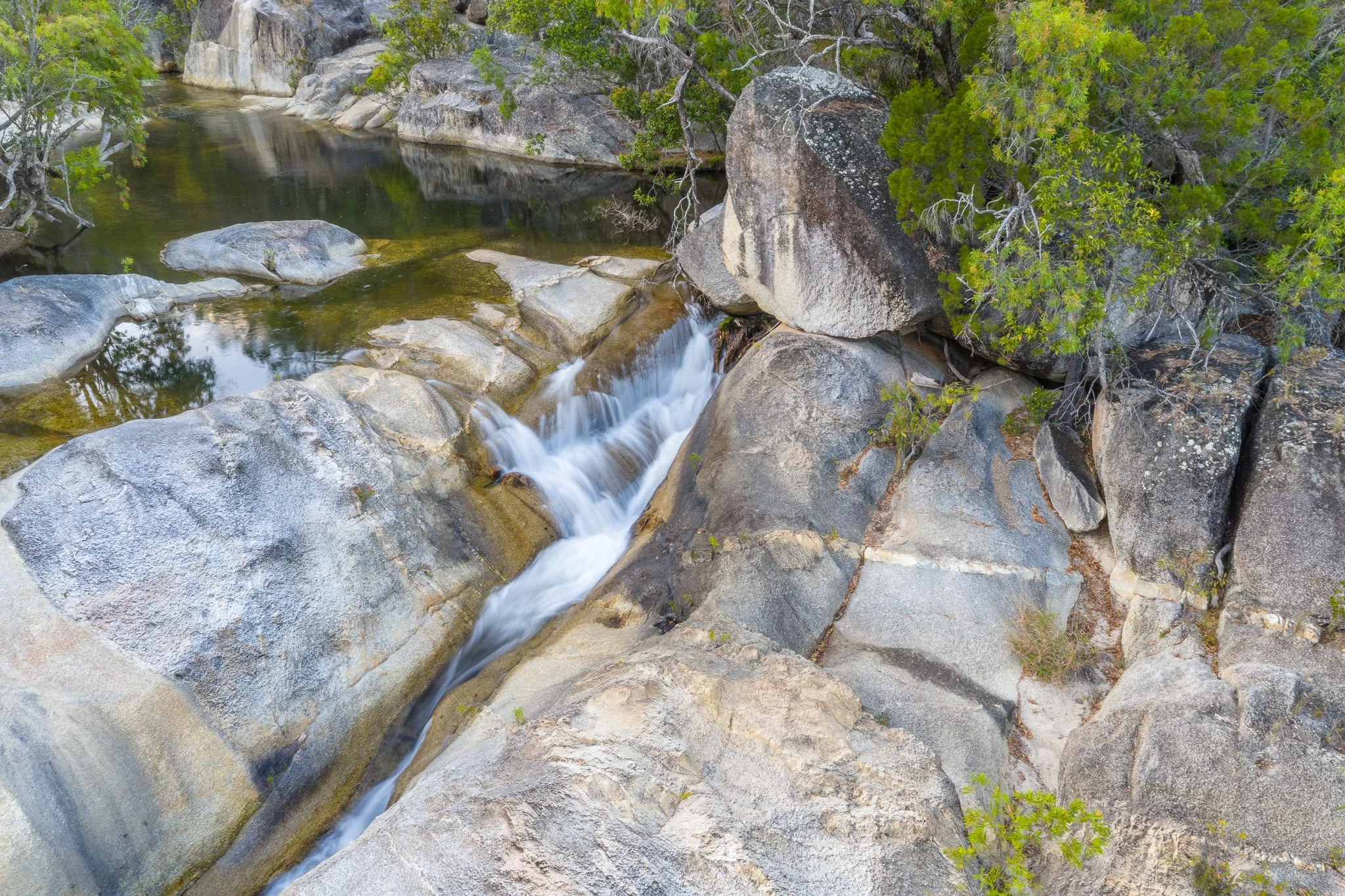
The images in this gallery reveal the fundamental architecture of the granite. Notice how the natural joints create systematic patterns—these fractures formed millions of years ago as the granite cooled, but they control how water moves and where erosion occurs today.
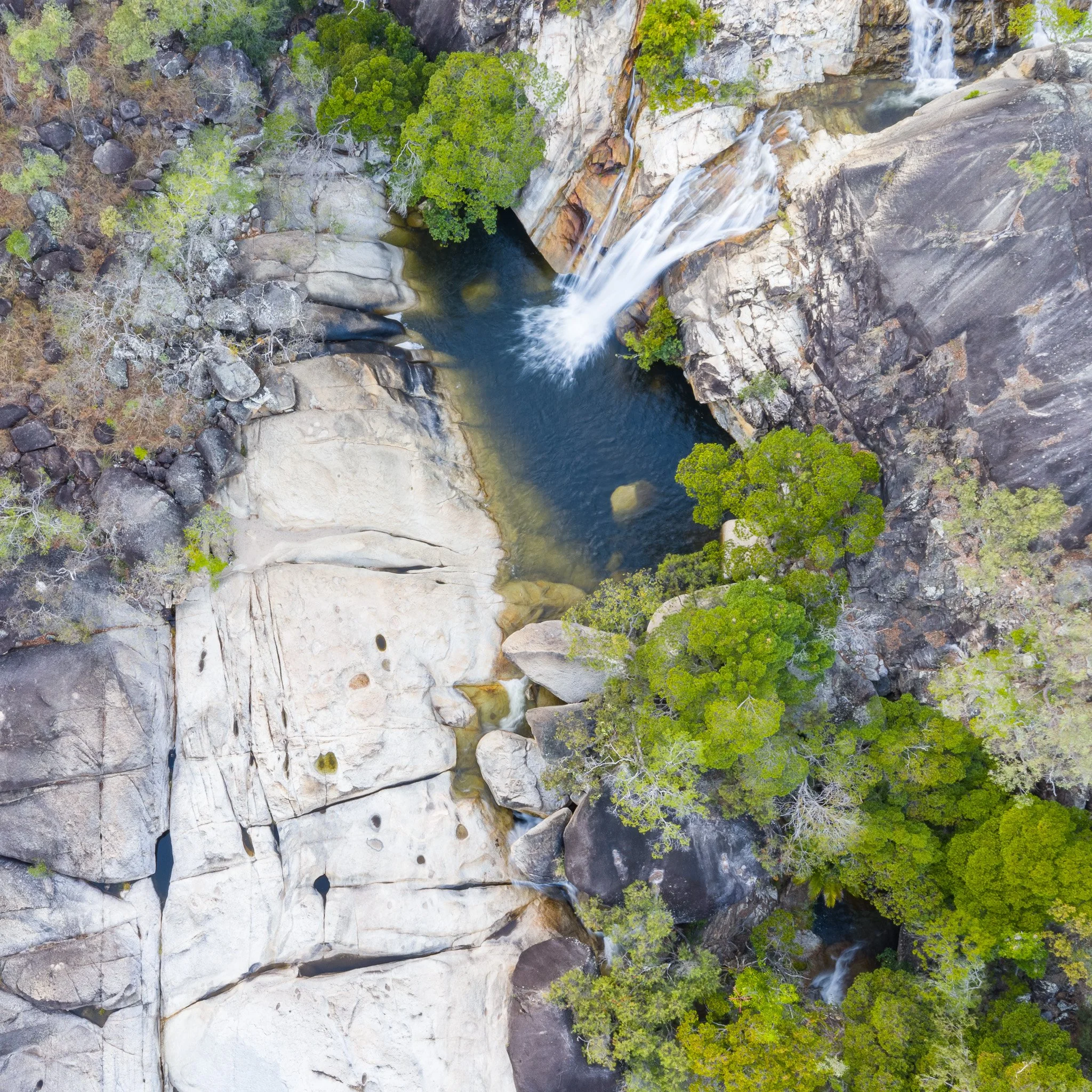
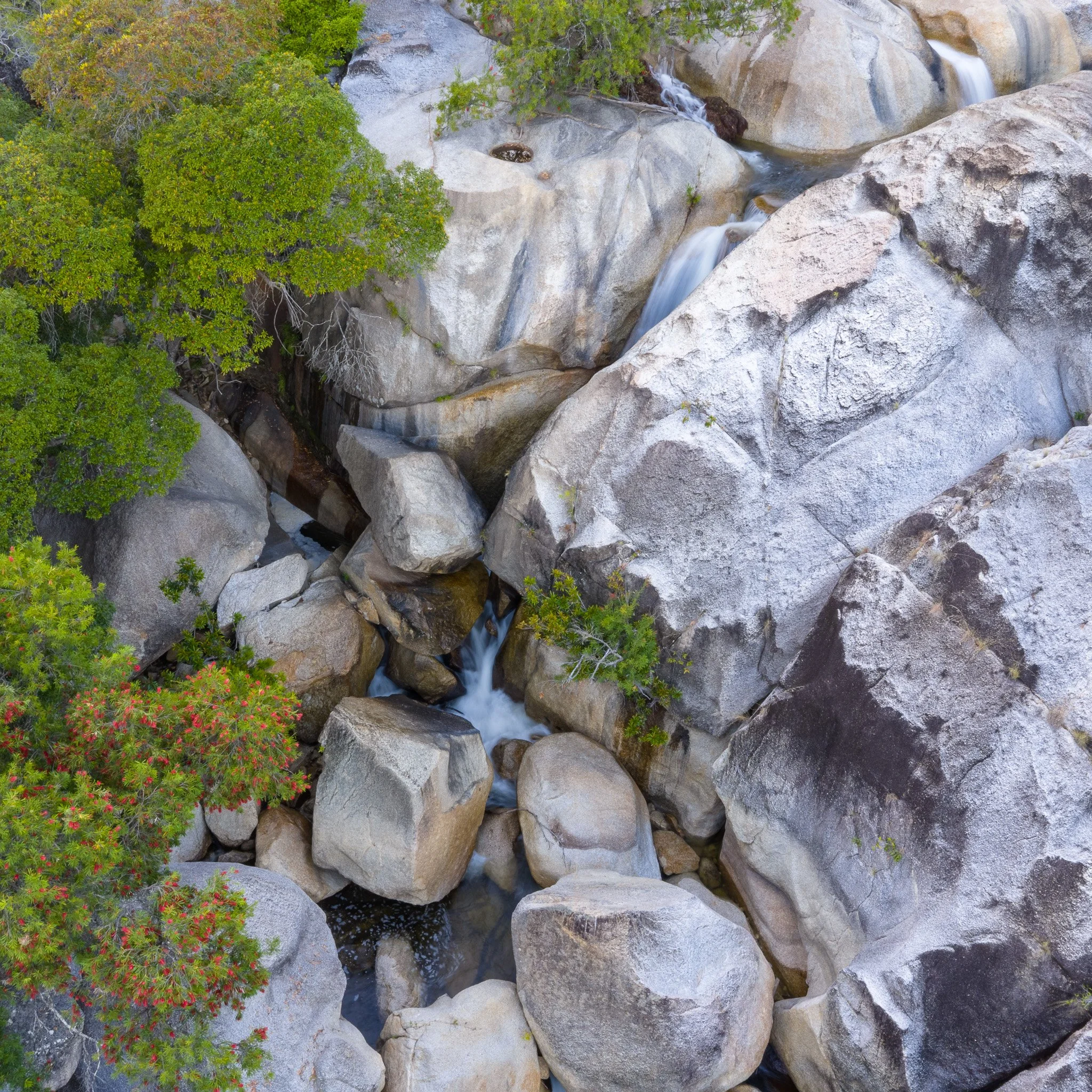
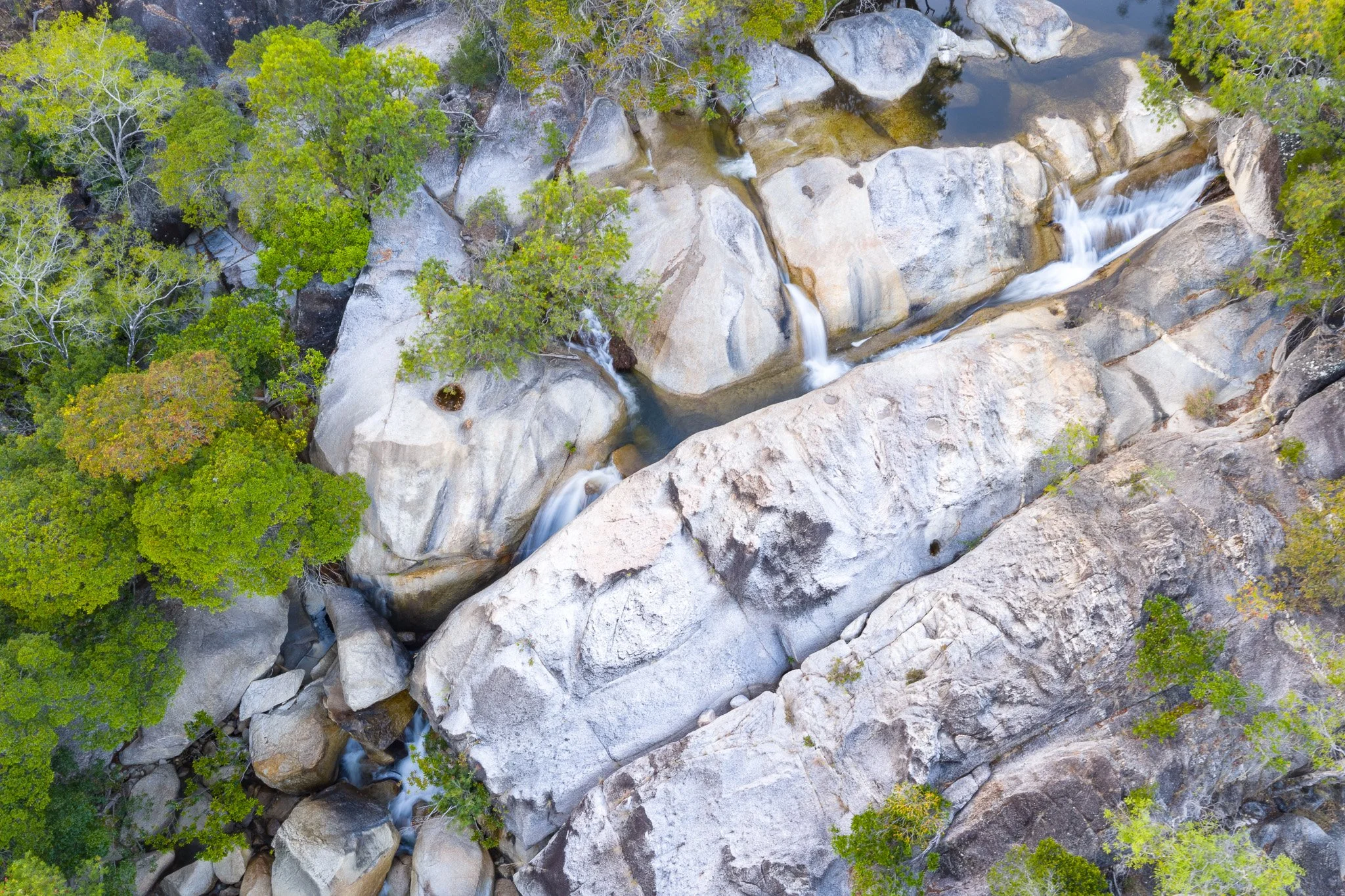

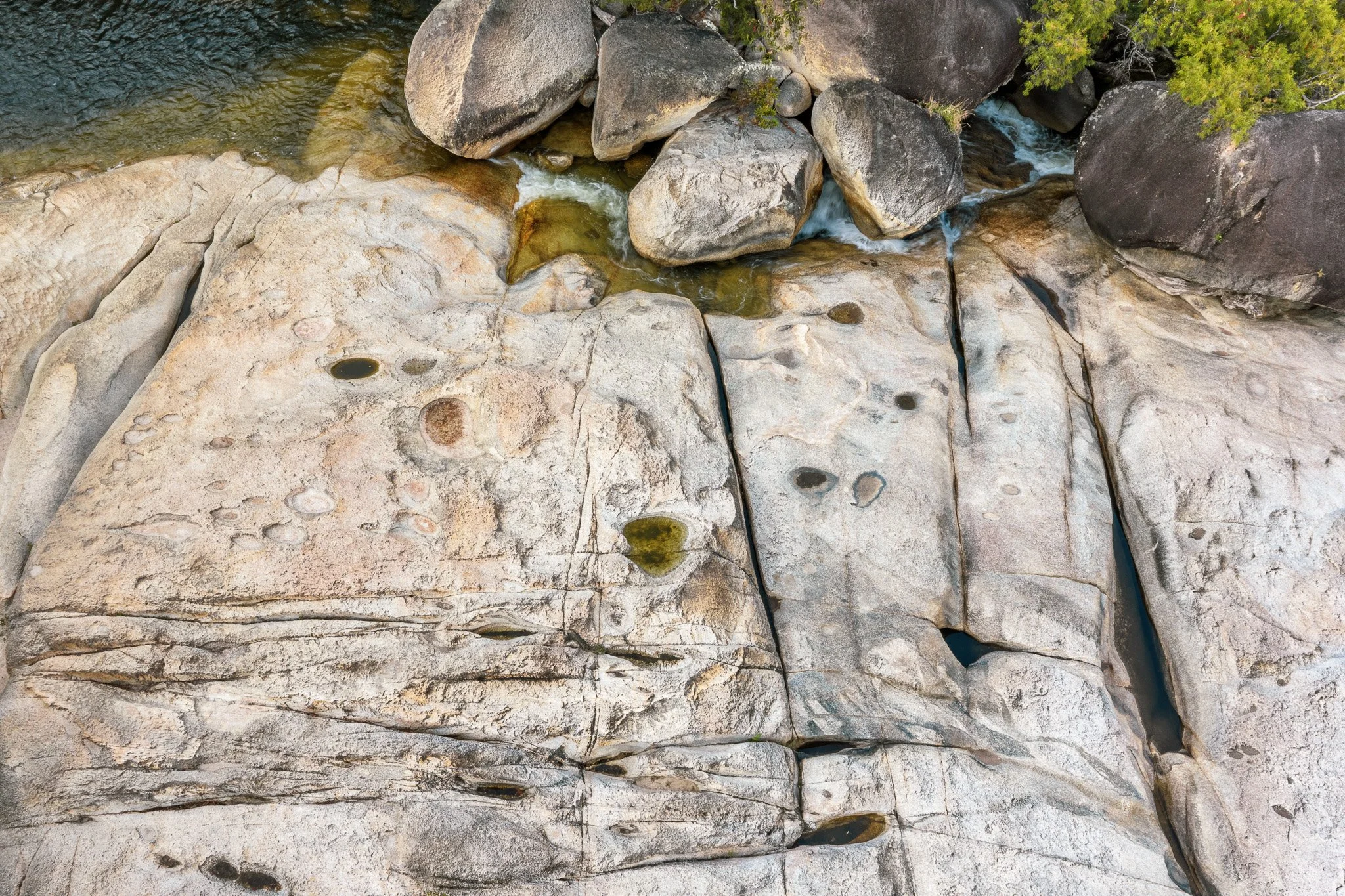

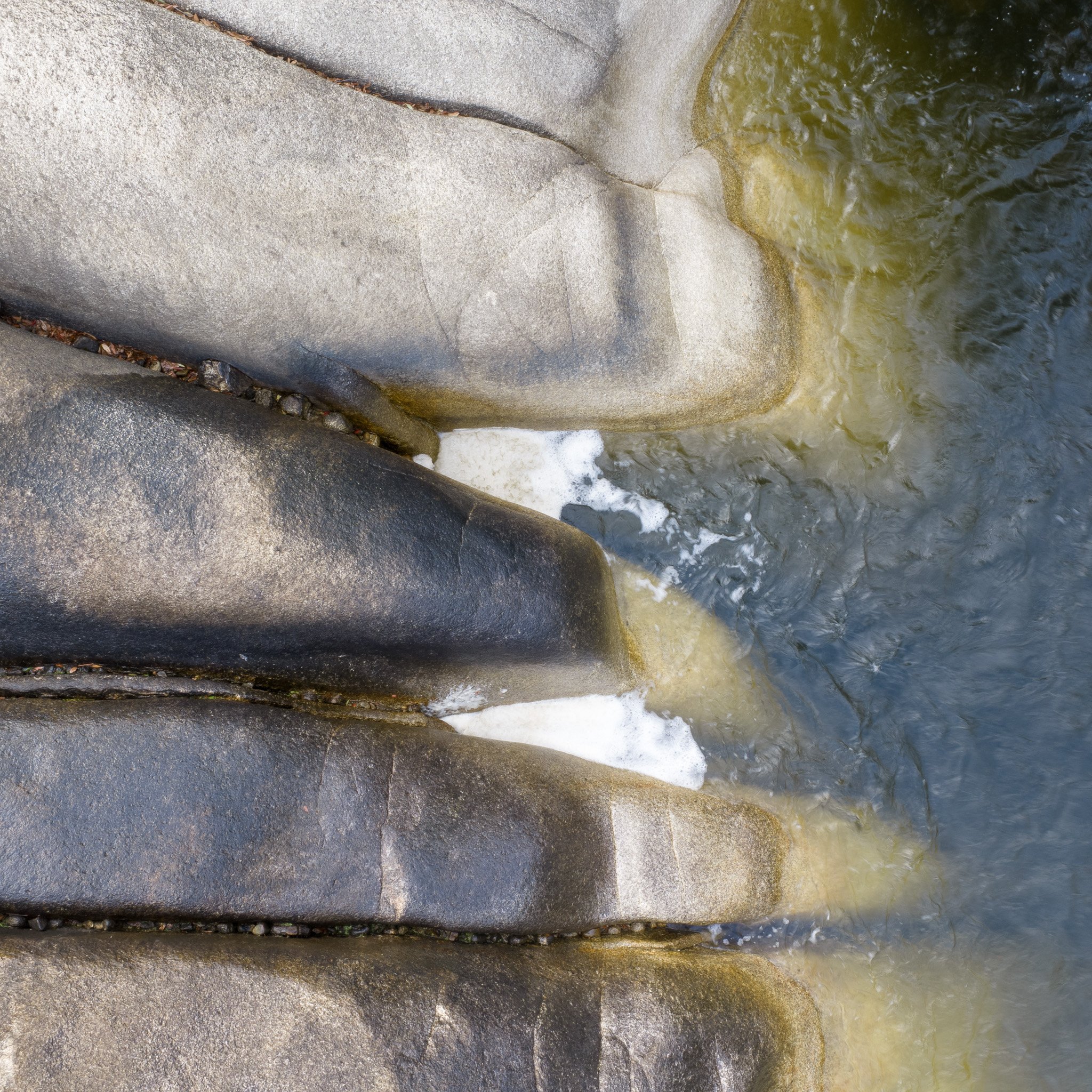
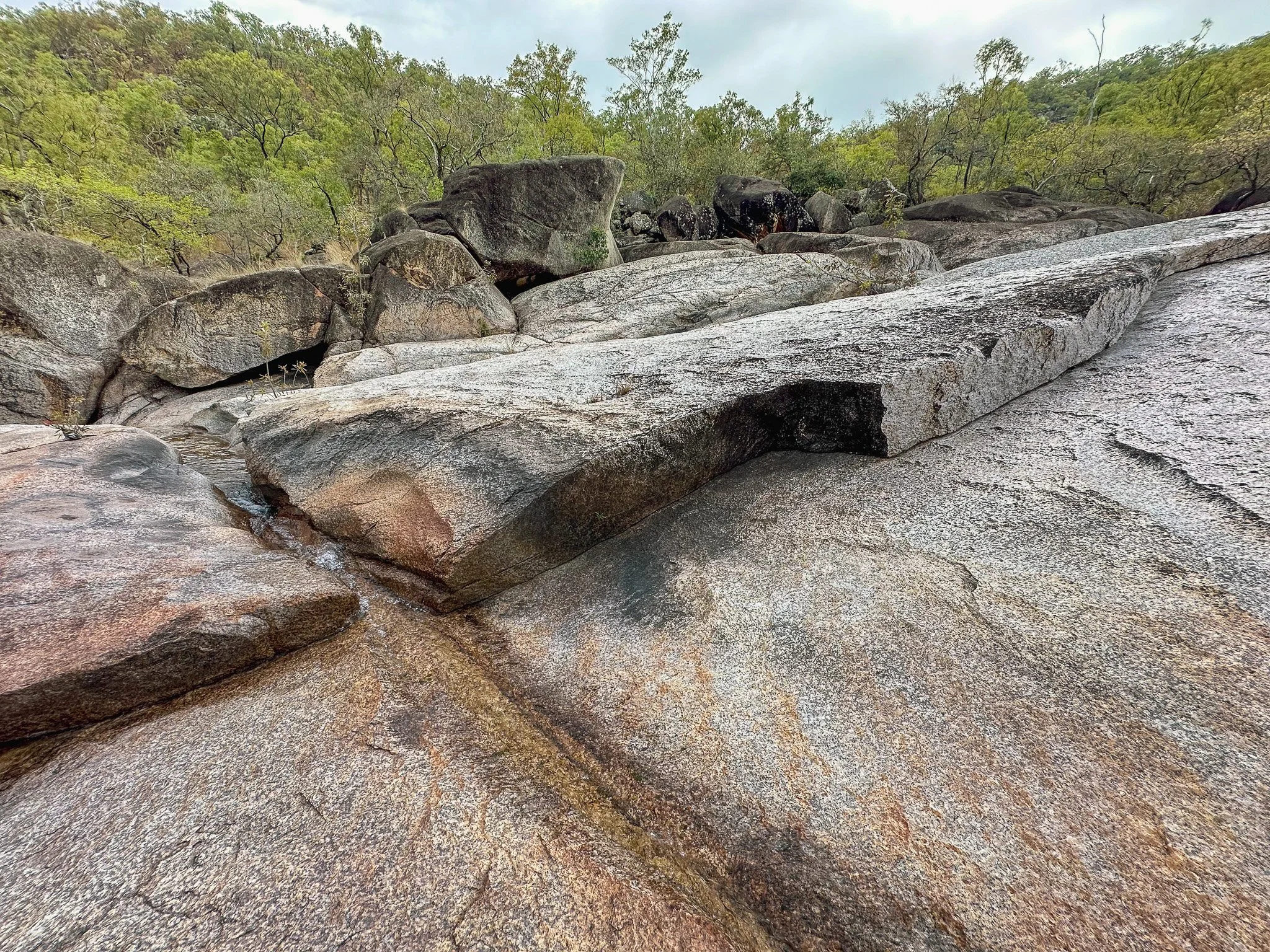

Look for the stepped, blocky appearance where water has exploited joints to remove entire sections of rock. The smooth, curved surfaces show exfoliation in action—pressure release causing rock sheets to peel away. Different weathering patterns reveal variations in mineral composition and the varying resistance of different granite zones.
Water as Sculptor
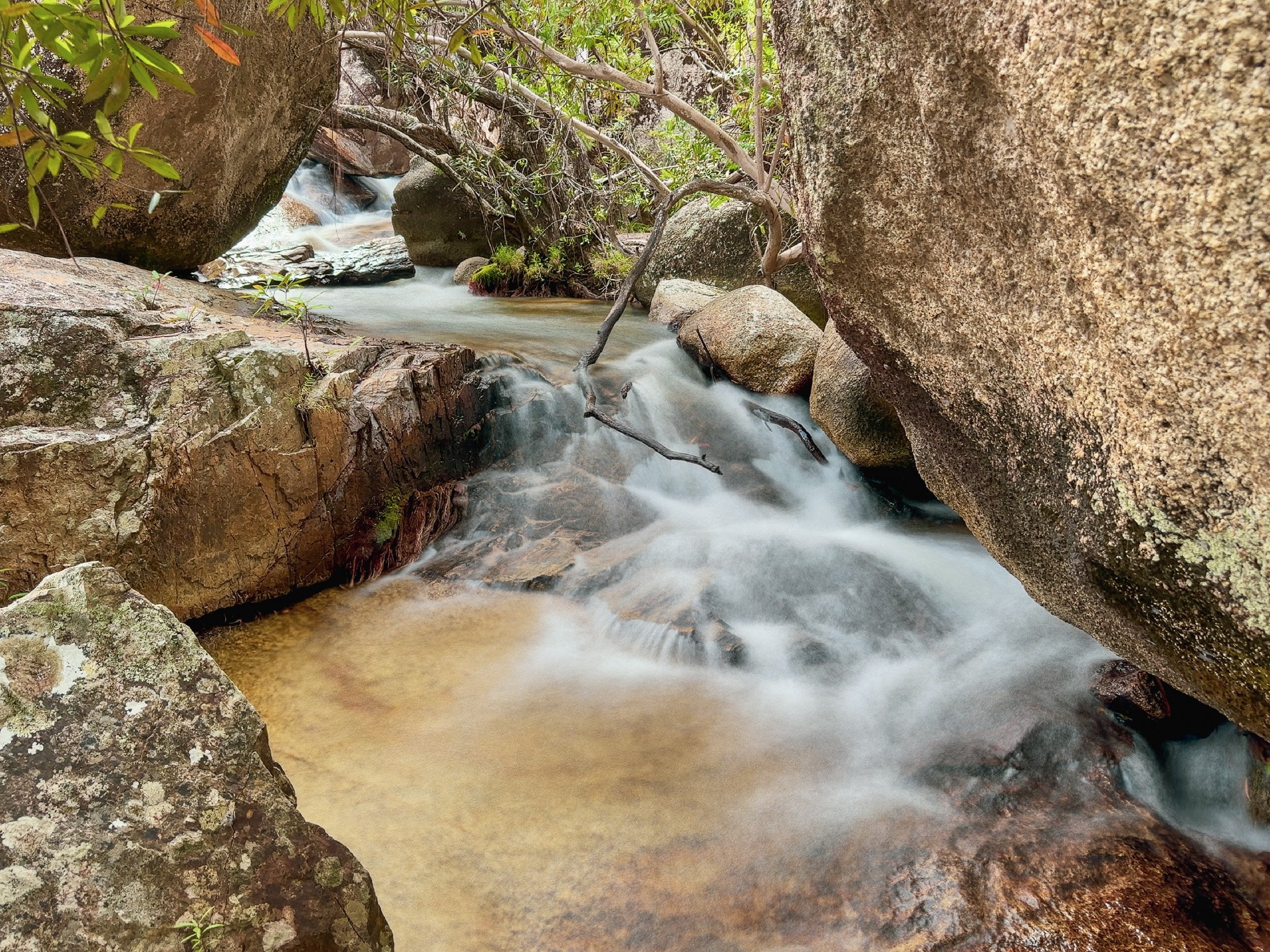
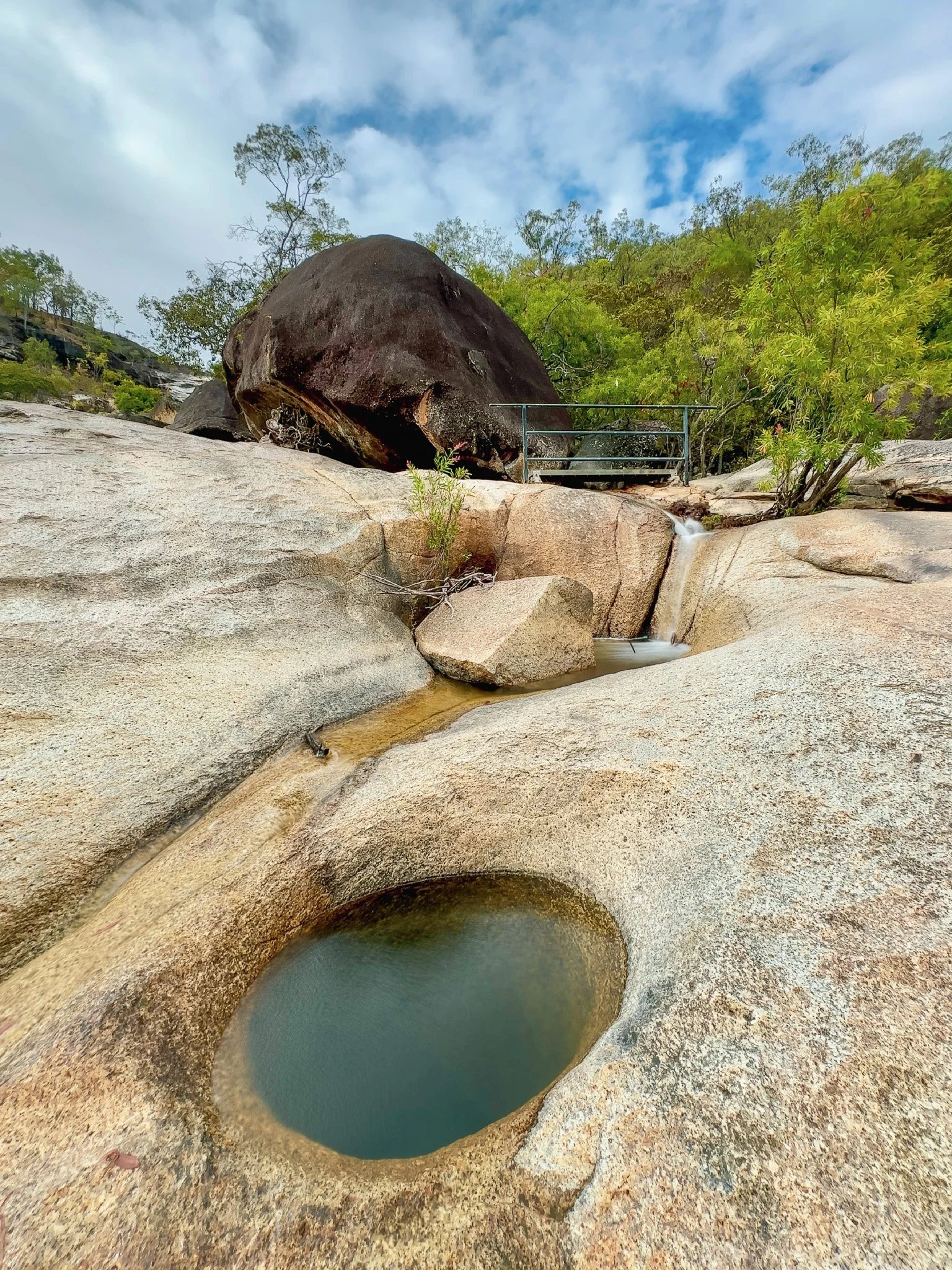
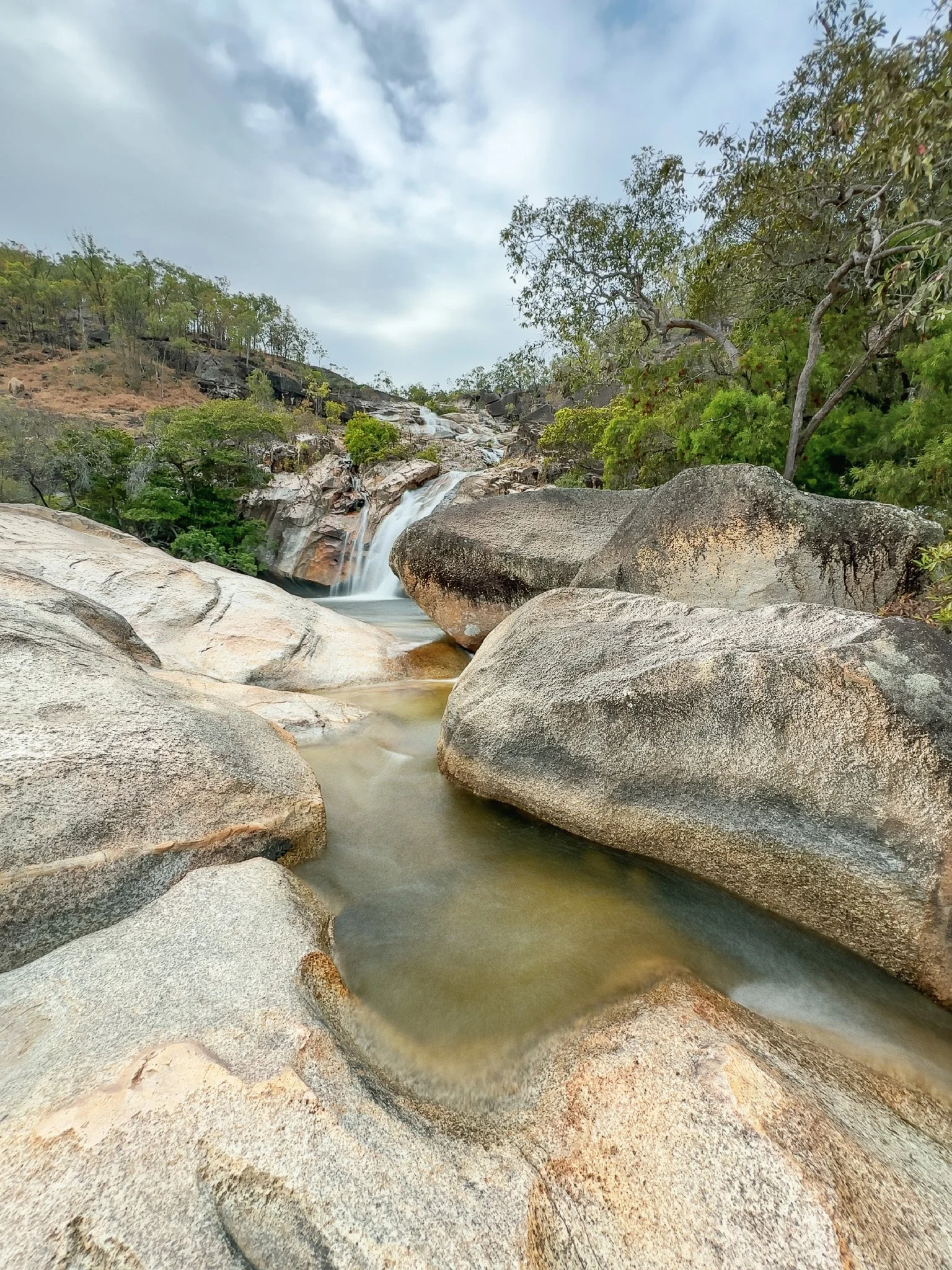
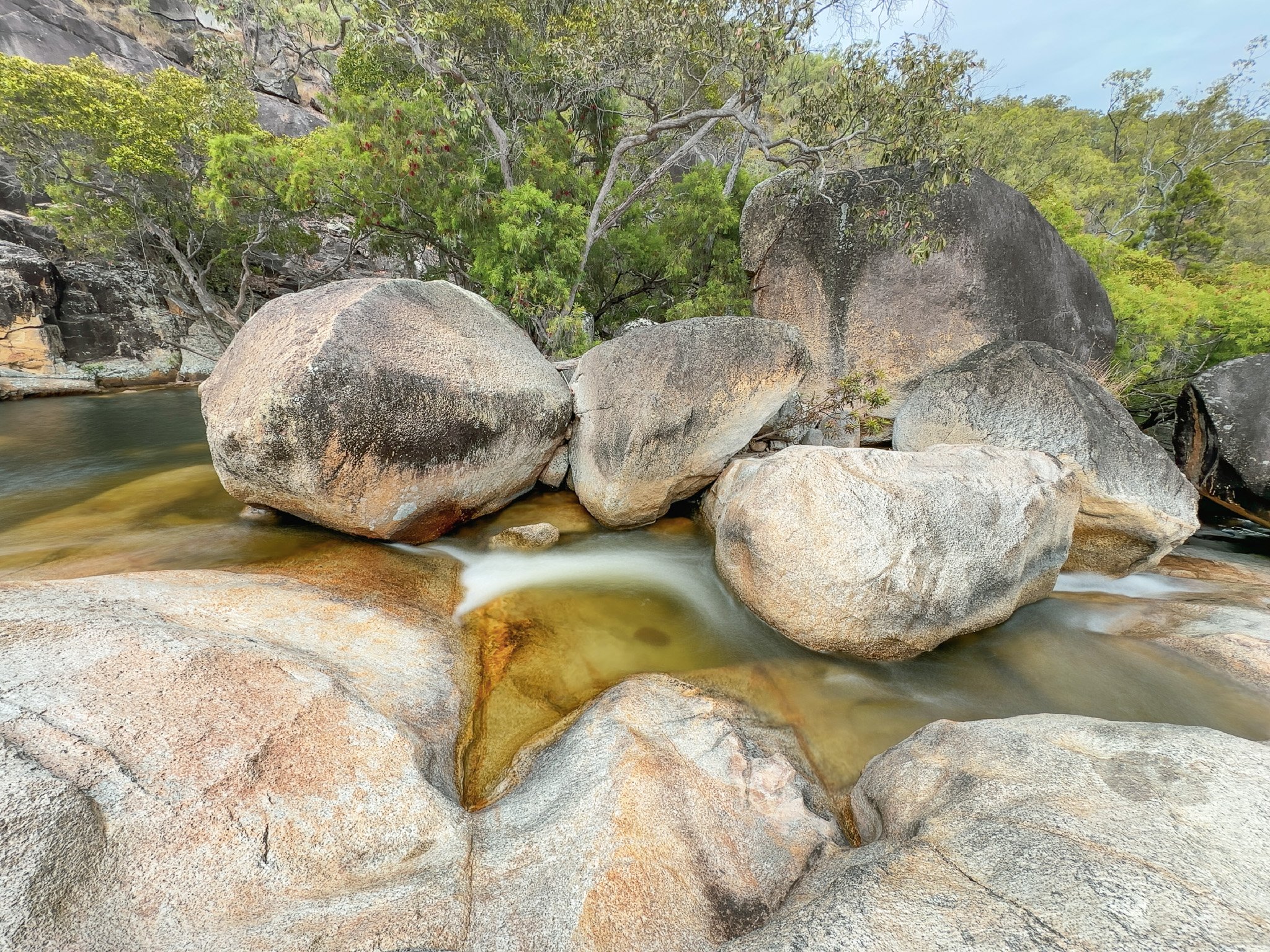
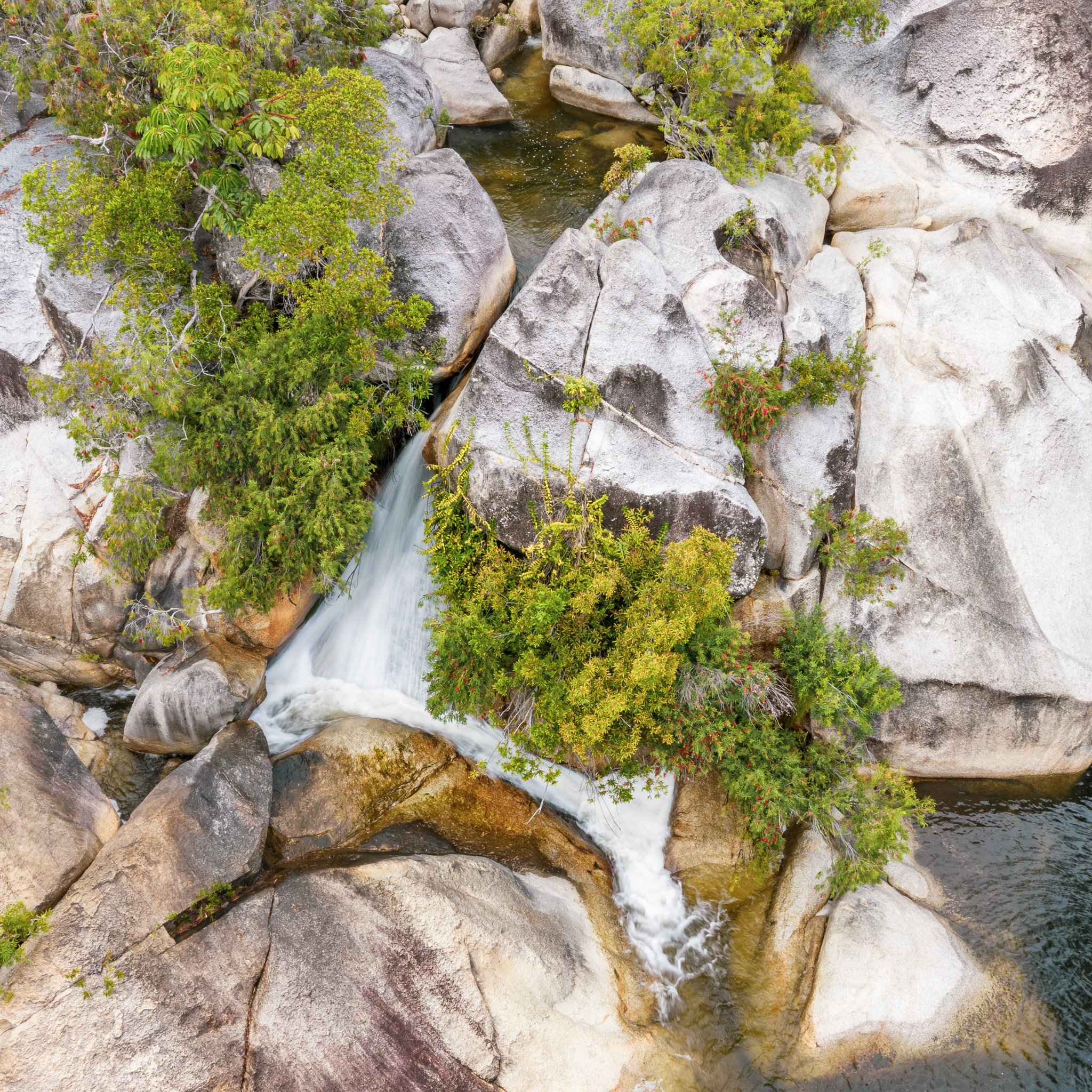
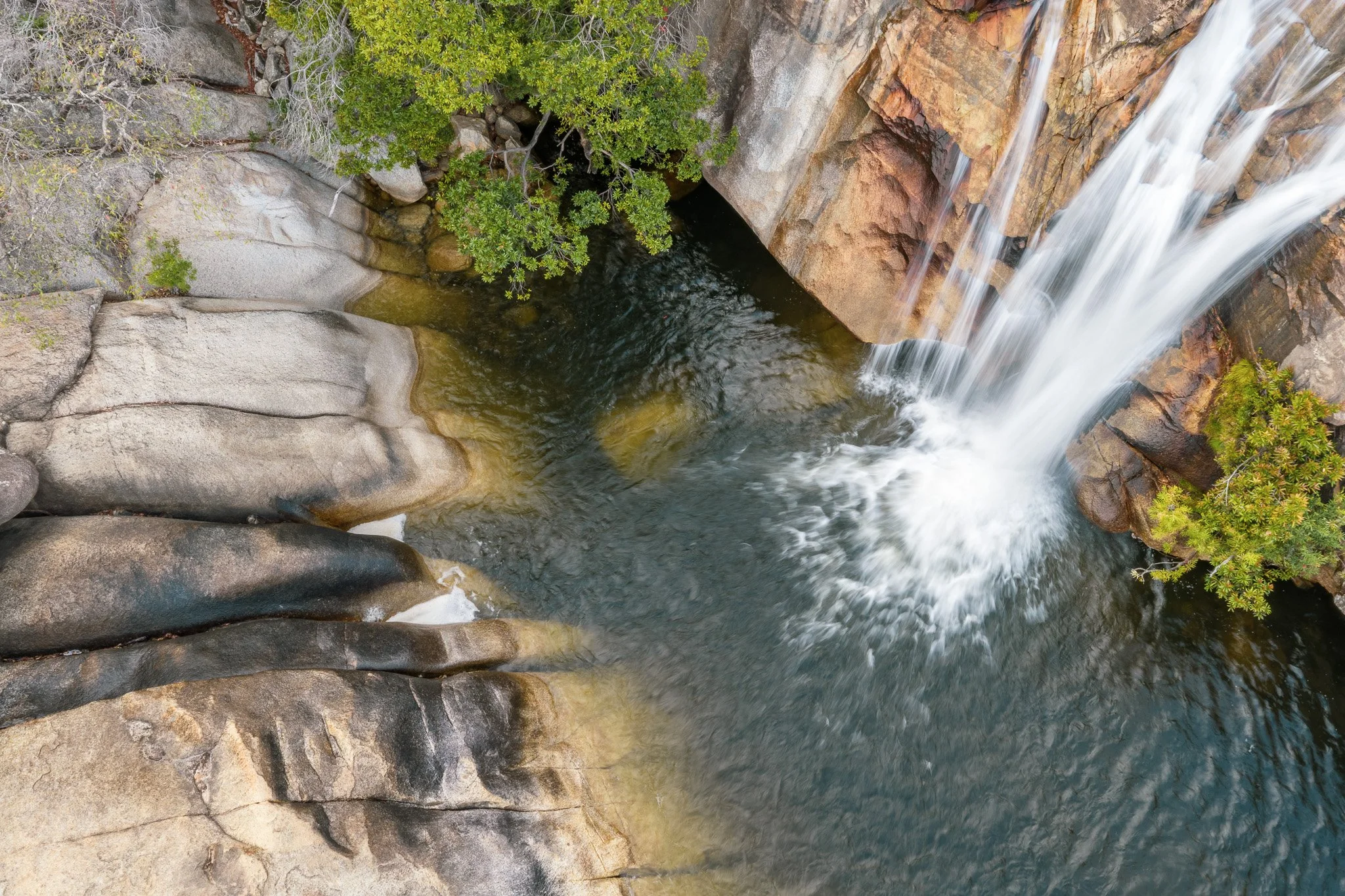
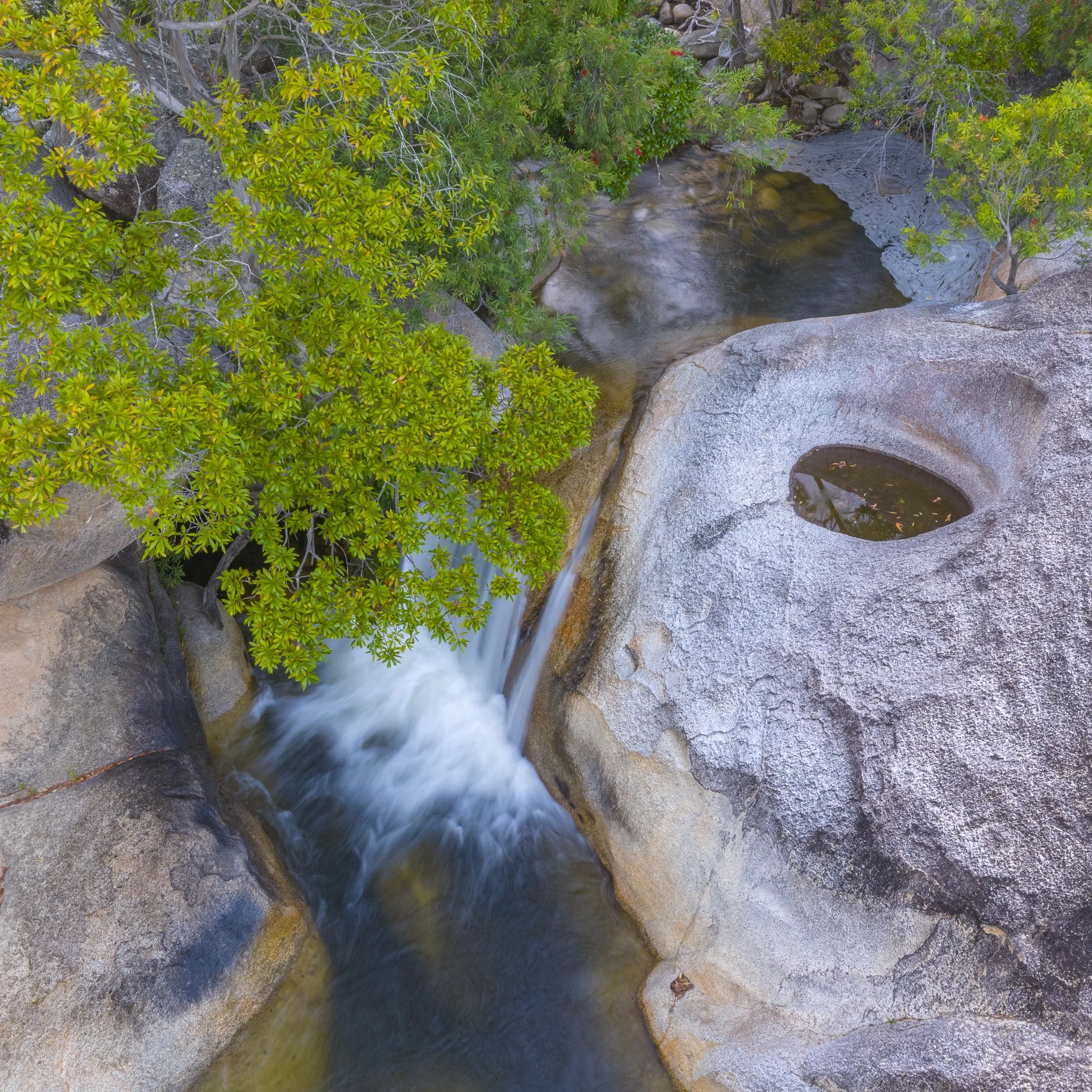
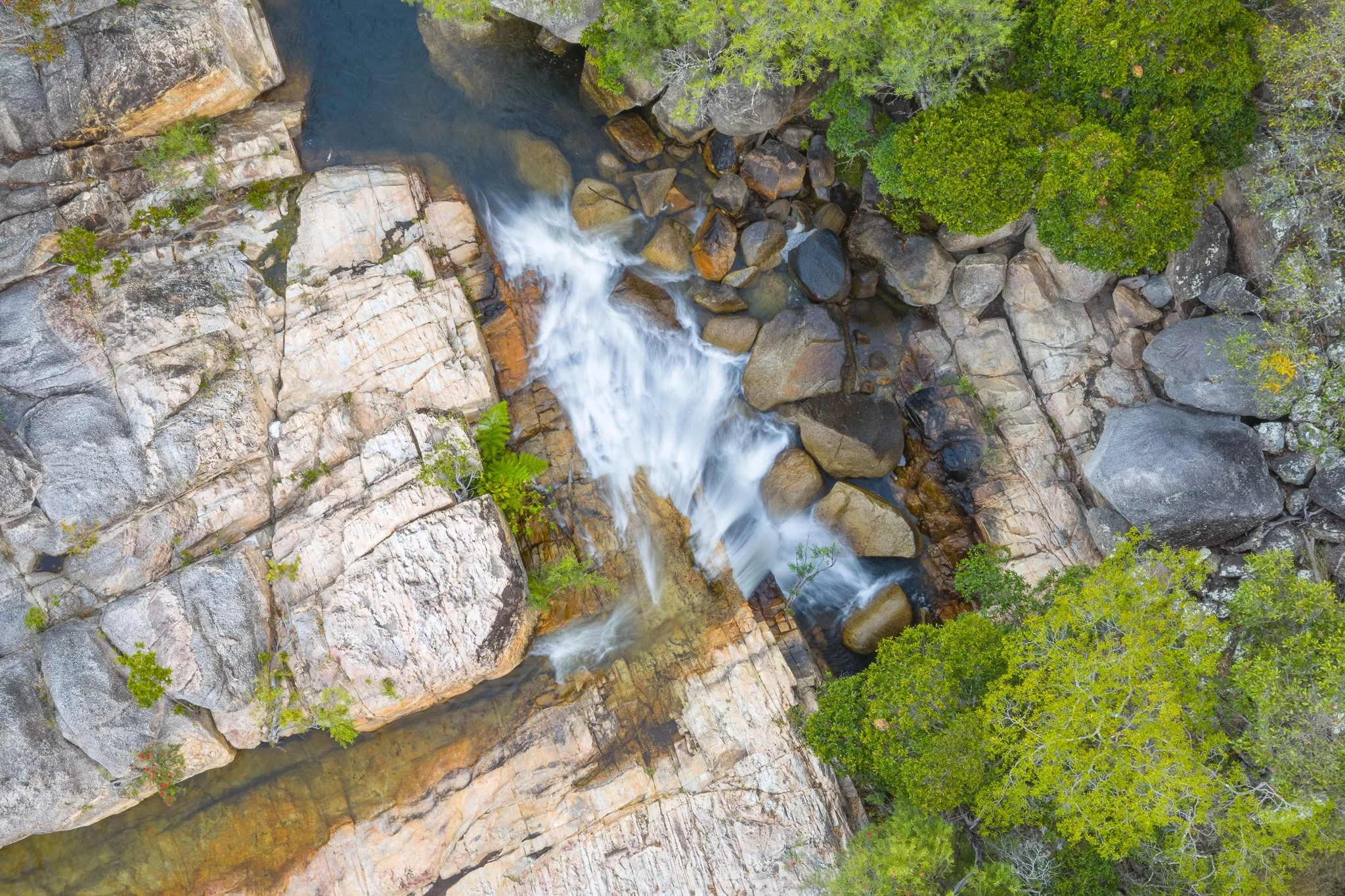
These images capture erosion in action. Follow the water's path and notice how it preferentially follows fracture lines and softer zones. The plunge pools show hydraulic action at work—water hammering the rock and gradually deepening circular depressions.
Observe how the creek has carved narrow channels along joint systems, and how abrasion has smoothed and polished rock surfaces. The contrast between angular, fractured areas and smooth, water-worn surfaces illustrates the ongoing battle between geological structure and hydrological force.


Your Rock Detective Challenge
What Lies Beneath Your Feet
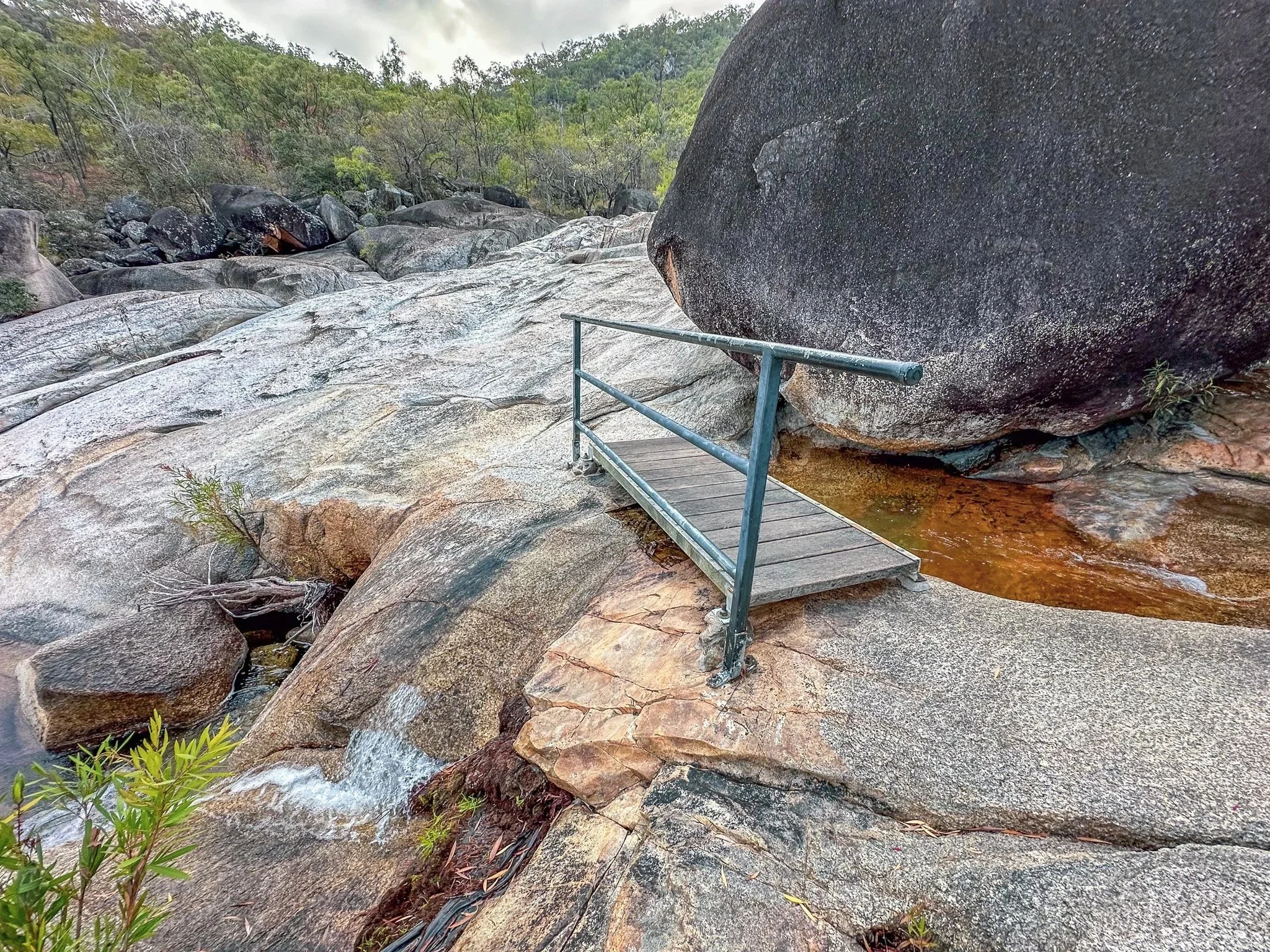
As you make your way to the falls, don't just focus on the destination—the story is literally beneath your feet! The slabs in the creek reveal the very coarse Tinaroo Granite with its distinctive large potassium feldspar crystals. Look closely and you'll spot small dykes of fine-grained, pink aplite cutting through the granite—these were probably injected during the later stages of granite solidification, like the final brush strokes on a geological masterpiece.
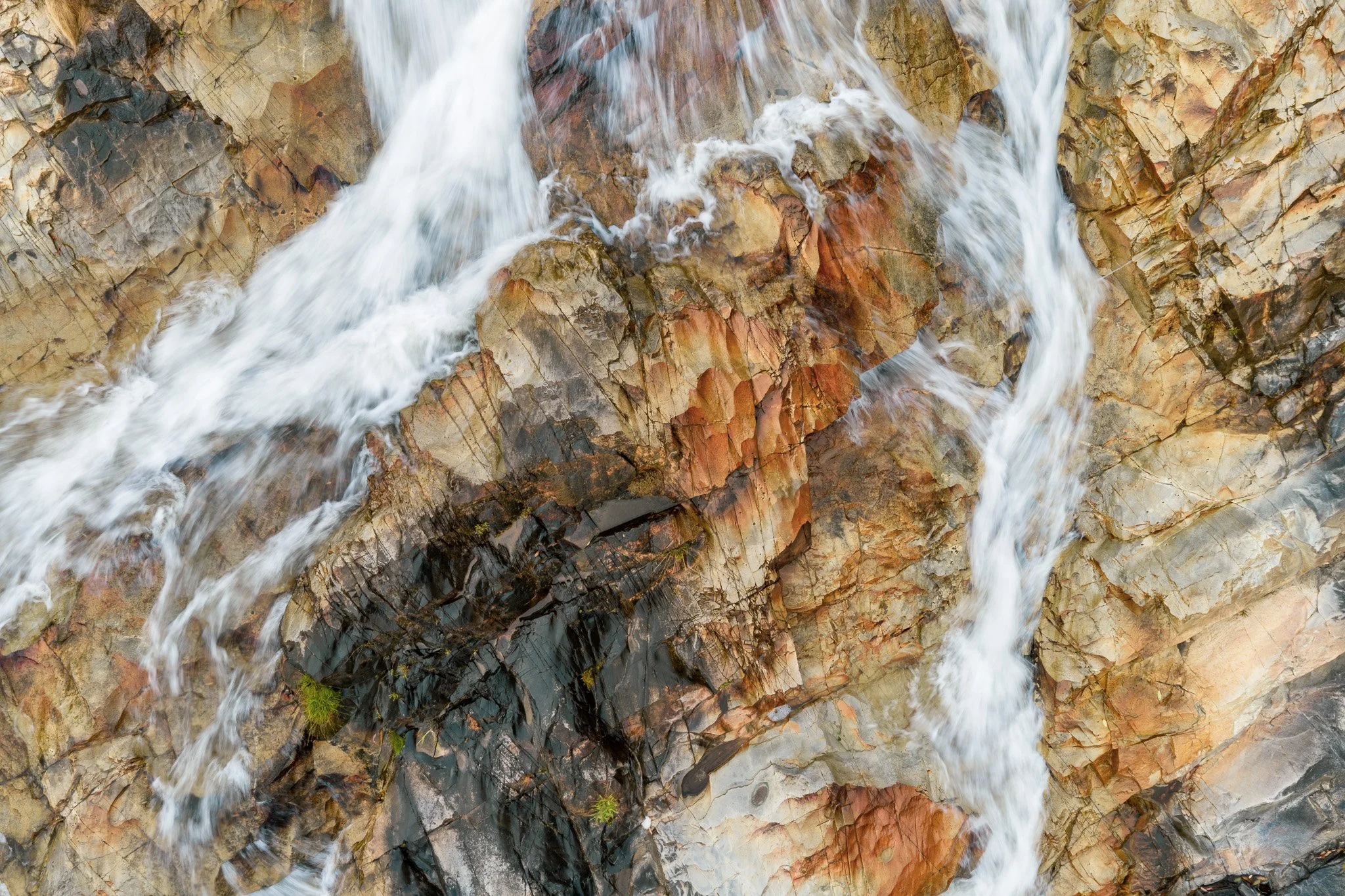
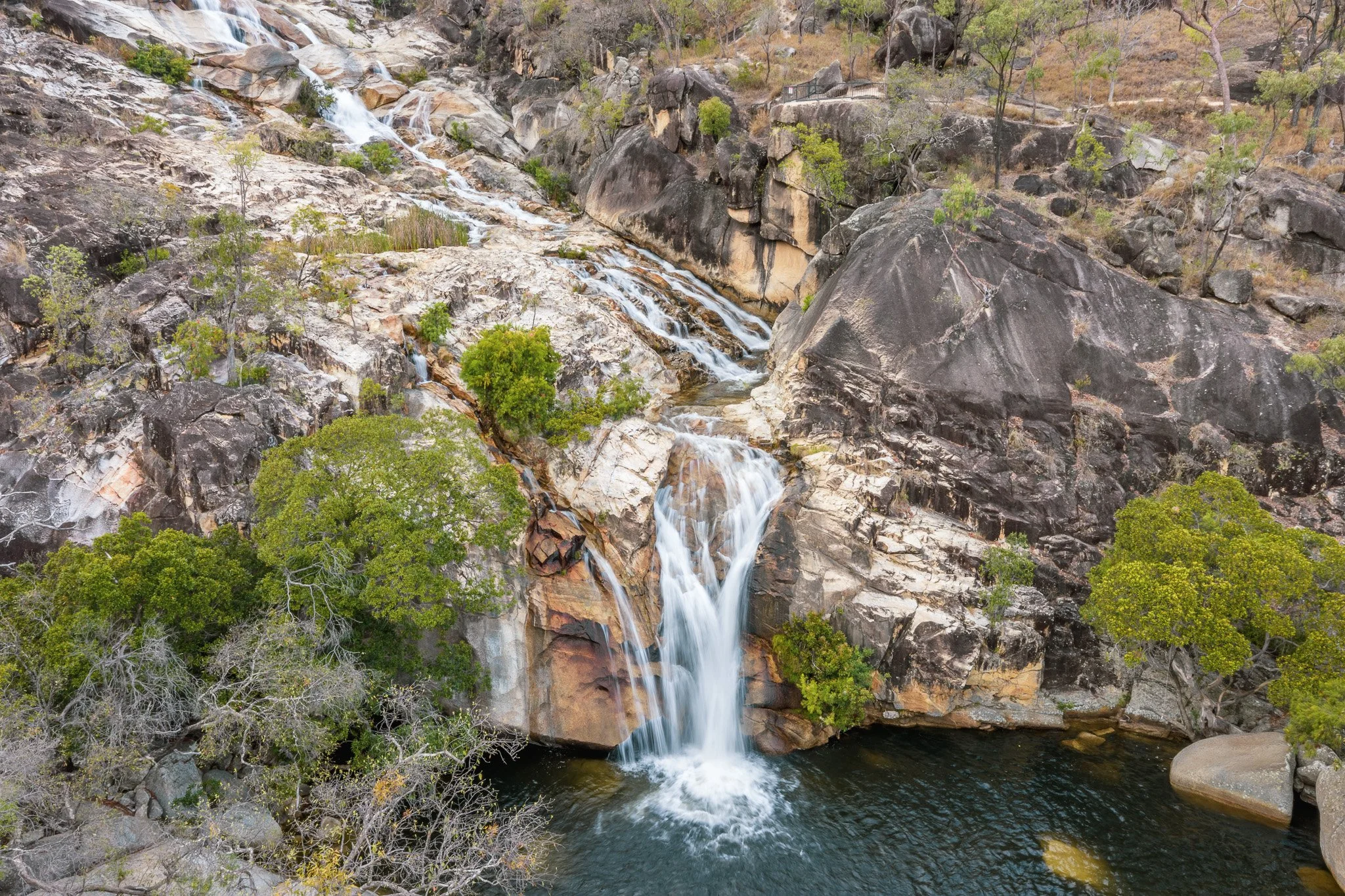
Keep your eyes open for dark, fine-grained fragments called xenoliths—these are pieces of older rocks that got caught up in the granite as it formed, like fossil evidence of what came before. The main waterfall itself owes its existence to geology: its face is formed by a resistant band of aplite dyke over 30 meters thick that refuses to erode as easily as the surrounding granite.
On the northern side, narrow fault fractures have provided pathways for the water, and if you're observant, you'll discover spectacular potholes scoured out by trapped boulders—nature's own rock tumblers in action.
Take your time exploring the rock surfaces as you walk. Every step reveals new clues about this ancient landscape. The complete story isn't just at the waterfall—it's written in the granite beneath your feet, waiting for curious visitors like you to read it.

The Bigger Picture
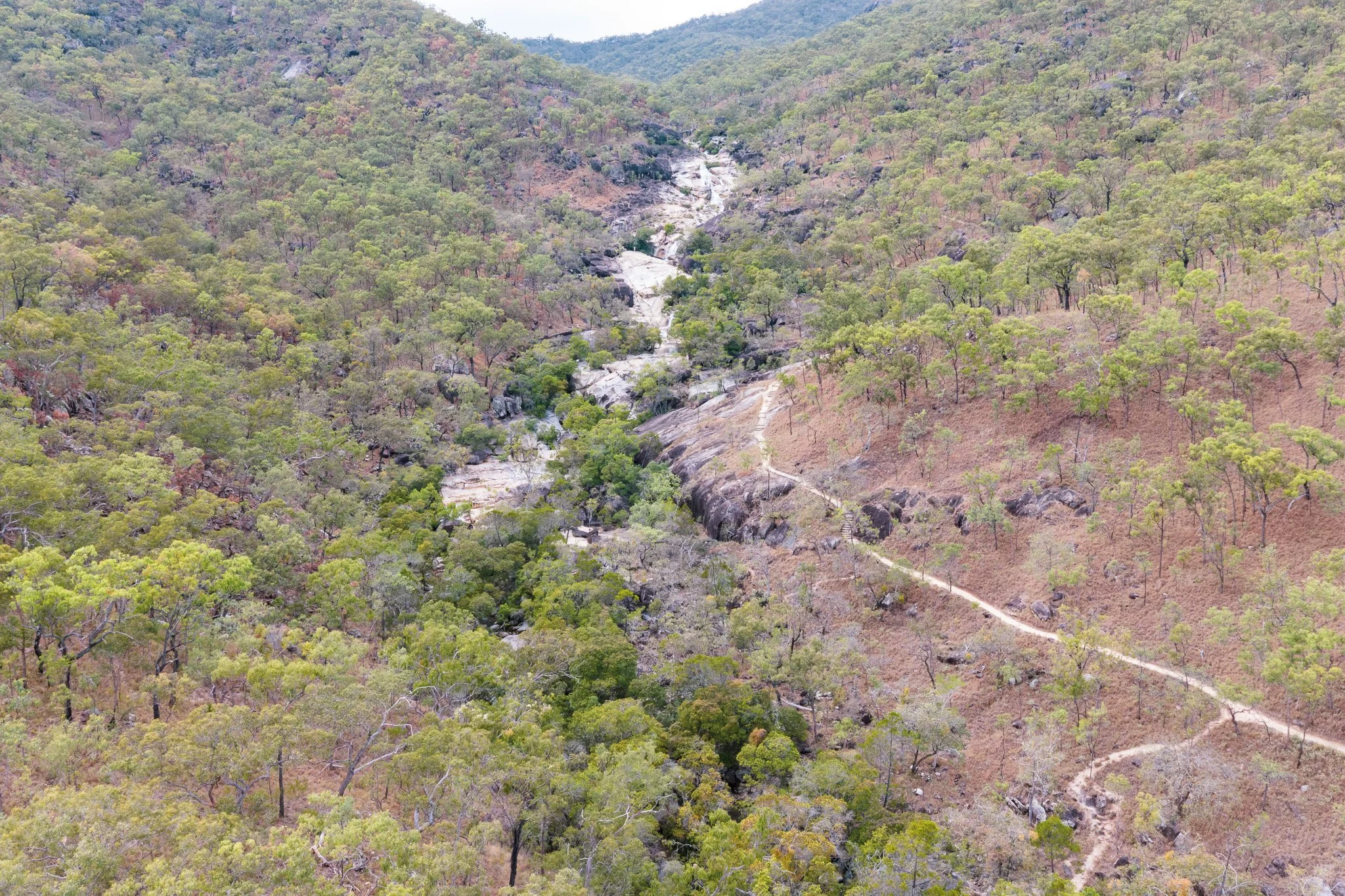
The wide-angle views in this gallery show how all these processes work together to create the overall landscape. The waterfall exists where it does because of the underlying granite structure—joint systems, dyke orientations, and zones of different rock resistance all influence the creek's path.
Notice how the surrounding hillslopes show the same granite weathering processes on a larger scale. The vegetation patterns often follow geological boundaries, and the overall valley shape reflects millions of years of erosion working along structural weaknesses in the granite.
Conclusion
Ancient Rock, Active Landscape
Emerald Creek Falls demonstrates that landscapes are never static. The granite foundation, formed deep underground millions of years ago, continues to evolve under the influence of water, weather, and biological processes. The fractures that developed as the rock cooled now guide the creek's path. The minerals that crystallized in ancient magma chambers now weather at different rates, creating the varied textures and forms we see today.
Understanding these processes helps us appreciate not just the beauty of the falls, but the dynamic Earth processes that create and constantly reshape our landscape. Every visit to Emerald Creek Falls is a glimpse into deep geological time—where the ancient past meets the active present.