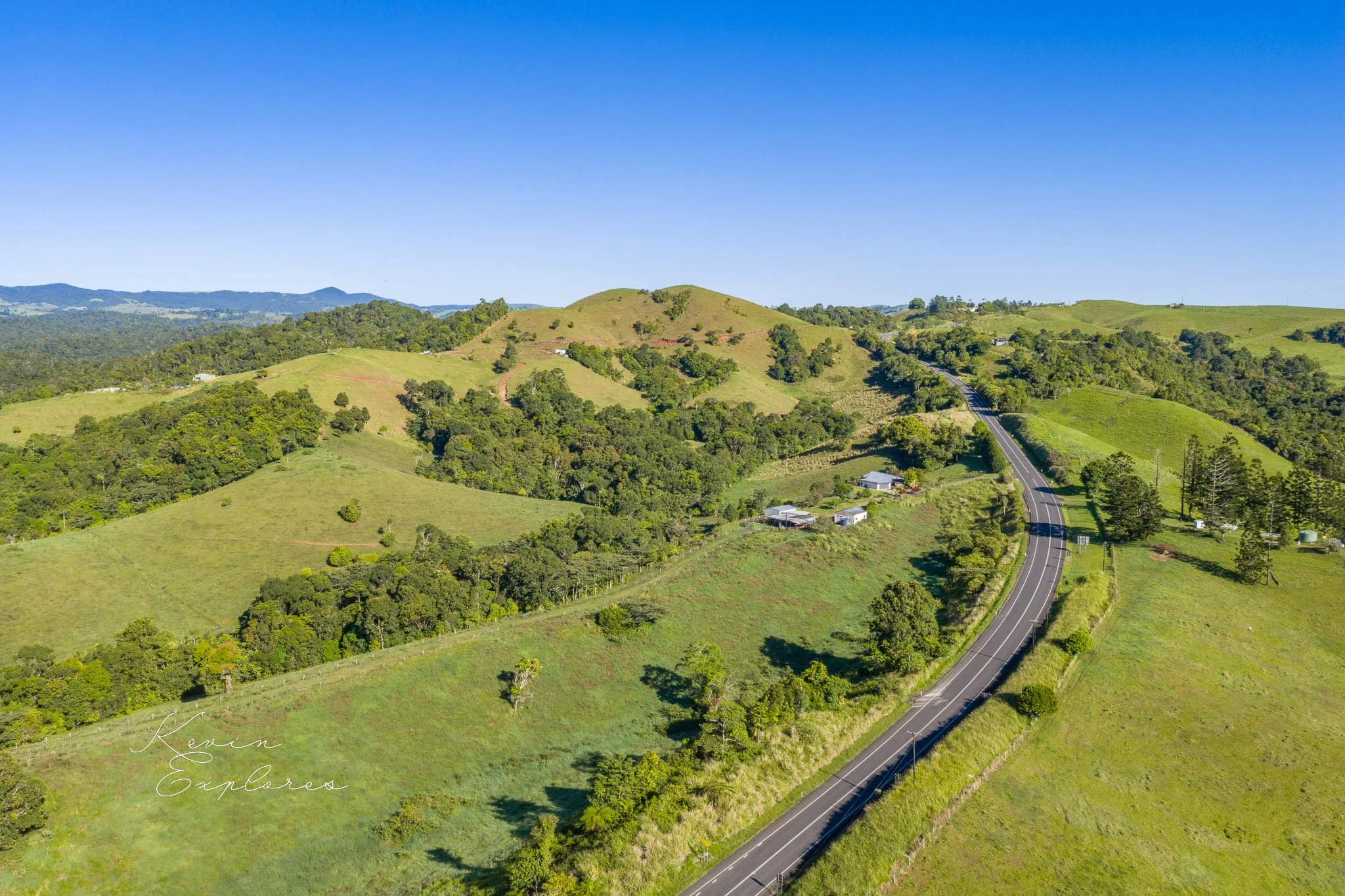
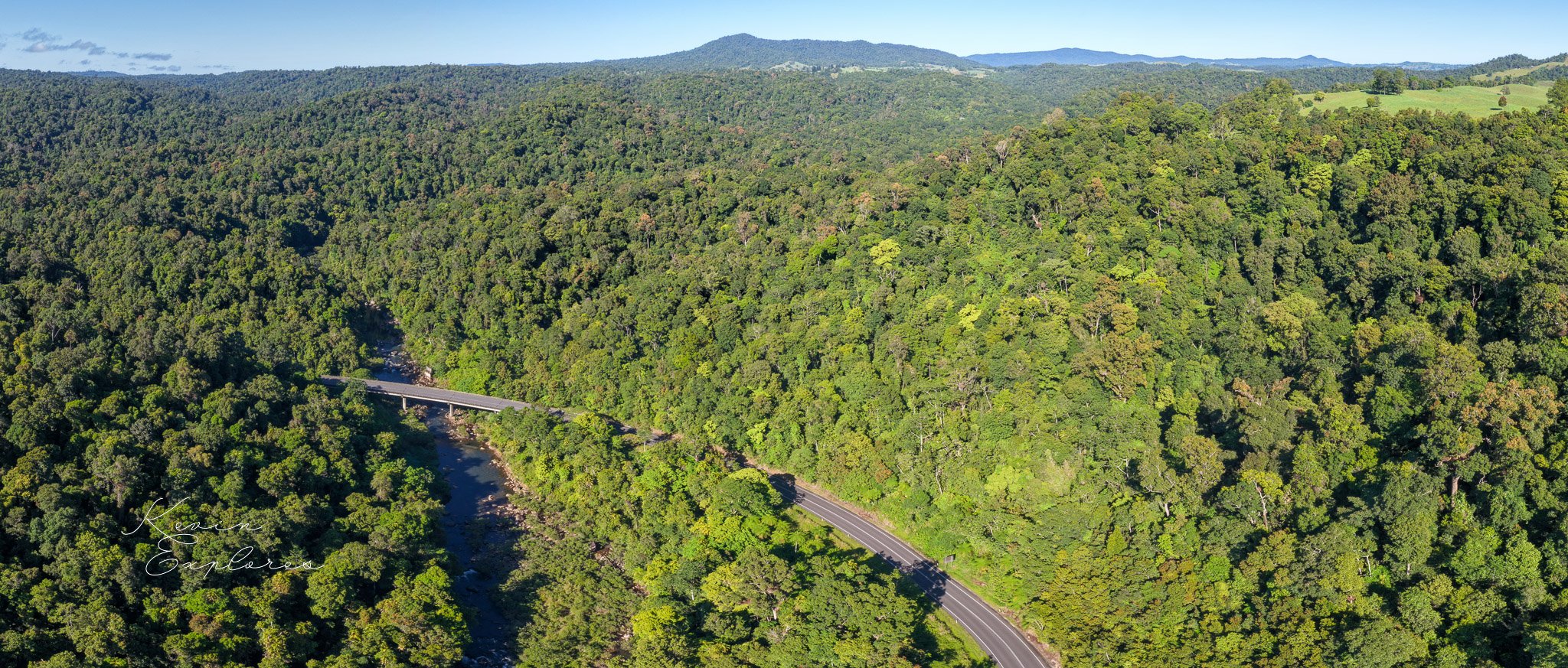
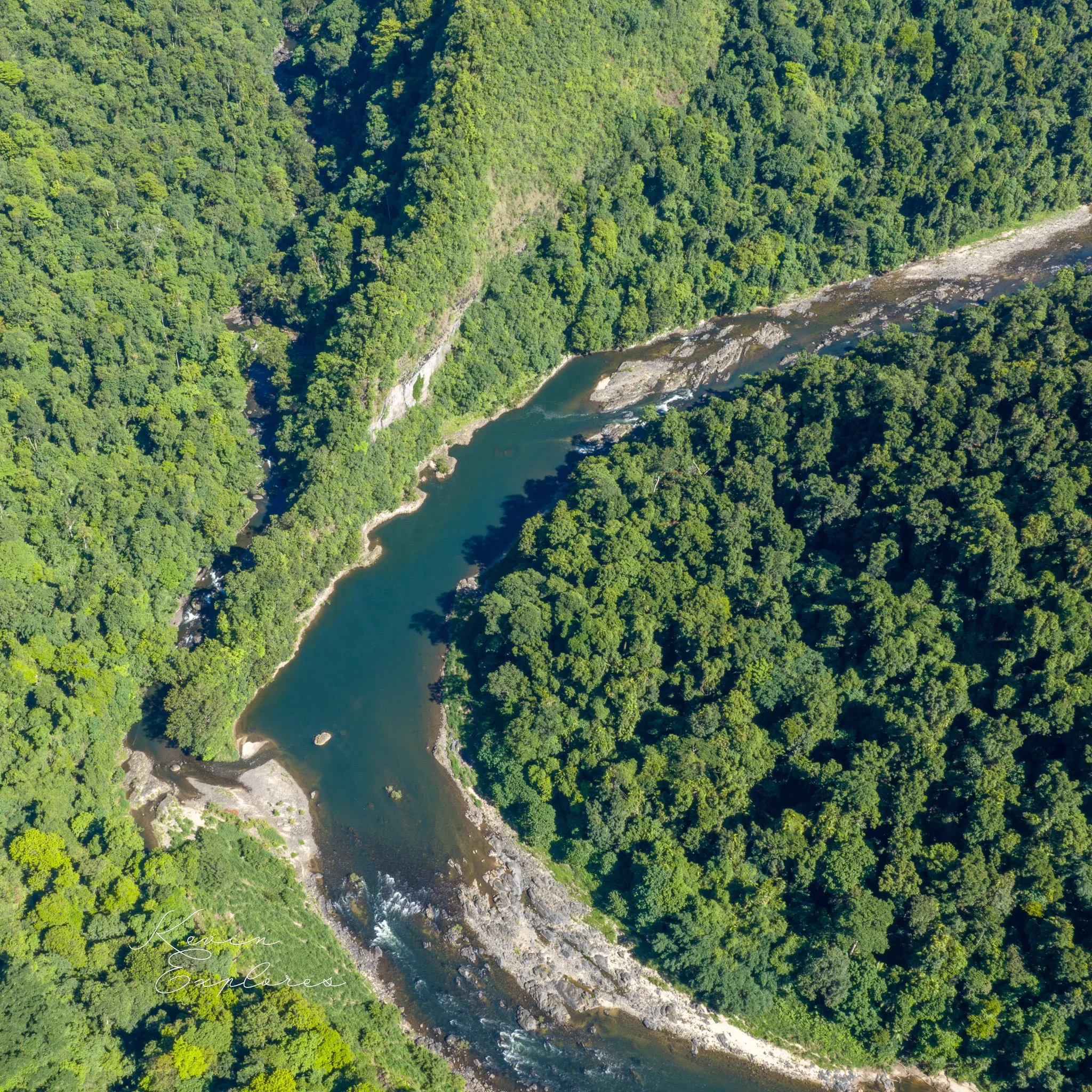
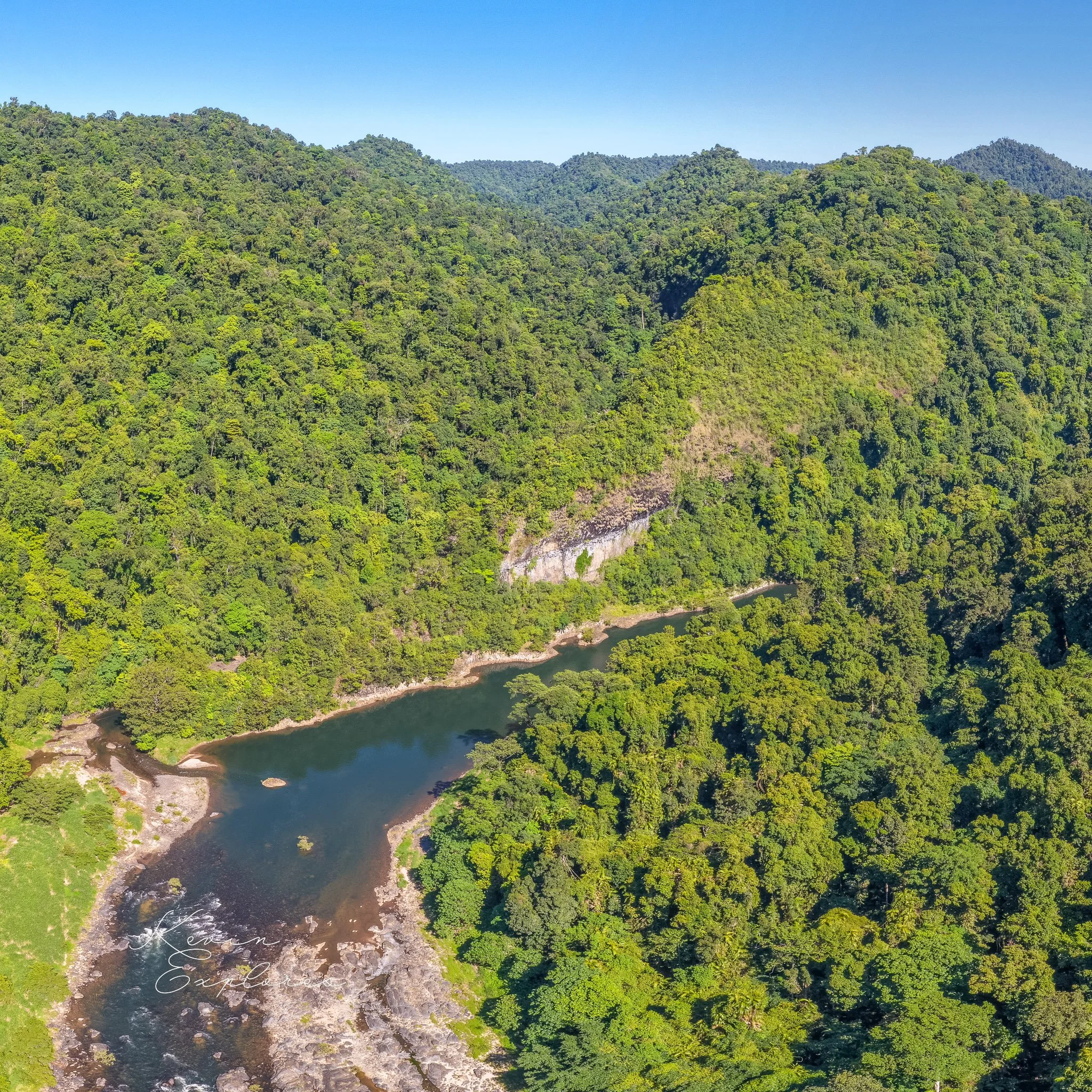
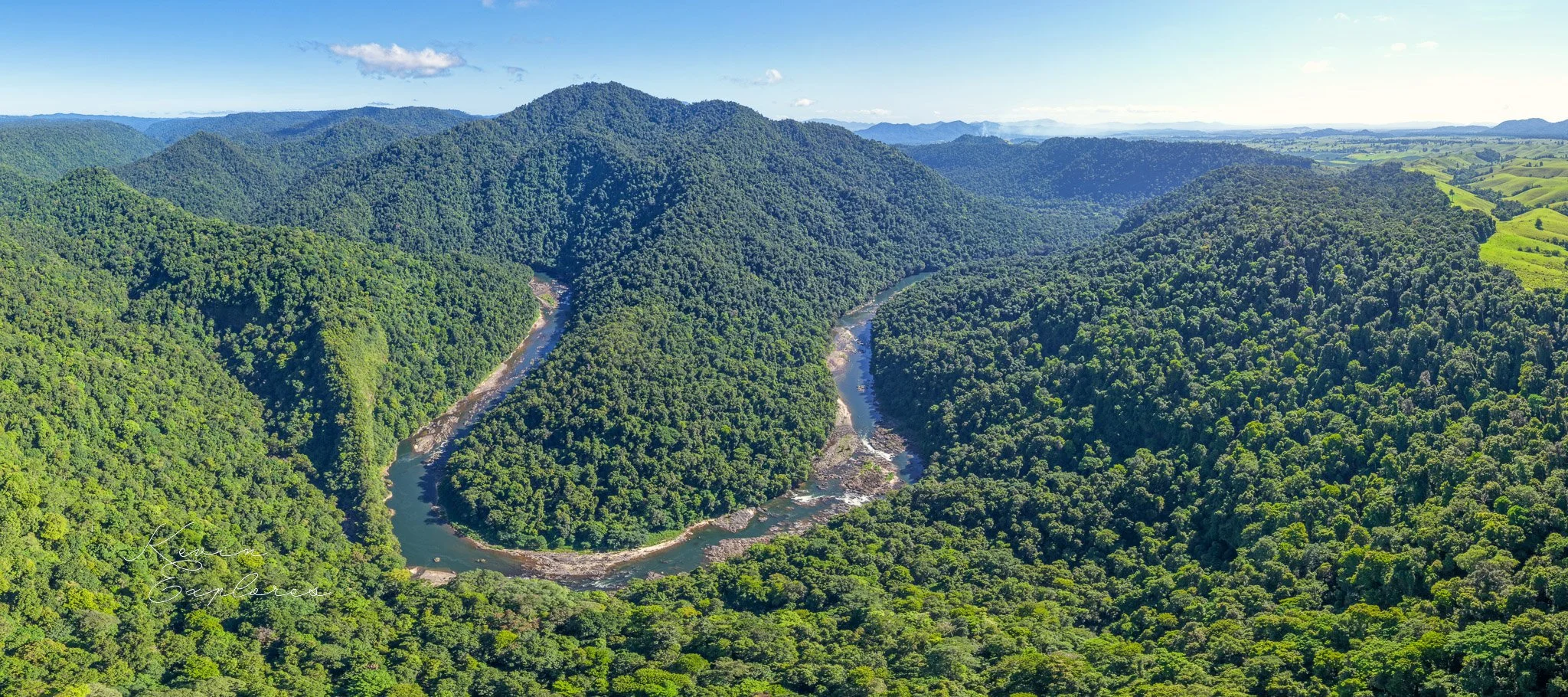
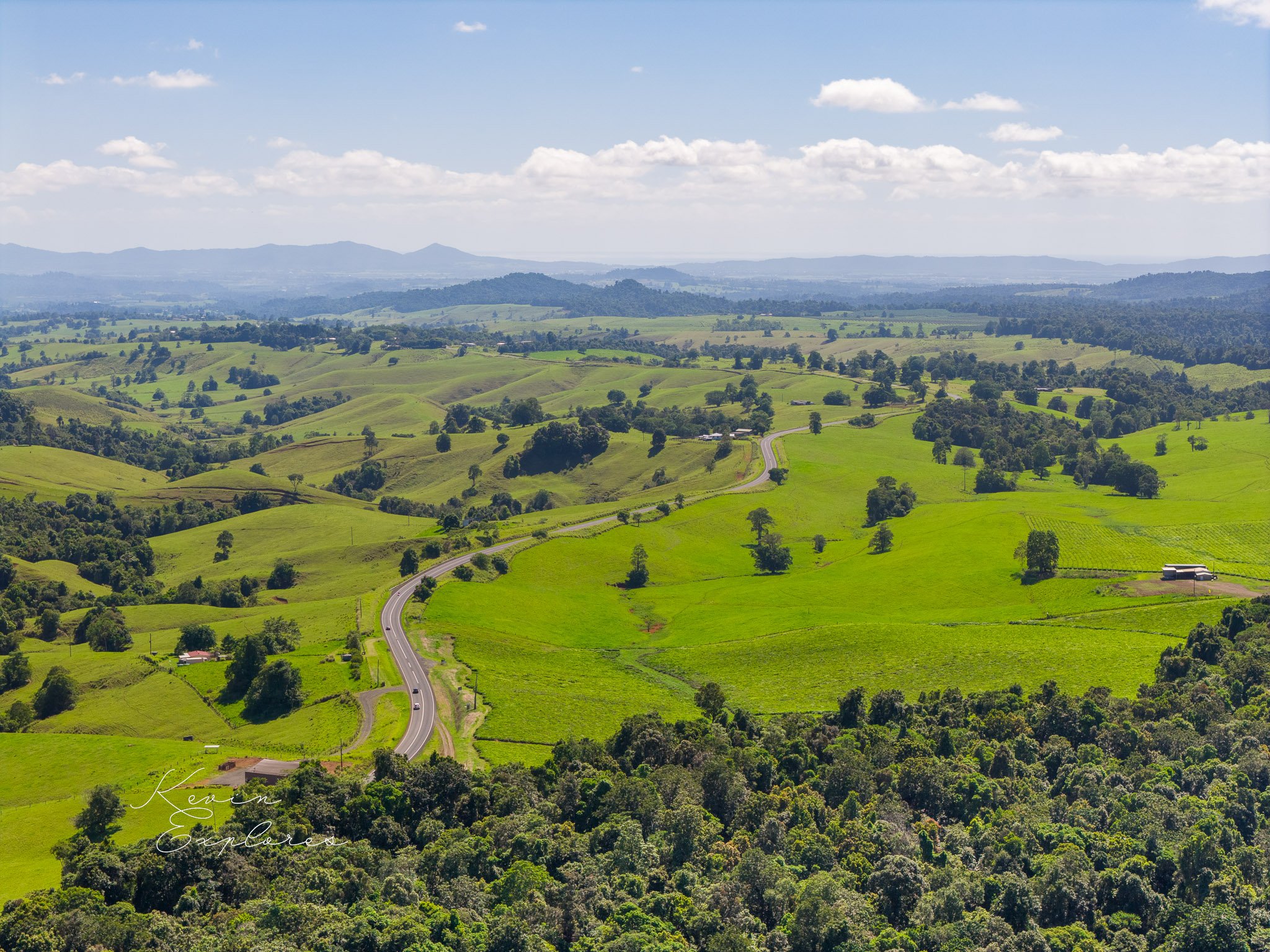
The basalt ramp beneath the Palmerston Highway was built in several episodes:
Phase 1: The Malanda Volcano (3.4-3.0 Ma)
The earliest basalt flows erupted from the massive Malanda Volcano and flowed down an ancient Johnstone River valley all the way to the coast. At that time, the valley entered the sea at Mourilyan Harbour - basalt has been found in drill holes beneath younger alluvium between South Johnstone township and the harbour, but not near the present mouth of the river!
Phase 2: River Reorganisation
After these flows filled the original valley, new rivers were forced to erode courses on either side of the resistant basalt ramp, forming the ancestral South and North Johnstone Rivers.
Phase 3: Campbells Hill Eruptions
Then Campbells Hill became active in two main phases:
~2.2 Ma - First flows cascading over the escarpment
~1.6 Ma - The final and youngest flows to overflow the escarpment in this area
These new lava flows poured down the newly formed river valleys, forcing the rivers to adjust their courses twice again!
Creating Inverted Relief
This is where it gets fascinating: Because basalt is more resistant to erosion than the softer surrounding metamorphic rocks, something remarkable happened - inverted relief. The river valley filled with lava became a high ridge, while the original valley walls eroded and became the new valley floors!
Since these eruptions, the South Johnstone River, Douglas Creek, and the North Johnstone Rivers have continued to erode deep gorges into the voluminous pile of basalt lavas. At places like Crawfords Lookout, you can see where the North Johnstone River has cut so deeply through the basalt that it has re-exposed the meta-sediments of the Hodgkinson Formation beneath!
The Palmerston Rampart
Today, the Palmerston Highway follows the flat top of this ancient lava ramp down to the coastal lowlands. On either side, deep gorges carved by the North and South Johnstone Rivers flank the highway - a dramatic demonstration of inverted topography.
Seeing the Layers
At Nandroya Falls on Douglas Creek (accessible from Henrietta Creek campground), the rock amphitheatre beautifully displays several horizontal basalt lavas with clear boundaries between individual flows. Below the falls, the creek flows over a flat basalt surface and then over smaller drops, each representing yet another separate basalt flow.
Along walking tracks in the gorge of Douglas Creek, you can see:
- A succession of flat slabs and small falls attesting to the series of separate flows;
- Gas bubble layers preserved in the basalt;
- Small cooling columns (usually sub-vertical) formed as the lava cooled.
At Tchupala and Wallicher Falls, two distinct lava flows are evident - the lower with crude cooling columns, and the upper more massive with curved fracture surfaces.
A Natural Highway
This ramp of basalt lavas proved such a convenient route that it became the natural pathway for the modern Palmerston Highway. The fertile soils developed on the basalt have been instrumental in the development of the magnificent rainforest that now cloaks the park.
It's estimated these flows created a ramp up to 300m thick in places - an almost incomprehensible volume of lava that fundamentally reshaped the landscape, redirected rivers multiple times, and created the route we drive today!
Standing at viewpoints like Crawfords Lookout, you're literally standing on top of ancient rivers of stone, with modern rivers flowing through gorges carved into their flanks below.
Sources: Rocks and Landscapes of the National Parks of North Queensland, 2007, Warwick Willmott, Geological Society of Australia; Temporal Development of the Atherton Basalt, 2007, Whitehead JCU and others.